sábado, 30 de mayo de 2020

UN VASO DE AGUA, POR FAVOR (GLASS OF WATER)

Esta es la canción de Discordia de Mi Pequeño Poni. El episodio donde Discordia se pone azul y sufre de malestar general. La traducción es mía propia y está recién salida del horno.

UN VASO DE AGUA, POR FAVOR
Discord Draconequus by Sandra Dermark
30 de mayo, MMXX

Un vaso de agua, por favor,
y un pañuelito pa’ toser,
también una taza de té
con miel de las abejas…
¡Te lo traeré!

Y otro deseo bien formulao:
para mi pecho así atorao,
aceite de este bacalao
en frasco de Bohemia…
¿Cristal de Bohemia?

¡Pardiez, soy todo un papanatas!
Se me irrita la garganta…
Más sopa de calabaza
y ramos de gerberas.

¿Dije gerberas? Dije seda,
suave y reluciente queda…
Y luego una caliente crema
y pastas de canela.

Estoy de vientre algo indispuesto…
un plato nada indigesto
y relajante como esto:
¡soba a mansalva!

Añade un pan integral
con muchas lonchas de emmental,
¡servido todo con mince pies
y guarnición de albahaca!

Estoy por siempre agradecido
a vuestra caridad,
pues sé que con ternura es
como se trata a una amistad…
Ternura… ¿no es verdad, amistades?

¿Estáis todos listos para el GRAN ENCORE?

Un vaso de agua, por favor,
con un hechizo sanador,
dejar de estornudar así
y coloridas rosas…

Con algún caramelo herbal
mejor podría respirar…
¡Una peluca no iría mal,
ni zapas esponjosas!

Que me traigan aquí las pinzas
y un masaje relajante,
unos guisantes al gratén,
acariciar a un pekinés,
un arpa que pueda cantar,
un cabritillo y acrobacias,
más y más y más y más
y máááááás…

Y porque uno se hidrata
aún cuando no tenga sed,
de día y noche así ha de ser,
cuánto deseo, que gran placer,
esa cosita así sería…
Oh, por favor, escanciadme
¡¡¡UN VAAASO DE AGUAAAAA!!!

martes, 12 de mayo de 2020

LA HORA DEL CUENTO (Storytime)

Here's a little playlist where I tell favourite stories in Spanish, using my own words and the illustrations from storybooks. I began with Lily White and Rose Red, followed by The Snow Queen... and wound up telling three tragedies by Shakespeare, the first half of Les Misérables (until Cosette goes to school in the nunnery where her guardian Valjean becomes gardener), and some Slavic tales. Some of the stories --like Othello, Les Mis, Cats...-- contain my own translations of songs from their musical adaptations.

domingo, 3 de mayo de 2020

THE JELLICLE CODE

PS. The following are my own esoteric interpretations. Nothing more and nothing less.
https://gutenberg.ca/ebooks/eliotts-practicalcats/eliotts-practicalcats-01-h.html
https://pdfs.semanticscholar.org/c16b/4ac78384e968d8b70e7b2ff49d3d9ba8580f.pdf
and more chakra symbolism http://philosopherswheel.com/toccata.htm


THE JELLICLE CODE - my own personal interpretation of the musical Cats

I. Jellicles as Archetypes of the Collective Unconscious
II. The Triform Naming of Jellicle Cats
III. Jenny Anydots - the Caregiver
IV. The Rum Tum Tugger - Adolescent Subversion
Grizabella Interlude I - the Plight of the Traitor/Outsider
V. Bustopher Jones - the Authority Figure
VI. Mungojerry and Rumpleteazer - Young Adult Subversion
VII. Old Deuteronomy - the Hierophant
Grizabella Interlude II: Mournful Memory
VIII. Asparagus - the Piscean Paradigm
Interlude on the Fiend of the Fell and Growltiger/Griddlebone
IX. Skimbleshanks - the Aquarian Paradigm
The Mystery of Life, Death, and Rebirth I: MacCavity, the Dark Lord
The Mystery of Life, Death, and Rebirth II: Mr. Mistoffeles, the Lightbringer
The Mystery of Life, Death, and Rebirth III: Hopeful Memory
The Mystery of Life, Death, and Rebirth IV: The Jellicle Choice
X. The Ad-Dressing of Cats


I. Jellicles as Archetypes of the Collective Unconscious
"jellicle": dear little + jewel (hara/3rd chakra - precious gemstone - navel jewels in Steven Universe and Trollz) + miracle
allegorical, metaphorical, mystical, magical -- the jellicles are fey cats/cait sith: extended lifespan, sapiency, supernatural powers (revealed later on as the story unfurls)
unity in diversity (of ages, ranks, genders, personalities/philosophies)
supermoon - lunacy - as the time of their rendezvous; later on we'll talk about Arcanus XVIII but for now let's focus on the supermoon as a lunar phase
the jellicle choice - arcanus XXI - judgement as resurrection/catharsis

the heaviside layer is enlightenment, of course

*

II. The Triform Naming of Jellicle Cats
3 as a magic number - trinities

  • name bestowed by human people (there are namesakes)
  • name bestowed by other jellicle cats (unique special snowflake; the same name can't be used by more than one individual)
  • secret name (completely confidential; compare the power of names in straw-into-gold fairytales and egyptian myth)

analogy of the tripartite psyche: gut/heart/head or id/ego/superego --

id/gut: secret name (the part of the iceberg that is underwater - the unconscious, individual and collective)
ego/heart: jellicle name
superego/head: human name (bestowed by established society)

**


III. Jenny Anydots - the Caregiver
third musical number, analogous to arcanus III and the caregiver/mother nature archetype

jenny: spinning wheel, used to make one's own clothes - she teaches her pupils music, crochet, and tatting
dots/spots on her back and name echo seeds (it. / fr. Jenny Touteàpois)
raising small animals considered disturbances (vermin/pests), like beetles or rodents, to teach them life skills
young children as disturbances/vermin/pests need someone to raise them right
from disorderly louts to disciplined helpful bug scouts
epilogue: the beetle tattoo - "tatau" in pacific cultures


***

IV. The Rum Tum Tugger - Adolescent Subversion
the knights on tarot
a "curious beast", stubborn, whom the likes of Jenny Anydots cannot tame since he refuses
rhum - pirate poison (compare quaffing draft cream scene) - tum tugger echoes "tsuntsun" (compare es. "rontón terco", stubborn) doesn't care for a cuddle (ie sees affection/endearment as too "kiddie" or "sissy" like most bad boys and some bad girls do)
nothing he enjoys more than a horrible muddle
on the stage show - the Tugger's 4th wall breaks, taking up a girl from the audience to the stage to dance with her


****

Grizabella Interlude I - the Plight of the Traitor/Outsider
her coat is stained and the corners of her eyes are twitchy (tsurime)
loiters on the streets at night on her own, unwelcome by the jellicles since she went over to the enemy, who left her in turn
jellicles surprised that she's still alive - but the lonely life of sacrificed youth she leads is worse than death
arcanus XII, the Hanged One
 
characters who embody this arcanus in Persona - most importantly Chidori/Medea (persona named after archetypal fallen woman) - character arc if the choice in the game is having her survive her injuries/trauma
one needs to fall down to get back up again; no catharsis is possible without previous catastrophe

+

V. Bustopher Jones - the Authority Figure
young rebels like the Tugger need someone to show them the socially established way, for them to  look up to/protest against
analogous to arcanus IV and the authority/father state archetype

not skin and bones - physical and social weight (no pubs like the tugger: 8 or 9 gents' clubs; 9-Sagittarius-Jupiter, compare his spherical waistline)
eclectic food tastes - from curry (exotic, expensive) to cabbage and mutton (unexpected peasant fare) depending on his mood
putting on weight both for status and for a rainy day
fashion sense - tux, spats, gloves: fashion is not considered quite masculine, but closer to society than to nature, and meant to signify status
...

*****
VI. Mungojerry and Rumpleteazer - Young Adult Subversion
Mercury, Gemini, and arcanus VI

knockabout artistes among the jellicle cats, but terrorists to wealthy human people (the establishment); those who protest against/question authority
twin resemblance as the key to their ruse + playful incestuous subtext
Rumpleteazer: Rumplestiltskin (spinning straw into gold thread - secret name as key to him not taking royal baby away: analogy to Jellicles' secret names) + teaser (both playfully/prankster and erotically/twincest innuendo) / Mungojerry: mongoose/mango jelly?
connection between arcanus VI and XV (the siblings' arrival is heralded by an alarm of MacCavity, the first mention in fact)
...


******
VII. Old Deuteronomy - the Hierophant
gender "they" explained - Dame Judi Dench proves this archetype can also be female
lifespan of centuries - this character has lived since the ancien régime, which like their name provides a clue
wise old mentor in spiritual retirement (lives in the countryside away from London and only comes to town for the jellicle choice)
name taken from a patriarchal sacred text that is in some places too conservative (no crossdressing, no mixing of animal and plant fibers in the same garment...), mirrors the conservatism of Arcanus V

wise old mentor/elder kind of leader as hierophant, ie initiating priest/spiritualist


*******
Grizabella Interlude II: Mournful Memory
Mournful Memory - autumn leaves in the light of the Tarot Moon (Arcanus XVIII) - delusion and disenchantment unable to discern positivity -- baroque disenchantment in Andrew Marvell: the cramp of hope, joy's cheerful madness (mania), the pestilence of love does heat (febrile, septic infection) -- When you (psyche/kokoro) experience any hope, I (physical body/karada) am racked with cramp. If you experience love, I am fevered with the plague, or sepsis. If you experience joy, I feel madly elated, like in a manic episode. - even more painfully, Sir Edmund Arwaker compares eros love to a cancer affecting the heart, where kokoro and karada overlap in 4th chakra (Love's O'erspreading Cancer gnaws my Heart), a cancerous tumour which can reproduce through the system, and is chronic, unlike acute sepsis (heart cancer is a rarity, but it still can be a possibility scientifically and a powerful metaphor!) - and Cancer is ruled by the Moon - let's return to the Jellicle Moon but now in the light of the delusion of Arcanus XVIII

Deuteronomy's Experience - Moments of Happiness (Skimbleshanks tune, as foreshadowing, after "many generations")


The Innocent Child at Heart, Arcanus 0 - Send Her, Victoria, Happy and Glorious;
most powerful person in the 19th c, female (reclaiming the power of femininity) - also, name is an omen
white fur coat for purity
Victoria's innocence and lack of "beautiful ghosts", but her mixed yearning and fear thereof - the "riddle princess" stage with its fears/insecurities towards coming of age, social integration, commitment (compare Portia or the 4th Story of TSQ)

++

VIII. Asparagus - the Piscean Paradigm
Aspara-Gus (fr. End-Yves) named after nourishing yet underrated vegetable; thin as a rake - bohemian (compare Bustopher Jones); eats only what he needs to survive in the present
waning star ("once of the highest degree") - his star is waning - outdated paradigm

Interlude on the Fiend of the Fell and Growltiger/Griddlebone
epic villains (in Frye's mythos of summer) are also tragic heroes (in Frye's mythos of autumn) - two sides to every story
Fiend: demon/villain/enemy (se. fiende)
Fell: either fall/fell/fallen (in defeat) or mountains (se. fjäll; ie the higher the rise the harder the fall)
Growltiger the pirate captain: grow, glow, burning bright -- but missing an eye and an ear in fearful asymmetry
vendetta against Asians/Easterners
Griddlebone: no meat on that bone either (compare both Gus and Bustopher)
Is Grizabella Griddlebone? Identity Change Theory

********

IX. Skimbleshanks - the Aquarian Paradigm
last standalone musical number: jaunty, catchy, releases serotonin
Thespian Gus hands over the torch to Skimble, Nimble Nimbus - changing of the astrological age
Uranus and the Industrial Revolution
a quite Aquarian choice of name for the railway conductor in the English source text
trains in Discworld Raising Steam, embodying quintessence created artificially (harnessing all classical elements)
Telepathy and Glass-Green Eye Contact - first cat with more powers than physical prowess and extended lifespan to be mentioned; cold steel may have weakened his powers, but he supplements the telepathy he has left with people skills - "I know" as Aquarian motto
Guided by the North Star - arcanus XVII


supervises everyone of both the crew (from train driver to lowest guards) and passengers (first, second, and third class) without any regard for social rank, treating them equally, with those glass-green eyes (Aquarian correlation)
fresh and bright, with perhaps a drop of scotch / what he does at each station while passengers are unaware / help them to get out at the final station - character depth and more apt role model for this day and age


*********

The Mystery of Life, Death, and Rebirth I: MacCavity, the Dark Lord
one of the two most powerful jellicles when it comes to magic

Arcanus XV as Horned One or Dark Lord - similar figure is the Dragon or Serpent
Mac=son, Cavity=abyss/chasm - incarnation of primordial chaos (ginnungagap)
very very tall and thin - compare the Slenderman
Panderers (pimp and madame) as corruptors of innocence
The Griddlebone/Grizabella and Arcanus VI/XV Connections Confirmed

+++

The Mystery of Life, Death, and Rebirth II: Mr. Mistoffeles, the Lightbringer
the other of the two most powerful jellicles when it comes to magic
the mastery in Arcanus I and Mercury as Hermes Thrice-Blessed (recall the triple names of jellicles and three powers he seems to possess - sexual/gender fluidity, bilocation, and physical feats)

The Dignified Trickster - Loki (compare to Misto) as Positive Catalyst
stage illusionist as opposed to the more adult, corrupting pimp - conjuring and casting spells for entertaining and helping others
Mistoffeles - Mephisto - Lucifer - Lightbringer; compare the Huntsman (animal killer) freeing Red Riding Hood from the belly of the big bad wolf / or Set (usurper) freeing Ra from the belly of the Serpent

++++

The Mystery of Life, Death, and Rebirth III: Hopeful Memory
Consequence of Deuteronomy's Liberation
Grizabella Warmed by Victoria and Deuteronomy Sees the Light; Maiden, Mother, Crone - three generations
Soon it will be dawning - impending catharsis

+++++

The Mystery of Life, Death, and Rebirth IV: The Jellicle Choice
Arcanus XIII - Death as Transfiguration/Metamorphosis - segue from the Hopeful Memory above
Arcanus XXI - judgement as resurrection/catharsis

Grizabella/Griddlebone deserved attaining Enlightenment, ie the Heaviside Layer
fate of MacCavity in the musical: chaos/darkness can be defeated, but not destroyed


++++++

X. The Ad-Dressing of Cats
cats are more or less like people, so treat them like that, with gifts, endearment, earning their trust... - Golden Rule "love/treat the others like you love/treat yourself"
sunrise - crowning the magnum opus

Para mi hija que ha crecido


"Entro en tu dormitorio en silencio para no despertarte. Me apoyo un instante contra la pared, entre posters, espejos y mil recuerdos. Y cierro los ojos. Mi niñita que ha dejarlo de serlo. Mi adolescente de ayer que se asoma temblorosa y desafiante a la adultez. Cariñosa, demandante, frágil, tierna, romántica, a veces te llevas el mundo por delante y otras corres a refugiarte en mis brazos como un gatito perdido. Mi hija queridísima que ha crecido."

ASI EMPIEZA ESTE LIBRO, EN EL QUE UNA MADRE LE DICE A SU HIJA TODO LO QUE SIENTE Y DESEA PARA ELLA AHORA, QUE EMPIEZA SU VIAJE POR LA VIDA. UN LIBRO LLENO DE TERNURA, EMOCIÓN Y PROFUNDIDAD. UN LIBRO DE TODAS LAS MADRES PARA TODAS LAS HIJAS EN ESA ETAPA TAN IMPORTANTE.


https://www.wattpad.com/174671885-%E2%80%A2para-mi-hija-que-ha-crecido%E2%80%A2-i
https://www.wattpad.com/174680328-%E2%80%A2para-mi-hija-que-ha-crecido%E2%80%A2
https://www.wattpad.com/174742591-%E2%80%A2para-mi-hija-que-ha-crecido%E2%80%A2
https://www.wattpad.com/174866287-%E2%80%A2para-mi-hija-que-ha-crecido%E2%80%A2
https://www.wattpad.com/241712869-%E2%80%A2para-mi-hija-que-ha-crecido%E2%80%A2

(tal vez copiar por mail?)

A SOMBRERO IS A KIND OF HAT

ARTICLE ON SPANISH WORDS THAT ARE HYPONYMS IN ENGLISH

  • English sombrero - literally hat - sombrero in Spanish is sombrero de charro
  • English salsa - literally sauce - salsa in Spanish is salsa para tacos
  • English queso - literally cheese - queso in Spanish is queso para nachos
  • English mesa - literally table - mesa in Spanish is meseta
  • English siesta - literally nap - siesta in Spanish is ???
  • English plaza - literally square - plaza in Spanish is ???

MIGNOLA - The Corsican Thumbelina

Ditu Migniulellu, or Mignola

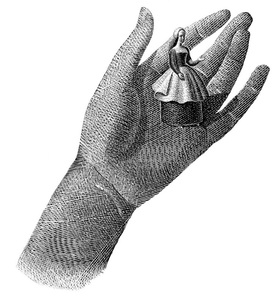
PictureImage by Alenka Sottler
There was a woman who had been married for many years, but despite all her wishes and prayers and fertility remedies, she could not have children. One day she said, “Oh, if I could have a little girl, I would be so happy! It would be enough even if she was only as big as my pinky finger.”

“WIthin nine months you will be satisfied,” replied a voice that seemed to come out of the roof or down the chimney.

"Who said that?” said the astonished woman. “If it is a genie that brings me such good news, it is blessed.”

But she saw and heard nothing more of the genie. Nine months afterwards she had a little girl. No one had ever seen a baby more beautiful or more minuscule. She was the size of her mother’s pinky fingers, so they called her simply Pinkie Finger, or Ditu Migniulellu; Pinkie or Mignola for short. The midwife was barely out of the bedchamber when the mother looked up and saw four beautiful and powerful fairies standing around her.

The first fairy came forward. "I will make Ditu Migniulellu so beautiful that nowhere in the world could anyone find a more beautiful maiden.”

The second fairy added, “And I give her a singing voice so sweet and so agreeable that everybody else will sing along in admiration."

“But before she sings, she must learn speak,” said another fairy. “So she will speak fluently from this moment forward.”

"Thank you, my lady, thank you," replied the little baby.

But there was one more fairy in the room. The mother turned toward her. “And you, beautiful fairy, what gift do you bring?”

“I will give her nothing yet, but I will come to her aid whenever she needs me.”

The fairies then vanished, leaving the woman alone with her newborn daughter, who began to look around and chatter excitedly.

“You’re so pale, mama! You must be tired.” She noticed the brand new baby clothes, of a size meant for a normal baby, laid out nearby and squealed. “Is that bonnet with pink ribbons for me? Can I wear it?”

“Certainly, my daughter,” said the woman. She tried to place the bonnet, sized for a normal baby girl, on the girl’s head, but Ditu Migniulellu was completely covered up and began to cry and kick.

And as the mother took off the bonnet carefully, she thought to herself, “Why couldn’t the fairies have made her bigger? Oh, why didn’t I ask the fairy to make her a little larger? But she’s less than a day old. I must be calm. In a year or two, surely she’ll be the same size as other children her age.”

But Ditu Migniulellu never grew to normal size. By the time she was sixteen years old, she was still only the size of a finger, although perhaps a larger middle finger. Still everyone called her Mignola, though. Her mother, now widowed and having to work twice as much, began to resent her and then to fret a lot about her.

“What can I do with her?” she said. “She can’t garden, she can’t clean, she can’t cook. She’d literally drown to death in a glass of water.”

When it came time to go to market shopping for groceries one day, the mother’s heart was filled with shame and anger, not to mention the pressure. Ditu Migniulellu worked merrily in the garden, trying to pull up weeds as tall as she was, and talking to all of the flowers and the bees. She was so busy talking that she didn’t even hear her mother sneaking up behind her until it was too late. A terracotta flower pot came down over her, closing her in what was to her an unbreakable prison.

“You’ll be safe in there until I get back,” said her mother, and walked away.

Ditu Migniulellu shrieked and pounded her tiny fists against the inside of the pot. “Mama! Let me out at once! You can’t leave me here!”

But her mother was already gone grocery shopping. When the tiny girl realized that she was stuck until her mother returned, she made up her mind to be patient. To entertain herself, she began to sing.

As luck would have it, the king’s and queen's only son happened to be passing by. You just can't keep up a prince cooped up in his room, especially during adolescence. He heard her singing.

“Who could that be?” he asked. “I swear that if it's a woman I will marry her.”

He entered the garden and searched for the singer. The tiny girl continued to sing:

I am a girl
Singing, singing,
I am a girl
Singing, singing,


“What a sweet melody! You sing so well that anyone would be glad to hear it.”

Mignola shook her head and sang,

My stressed-out mother
put me in here;
My stressed-out mother
put me in here.


“Where are you? I’ll die if I don’t find you.”

It is not far
to the beautiful young girl,
It is not far
to the beautiful girl.


"Can it be? There is nothing that will prevent me from finding you.” The prince began to search, but quickly grew frustrated.

Blushing, Mignola continued to sing.

She's at your feet,
The charming girl;
She is at your feet,
The charming girl.


The prince looked down and immediately flushed with anger. "But there’s nothing here but this ugly old plant pot!” With that, he kicked the pot and shattered it into large shards.

Mignola shook off the dust and said politely, “How are you today, good sir?”

“I’m doing quite well; but who was that person who was singing just now? Have you seen her?”

“It was me, Ditu Migniulellu, but you can call me Mignola,” she bragged. “Isn’t my voice clear and pure? It has no equal in this kingdom.”

“It was you singing?” He laughed. “Really, you must be joking.”

“No, no, I do not deceive you. I was bored and I started to sing. Do you really think me such a little nothing? You’ll see quickly that . . .”

“You’re very talkative,” he said. “I don’t wonder that you were bored, trapped in a pot with no one to talk to . . . But sing a little, and we’ll see if you’re right.”

Ditu Migniulellu cleared her throat and began to sing more sweetly than ever.

Yes, it's me
The beautiful girl;
Yes, it's me
The beautiful girl
Who sang in the pot,
who sang in the pot.

“You are right,” said the prince in awe. “I have never heard such a voice as yours.”

“So you see that I did not deceive you!” the girl said triumphantly.

“Oh, hush, you little chatterbox. Tell me, what am I supposed to call you?”

“Like I said before, everyone calls me Ditu Migniulellu, but you can call me Mignola.”

“Well, Ditu Migniulellu, I am the king's and queen's only son, and I gave my word that I would marry you.”

“Then I am to be queen? Thank you, your highness, thank you. I don’t deserve such an honor. You may be certain, my prince, I’ll always—”

“Yes, yes, of course.” So the prince put Mignola in his shirt pocket and went back home. As he walked, the little girl was bounced up and down and squeezed in the folds of cloth, deafened by his pounding heartbeat, and it wasn’t long before she cried out, “I’m suffocating in here! Please take me out!”

So he took her out of his pocket and carried her in his hand the rest of the way to the castle. He took her straight to his mother the Queen and said, “Good Mother, this is the maiden I have chosen as my wife. I would like to celebrate the wedding as soon as possible.”

“What? That little dolly will be the next queen? What can you mean by this, my son? You can’t possibly marry her.”

“To tell you the truth, I’m not happy about it; but I promised her that I would be her husband.”

“Well! Keep her, I suppose, as she will not take up much space.”

The prince did so; but his new little friend was so small that she could not go out to dances or deer hunts or dinners. The prince quickly grew bored with her. On a day which was even slower and duller than any that had gone before, he became exasperated.

“What good is it to be a prince, if I have to be bored like everyone else? I want to give a ball which lasts three days. Then I can meet all the most beautiful marriageable women of this kingdom and beyond.”

In all directions went messengers blowing on trumpets and banging on drums, announcing the feast given by the king and queen to find a bride for their son. On the appointed day, fine gentlemen and charming ladies flooded in great crowds to the feast.

The feast was in the summer residence, on the other side of town from the palace. Richly dressed and prepared for the feast, the prince left the palace and prepared to mount his finest horse. As he was about to leave, he heard a high voice and looked down to see Mignola down at his feet.

“Take me with you. I want to go to the ball, too, please!”

“Leave me alone; what would I do with you at a ball?”

“I’d behave myself. You wouldn’t even know I was there.”

“Go back to your room. I’m in a hurry.”

“No, I want to go with you!”

“Ah! This is how you obey me?” And the prince threatened her with the bridle that he held in his hand. Crying as if her heart would break, the tiny girl ran back into the palace. And the prince galloped away on his horse on his way to the ball.

Mignola reached her room and continued to cry. But her tears were interrupted when a bright light shone from the ceiling of the closet and began to sink slowly towards her. As it neared her, she saw that it was a beautiful fairy, the one who had not given her anything at her birth.

“What is wrong, little one? What do you wish?”

“Oh, my lady, I want to go to the ball more than anything! You can’t imagine how much I want it! If I could just—”

“No more tears, child. I am the fairy who at your birth, was responsible for your happiness. If you want to go to the ball, then you shall go.” With a wave of her wand, the fairy godmother transformed Ditu Migniulellu into the most beautiful maiden-sized girl imaginable. She was tall, slender and dressed in golden silks.

She waved her wand once more, and they were immediately transported into a golden coach drawn by beautiful butterflies. The coach raced off to the ball and they arrived within minutes.

The good fairy said, “If you need me, you have only to clap your hands three times and I will come; you can also make yourself as small as before by saying, ‘Let me again become Ditu Migniulellu.’”

The girl thanked the fairy gratefully and then went into to the ball. The crowd murmured in astonishment at the sight of her and she held her head higher at the sound.

“Ah,” said the prince, already weary of shallow partners, “never has there been a more beautiful creature than this girl. I must make her my wife.”

He approached her with a deep bow. “How beautiful you are! Are you of this kingdom? I have never seen you in court before.”

“That’s not surprising, my lord, for I am not from your country,” said the girl demurely.

“Then what country do you call home? Please, I must know.”

An idea occurred to the girl, and with a smirk in the corner of her mouth she answered, “From the kingdom of Bridle.”

“Listen, the violins are beginning to play. Would you do me the honor of dancing the first waltz with me?”

“It is I who am honored, your highness,” said the girl. But in the middle of the dance, with people all around them, she became flustered and thought, “Let me again become Ditu Migniulellu.”

In a flash she dwindled down to her former size, slipped between the feet of the dancers and disappeared. The astonished prince sought the lovely foreigner everywhere, but without any success. Yet no one had seen her leave. Then Mignola quickly ran to her room where she undressed down to her undershirt, waiting for the prince to return soon.

“How was your evening, my love? Did you enjoy yourself?”

“Leave me in peace!” snarled the prince, exhausted and cranky.

“Why are you angry? Did something bad happen?”

 “Will you soon be finished?”

“Ah! I am very sorry to see you in such a bad mood. Will you say nothing?”

“What do you want me to say, you nasty chatterbox?”

“I see you are sad. I’ll be silent, since you wish it; but I’d willingly give my own blood to bring a little happiness into your eyes. You seem tired. You must be worn out from too much dancing. Tomorrow, I beg you, take care of yourself a little; you could be seriously ill and then I would be—”

“If you say one more word, I’ll strangle you,” hissed the prince. “Go, tell the servants to scour the library. Find every map and book of geography in the palace. I must find the kingdom of Bridle.”

Now Mignola went to wake the queen, who arrived a few moments later laden with books from the royal library.

“I have never heard of such a country as Bridle,” the queen complained, but the lovestruck prince spent the whole night in the library searching every volume from beginning to ending. He questioned the courtiers and scholars but none had ever heard of the kingdom of Bridle.

He fretted all night and all day, but as soon as evening fell and it was time for the second ball, he was merry and forgot the ache in his tired eyes, and threw on his finest robes and ran to his horse. He was on the verge of mounting when Ditu Migniulellu ran up to his feet and the hooves of his steed.

“I beg you,” she cried, “let me see the ball just this once.”

“No, go away!”

The determined Mignola leapt up to catch his stirrup, but he pushed her away so abruptly with his spurs that she went rolling across the floor. She stood in blood and tears and went to her room. Once there, she wiped her eyes dry and clapped three times.

The good fairy appeared. “What troubles you now, child?”

“I want to go to the ball again tonight; please, let me be as tall and as beautiful as I was yesterday.”

The fairy touched her with the wand, and the girl was immediately as tall as before, dressed in a gown the color of roses, crowned with a rose wreath, and holding a rose bouquet. A few moments later she entered the ballroom and found the young prince waiting impatiently. As soon as he saw her, he ran to her.

“I hoped to find you again! Ah, madam, you deceived me last night. Why did you lie? Oh, it’s not important, just tell me the truth, where are you from?”

Laughing, the maiden answered, “From the kingdom of Spurs.”

As they began to dance, the prince went on, “I intend to go to your kingdom and ask your parents for your hand in marriage. In the meantime, please, accept this ring as a token of my love for you.”

She looked down at the touch of something cold, and saw that he had slipped a glittering golden ring onto her left ring finger. A huge diamond, a gemstone the size of a cherry, flamed with light.

She admired it for a moment but then frowned. “But, prince, you can’t propose to me. Aren’t you already married?”

“Well, I did promise to marry Ditu Migniuellu, but we haven’t even celebrated our wedding yet.”

The maiden tilted her head. “And you’ll leave her, after letting her believe that you would marry her?”

He hummed and hawed and spun her around to the music. “It’s not like that. She sings so beautifully, the world’s never heard such a marvel. But you’re the one I love with all my heart. We can keep Ditu Migniulellu around to amuse us from time to time, as a pet. You have never heard such a voice.”

“I have to go,” said the maiden.

“Please don’t leave so soon! Stay at least a little while longer.”

Without replying, she whispered, “Let me be again Ditu Migniulellu.” And she disappeared instantly. Once more she looked around to see what had become of her, but he saw more. He began to despair and then to fume.

A once more tiny Mignola met him once more at the gate. The gem on her ring had now dwindled to poppyseed size. “Have you been happier tonight? You still look so angry. What hap—”

“Shut up! Go! Get me all the books and all the scholars who are in this palace!”

The scholars soon began to arrive, and the prince asked them in the library, “Has no one heard of the Kingdom of the Spurs?”

No one answered; no one was aware of such a country existing. The prince distributed the books and ordered everyone to search. They looked all night, but found not even a single note of any kingdom, county, province, or town known as Spurs or anything of that ilk.

The prince made a plan. “The third night of the ball is tonight. The beautiful girl is sure to return. I’ll surround the ballroom with soldiers. I’ll hold tight to her. She will not escape me again!”

That night, having sent soldiers ahead to guard the gates, he dressed more handsomely than ever and mounted his fiery steed.

At that moment Ditu Migniulellu appeared, in her usual pocket size. “Twice now you have refused me. This is the last night of the ball. I will ask one last time—take me to the ballroom. Show me this one kindness.”

“I have no time for you,” he said. “If I’m late, I’ll miss the beautiful stranger.”

She protested loudly. In his impatience, the prince lashed out at her, “I’m sick of your talking! Go!” He struck her with his riding whip in his haste and then galloped out of the courtyard.

He was not there to watch Mignola jump up and run to her room without crying at all, and of course he could not know how she closed herself in her room and clapped her hands three times.

For the third time, the good fairy appeared. “You still wish to go to the ball?”

“Yes, my good fairy.” The girl instantly became once more a tall and beautiful young lady, dressed in a rich cobalt blue gown with a diamond necklace and a matching diamond belt.

“Never will the world see anyone as beautiful as you are,” said the fairy. “Now hurry quickly to the ball. Everyone is expecting you.”

Shortly afterwards, Ditu Migniulellu entered the ballroom to general admiration. Her royal suitor was at the door to meet her.

Here you are,” he said. “You’re late this evening. But please tell me, why did you mislead me? Why did you run away from me? Why did you not tell me your true homeland?”

“The Kingdom of Whiplash,” she said. “I am from the kingdom of Whiplash. I was just teasing you before.”

“Dare I believe it? You've already deceived me twice . . . But what happiness! You’re wearing the ring I gave you yesterday? Thank you, thank you so much!”

They danced for one hour before the maiden vanished. The prince searched for her on all sides. When he asked the soldiers who guarded the gates, they had noticed nothing, and certainly not a tiny girl running past their feet.
The prince promised a huge reward to anyone who could locate the kingdom of Whiplash. They looked, they asked, they searched, but no one had heard of it. The prince had lost his beloved stranger forever, and fell seriously ill. At first his mother thought he was only sulking, but she found that he was deathly white and refused to eat or drink. The physicians all tried their best, but nothing could rouse him.

Finally Mignola herself arrived. “Let me make a cake for you. If you promise to eat it, I’ll find the woman you seek.”

“Leave me in peace,” said the prince. “All my scholars and all my soldiers have not been able to find her. What can you do?”

“Do not worry about it. Promise me, just eat the cake that I bring you.”

“Fine,” he said. “But I’ll kill you if I find out you’re trying to play a trick on me.”

Ditu Migniulellu asked for flour and water and sugar, and then fashioned a beautiful little brioche that she baked in the ashes. But before she baked it, she carefully wrapped the prince’s diamond ring, now grown with fairy magic to normal size (with the cherry-sized diamond) inside. When all was ready, the girl sent a servant to deliver the cake, and then she went to her room. The prince began to eat eagerly. When he had reached the middle, he clutched his throat, face turning blue. A vigorous pat on the back and a coughing fit later, he brought up and found the ring, which he quickly recognized. He began to yell out, “Mother! Mother!”

The queen thought that he must have been poisoned, and ran to strike Ditu Migniulellu. “Do you hear? My son is delirious. What did you do to him?”

“I didn’t do anything. Let me be!”

“Mother, Mother!” the prince continued to shout.

“There, there; I’m coming right away. "And the queen ran to see her child, whom she found so joyful he was completely well again and was practically dancing.

“Look, I have found the ring that I gave to the beautiful stranger. She must be somewhere in the palace. Give orders to search everywhere!”

But just then, in a flash, Mignola was transformed by the fairy and stood before the prince, tall as a normal maiden and beautiful again. She was wondrous to see.

“It is her—what happiness!” the prince exulted, and he fell on his knees before her. “I beg you, my love, do not abandon me again.”

But the maiden frowned. “Then you love me, my dear prince?”

Do I love you!”

“And yet you rejected me many times. You even struck me.”
“I struck you?”
“Yes, you threatened me with your bridle, and then threw me down with your spurs, and finally hit me with the riding whip in your hand.”
“But then . . . you are Ditu Migniulellu!”
At last the maiden smiled. “That’s right, I am she. Slightly changed, it is true, but I don’t think that size will displease you.”
“And you sing as well as ever?”
“Yes, I still sing well.”

Imagine the joy of the prince to have a bride so beautiful, so clever, and so accomplished. That very same day, they celebrated their wedding and invited all the people of the neighbouring towns.
But as for me, I arrived too late and had to sit under the table, where I received only the scraps. What did you do that day?

Sources

Les contes populaires de l'île de Corse by Jean-Baptiste Frédéric Ortoli, published 1881. Retold by Marie Ortoli, d’Olmiccia-di-Tallano.

The Mother and Daughter Who Worshipped the Sun

THE MOTHER AND DAUGHTER WHO WORSHIPPED THE SUN


Once upon a time somewhere in the east there lived a mother and a daughter who worshipped the Sun. Though they were very dirt-poor they never forgot to honour the Sun, giving everything they earned to it except two rice cakes, one of which the mother ate, while the other was the daughter's share,–every day one cake apiece; that was all.
Now it so happened that one day, when the mother was out at work, the daughter grew hungry, and ate her cake before dinner-time. Just as she had finished it a wandering priest came by, and begged for some bread, but there was none in the house save the mother's cake. So the daughter broke off half of it and gave it to the priest in the name of the Sun.
By and by the mother returned, very hungry herself, to dinner, and, lo and behold! there was only half a cake in the house.
'Where is the remainder of the bread?' she asked.
'I ate my share, because I was starving,' said the daughter, 'and just as I finished, a priest came a-begging, so I was obliged to give him half your cake.'
'A pretty story!' quoth the mother, in a rage. 'It is easy to be pious with other people's property! How am I to know you had eaten your cake first? I believe you gave mine in order to save your own!'
In vain the daughter protested that she really had finished her cake before the priest came a-begging,–in vain she promised to give the mother half her share on the morrow,–in vain she pleaded for forgiveness for the sake of the Sun, in whose honour she had given alms. Words were of no avail; the mother sternly bade her go about her business, saying, 'I will have no gluttons, who grudge their own meal to the great Sun, in my house!'
So the daughter wandered away homeless into the wilds, sobbing bitterly. When she had travelled a long long way, she became so tired that she could walk no longer; therefore she climbed into a big tall tree, in order to be secure from wild beasts, and rested amongst the branches.
After a time a handsome young prince, who had been chasing deer in the forest, came to the big tree, and, allured by its tempting shade, lay down to sleep away his fatigues. Now, as he lay there, with his face turned to the sky, he looked so beautiful that the daughter could not choose but keep her eyes upon him, and so the tears which still flowed from them like a summer shower dropped soft and warm upon the young man's face, waking him with a start. Thinking it was raining, he rose to look at the sky, and see whence this sudden storm had come; but far and near not a cloud was to be seen. Still, when he returned to his sleeping place, the drops fell faster than before, and one of them upon his lip tasted salt as tears. So he swung himself into the tree, to see whence the salt rain came, and, lo and behold! a beauteous maiden sat in the tree, sobbing.
'Whence come you, fair stranger?' said he; and she, with tears, told him she was homeless, houseless, motherless. Then he fell in love with her sweet face and soft words; so he asked her to be his bride, and she went with him to the palace, her heart full of gratitude to the Sun, who had sent her such good luck.
Everything she could desire was hers; only when the other women talked of their homes and their mothers she held her tongue, for she was ashamed of hers.
Every one thought she must be some great princess, she was so lovely and magnificent, but in her heart of hearts she knew she was nothing of the kind; so every day she prayed to the Sun that her mother might not find her out.
But one day, when she was sitting alone in her beautiful palace, her mother appeared, ragged and dirt-poor as ever. She had heard of her daughter's good fortune, and had come to share it.
'And you shall share it,' pleaded her daughter; 'I will give you back far more than I ever took from you, if only you will go away and not disgrace me before my prince.'
'Ungrateful creature!' stormed the mother, 'do you forget how it was through my act that your good fortune came to you? If I had not sent you into the world, where would you have found so fine a husband?'
'I might have starved!' wept the daughter; 'and now you come to destroy me again. O great Sun, help me now!'
Just then the prince came to the door, and the poor daughter was ready to die of shame and vexation; but when she turned to where her mother had sat, there was nothing to be seen but a golden chair, the like of which had never been seen on earth before.
'My princess,' asked the prince, astonished, 'whence comes that golden chair?'
'From my mother's house,' replied the daughter, full of gratitude to the great Sun, who had saved her from disgrace.
'Nay! if there are such wondrous things to be seen in your mother's house,' quoth the prince gaily, 'I must needs go and see it. Tomorrow we will set out on our journey, and you shall show me all it contains.'
In vain the daughter put forward one pretext and another: the prince's curiosity had been aroused by the sight of the marvellous golden chair, and he was not to be gainsaid.
Then the daughter cried once more to the Sun, in her distress, saying, 'O gracious Sun, help me now!'
But no answer came, and with a heavy heart she set out next day to show the prince her mother's house. A goodly procession they made, with horsemen and footmen clothed in royal liveries surrounding the bride's palanquin, where sat the daughter, her heart sinking at every step.
And when they came within sight of where her mother's hut used to stand, lo! on the horizon showed a shining, flaming golden palace, that glittered and glanced like solid sunshine. Within and without all was gold,–golden servants and a golden mother!
There they stopped, admiring the countless marvels of the Sun palace, for three days, and when the third was completed, the prince, more enamoured of his bride than ever, set his face homewards; but when he came to the spot where he had first seen the glittering golden palace from afar, he thought he would just take one look more at the wondrous sight, and, lo! there was nothing to be seen save a low thatched hovel!
Then he turned to his bride, full of wrath, and said, 'You are a wicked witch, and have deceived me by your detestable arts! Confess, if you would not have me strike you dead!'
But the daughter fell on her knees, saying, 'My gracious prince, I have done nothing! I am but a poor homeless girl. It was the Sun that did it.'
Then she told the whole story from beginning to ending, and the prince was so well satisfied that from that day he too worshipped the Sun.


And here's a sunflower mum with her little seedlings!