Mostrando entradas con la etiqueta comparisons. Mostrar todas las entradas

lunes, 7 de octubre de 2019

REVIEW - THE RESTLESS GIRLS


After their mother, the dashing, adventurous Queen Laurelia of Kalia dies in a freak accident, her 12 daughters are imprisoned in their black-draped bedroom by a bereaved King Alberto, who confiscates all of their distractions. For the twelve princesses, the Queen's demise is a disaster beyond losing a mother; she was the one to encourage all of them to follow their passions. Their father, King Alberto, cannot bear the idea of the princesses ever being in danger, and decides his daughters must be kept safe at all costs. Those costs include their lessons, their possessions and, most importantly, their freedom.
Alberto rules a kingdom in mourning, where females are not valued. After his wife’s untimely death and, now that Laurelia isn’t around to manage their education, having been raised in an all-male environment and now even more brooding with sorrow for his lost lenore, Alberto simply doesn’t know what to do with his daughters. The 12 princesses, all with distinct personalities and gifts (unlike in the original fairy tale of The Twelve Dancing Princesses, of which this story is a retelling, where they were all interchangeable paper cutouts) discover a spiral stairway in the wall, down to a strange colourful forest underworld where the princesses find the tree palace, and within, anthropomorphic animals and a magical party.
Every night, the princesses return to the underworld palace, where they dance to jazz and eat glistening pyramids of doughnuts, pavlovas, and roast chickens. Yet, every day, when they return home to far more austere halls on the surface, they have danced so much that their shoes are worn through. The King is determined to find out what the princesses are doing, but what will happen when he does?
On their side, the Restless Girls have one special possession in common that their high father can't wrest from them: THE POWER OF IMAGINATION. And so, with little but wits and ingenuity to rely on, a dozen royal sisters begin their fight to be allowed to LIVE.
Jessie Burton’s first book for children is a wonderful, magic-realist feminist fantasy of which there are translations into Italian and French (sadly, not into Spanish), perfectly balanced with the soft magic of Angela Barrett’s illustrations. It’s particularly delightful to see 12 dark-skinned princesses depicted, representing girls that are dynamic, well differentiated, and invested in the action of the story.


The first thing that called my attention to this retelling, aside from the race-lift, was the Roaring 20s or interbellum setting - now, other 12DP retellings/adaptations have chosen the same time period for a backdrop as well, but generally these are set in the real-life US (due to the whole prohibition and mafia factor); while the kingdom of Kalia, where The Restless Girls is set, is a Latina/Caribbean counterpart culture full of luscious flora, brightly-coloured façades and fashion, and interracial relationships (the titular heroines are mixed-race: Afro-descendants on their mother's side and of Spanish descent on their father's). Outside Princess and the Frog (in real-life Louisiana) and Elena of Avalor (in another Caribbean counterpart culture), I know no other fairytales with such an interbellum post-colonial setting. And the result is fresh-air-revolutionary.

The late Queen and the overprotective King, and the palace above in mourning to contrast with a vibrant underworld, are remarkable similarities with other 12DP adaptations. For instance, the doll-toyetic Mainframe version of 2006 The 12 Dancing Princesses, an animated feature with an 18th-century setting, which also had an ambitious governess micromanaging the sisters' lives in a way that makes Fräulein Rottenmeyer look like a 60s flowerchild... while tampering with the widower's drink little by little (I always yelled across the fourth wall to Randolf that he should stop taking afternoon tea)... The suitor was here the royal shoemaker (a single attractive 20sth, notch), and there was an outright badass climax with the older sisters fighting off mook guards while the youngest of them all, blond toddler Lacie, put a phial of water from the underworld lake to Randolf's lips and saved his life in extremis!! The girls had previously discovered that the lake had healing properties, exactly what they needed to set everything right (PS: the themes of this sibling batch were birthstones and flowers). Similarly, generally the Prohibition-setting historical fiction retellings of 12DP feature the same austerity and discipline above the surface and the same overprotective-parent catalysts.

Says the author herself:
"I wanted The Restless Girls to retain the unbridled joy of the original, because what had held firm for me over the gap of 30 years was the sisters' ingenuity, style and energy - and the power of a secret that nourished them all.
I wanted to build on those irresistible ingredients, to write a tale fit for a modern child. I wanted humour and resistance - vital qualities in navigating the difficult, confusing world in which we live.
My princesses are assertive, but there is more than a dollop of kindness here. Smart mouths and smart thinking are rewarded, but so are collaboration, thoughtfulness, and heart. Every princess has a name, a life, a world inside her own imagination. There's also a peacock maître d', a motor car, an aeroplane, and a lot of elderflower fizz!
I knew those girls were restless in the first place for a reason, because once upon a time, I was like them, too. It's their story: not the king's, not the suitor's. They still go dancing - every night! - except no young girl swirling in the lights will be punished for her joy.
That's some feeling, let me tell you. Put simply: it feels right."


Due to the nature of the ensemble cast and the need to flesh each character out to distinguish them from one another (what Save the Cat calls giving them "a limp and an eyepatch"), the sister teams in 12DP retellings often have a theme - zodiac, flower, and birthstone themes being extremely popular, while Vita Murrow's "Star and the 12 Dancers" had spices (and the first co-ed/equal-opportunity batch of royal siblings!), the titular character's full name being Star Anise... -- In feministically girl-power-themed The Restless Girls (even more feministic and girl-power-themed than the 2006 animated film!), the theme that unites and diversifies the ensemble cast is pastimes or passions, so this far wider diversity gives one an even more ample berth to find someone to identify themselves with.
My favourites among this dozen sisters are and were, of course, Bellina, who taught herself five languages; and Flora, always reading a book, a newspaper, or the side of a biscuit box (italics quotes straight from their character establishment in Chapter One). Of course I spent the whole novel following the character arcs of, and rooting for, the polyglot and the reader (whose character establishment reminds me of Cervantes, who even read "scraps of paper he found on the streets!") in this sibling ensemble for obvious reasons.

In the where-are-they-now epilogue at the end of the final Chapter Eight, we do see Bellina in foreign service; to quote: Bellina is chief of foreign affairs, and since her appointment Kalia’s wars with neighbouring kingdoms have ended. (Just like Ling in the Waterfire Saga; foreign service happens to be every polyglot's career dream, but not all of us are that lucky as our fictional counterparts with that quirk, so we have to dream on); and Flora... (jot down what Flora does at the end -- librarian, minister of culture, something literary non-writer? The youngest sister Agnes was the one with writing as a hobby, and she is credited with becoming a novelist, her first work being of course her own rendition of this story). Let's say I nailed it when guessing "librarian;" - Flora is the palace librarian, and people flock from miles around to come and find a cosy nook, where they while away the hours with her excellent choice of books.


The happier life when Mum was alive (above) and the boating across an underworld lake, something like the Styx (below).

The austere, Dickensian bedchamber in mourning has an orphanage atmosphere; the only note of colour in this barren sepia-tone hall is the portrait of the late Queen, who seems to be encouraging her daughters from the afterlife.

Firstborn, future Queen, and de facto leader Frida (centre stage in the previous illustration, the one in the bedchamber) rebels by tearing away a mourning curtain to let the light in.


The descent down the spiral stairs into the underworld

A long line of suitors, all single males of different age and rank, queue before the palace gate; not an unfamiliar scene in any engagement challenge tale. Yet this dozen damsels need no hero to save their days!


Frida finally calls the old man out and has him abdicate the throne; time for a new, younger ruler to take over -- and like mother like daughter (notice also her masculine, casual adventurer's outfit)!!


Last of all, the icing on this cake are definitely the lavish illustrations by Angela Barrett; I have already been wowed by the pastels and the textures of her lavish B&tB and Snow Queen, both of them set in Victorian European kingdoms - so here are a few samples of her takes on those two tales to see what I mean:
Cover art for Beauty and the Beast: what a beastly bush is lurking behind our shero!


The Master of the castle captures Mr. Fortune, a businessman home from town, who had stopped to pick a red rose from the garden for his daughter. You know how this will go down...


Belle Fortune has a heart-to-heart with her catlike beast in the royal gardens.


The palace grounds have it all that Belle could wish: libraries, aviaries, music rooms, English gardens, French gardens, a lake...

She returns to help him out in his hour of need...

Kissing the disenchanted prince under the roses.


https://kinita.livejournal.com/14940.html

And as we have said before her Snow Queen is as evocative as her B&tB:

Cover image of the Snow Queen kissing Kai.


Gerda and Kai in spring in their aerial bower.

The Snow Queen peers into Kai's room.

Gerda and Kai sledding in winter.


Kai spots the Snow Queen's troika

 The Queen whisks Kai away.

 The orchard witch finds Gerda.

 Gerda among the flowers in the springtime garden.


 Gerda and Mr. Crow

 Entering the palace gardens, then moving up the stairs.


 The robbers' ruin

 Gerda wins the trust of the robber maiden. Note the lesbian overtones!


 Riding across the tundra

 Gerda and the wise woman


 Gerda summons warriors with her breathing, to combat the Queen's guards


 Kai and the Snow Queen in her throne room

The Queen leaves her ice fortress

 Gerda warms Kai's heart

 Reunion with the robber maiden in the woods

Back home - physically adults, yet children at heart

viernes, 20 de septiembre de 2019

TSQ-IV ECHOES IN FROZEN


A Prince and Princess — Part I


In the fourth “The Snow Queen” story, “The Prince and the Princess,” there is told a story about a clever princess who wanted to get married as soon as possible: “And she made up her mind to marry as soon as she could find the sort of husband who could give a good answer when anyone spoke to him, instead of one of those fellows who merely stand around looking impressive, for that is so tiresome.”
The explanation of the princess and her willingness to be married is kind of reminiscent of Anna and Hans’s relationship. Anna was so quick to agree to marry someone who understood her quirkiness. But it is a bit of a stretch since there are no real romantic relationships in the original fairytale. It may be for the best since the whole Hans thing didn’t really work out for Anna anyway. However, that also means no Kristoff in the original fairytale. Say it ain’t so!


A Prince and Princess — Part II

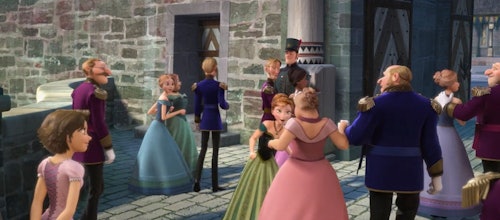
... the princess mentioned in the previous slide has found her prince .... Turns out it’s not him, but the princess and prince are very kind to ... and take care of .... Wouldn’t it be cool if this kind princess and prince were the inspiration for the Rapunzel and Eugene "Flynn Ryder" cameo in Frozen, eh? Eh?


Images: Walt Disney Pictures


REMARK BY DIAMOND GRANT
In an interesting parallel between movie and tale, in the fourth section of The Snow Queen, ... is told a story of marriage ..., about a princess who was fixated on getting hitched.


CRITIQUE BY Glory of Frozen vs. TSQ-IV

The different adventures (in TSQ) ... all represent a progression of love, of possession. ... the Princess who thought love was choosing a man who was handsome and talked well, ...

Anna (in Frozen) meets many people on her adventure and on the journey to locate her sibling, all of them representing love in its different forms: Hans, like the Princess of the tale, is almost shallow in his view of love, "true love" found so quickly and from nothing more than a day's meeting and a quick-witted word. 


FROZEN VS TS IN DISNEYFIED OR DISNEYTRIED, ON THE OTHER HAND, SEES KRISTOFF AS THE PRINCE (INSERT REMARK HERE):


martes, 11 de diciembre de 2018

L’Otello di Verdi e Boito

Giuseppe Pucci[1]
L’Otello di Verdi e Boito


Abstract
Shakespeare’s Othello and Verdi’s and Boito’s Otello are compared, stressing differences in structure, lexical choices and characters’ psychology. The aesthetic achievements of its score and libretto make the opera as great a masterpiece as the tragedy.

Keywords
Verdi, Boito, Otello


Il presente contributo è dedicato all’unica riscrittura di un’opera di Shakespeare che viene considerata un capolavoro di grandezza pari – qualcuno dice anche superiore – all’originale: l’Otello di Verdi e Boito[2]. Poche volte si sentirà dire “il Trovatore di Verdi e Cammarano”, o “l’Aida di Verdi e Ghislanzoni”; ma è normale dire “l’Otello di Verdi e Boito”, et pour cause.
Verdi ebbe sempre una vera e propria venerazione per Shakespeare. Gli si accostò una prima volta, poco più che trentenne, con il Macbeth (1847), ma il risultato non lo soddisfece molto, anche per la debolezza del libretto, firmato da Francesco Maria Piave. Per circa cinquant’anni accarezzò l’idea di comporre un Re Lear, ma non ne fece mai nulla. Probabilmente non avrebbe mai scritto neanche l’Otello, che era l’altra grande tragedia che lo appassionava, se non ci fosse stata una specie di congiura tra l’editore, Giulio Ricordi, la moglie, Giuseppina Strepponi, e altri amici per convincerlo a collaborare con Arrigo Boito, un intellettuale colto e sensibile, l’unico – così gli assicuravano – che gli avrebbe fornito un libretto adeguato.
Il primo abbozzo del libretto Verdi lo ebbe fra le mani nel 1879, ma il “progetto Cioccolatte”, come Verdi lo chiamava scherzosamente, ebbe una gestazione lunghissima[3]: l’opera andò in scena solo otto anni dopo, nel 1887, quando Verdi di anni ne aveva già settantaquattro. Agli inizi Verdi diffidava di quell’ex scapigliato che fino a pochi anni prima era stato un acceso sostenitore di Wagner contro la vecchia scuo­la italiana – quindi anche contro di lui – ma poi lo apprezzò, e – cosa abbastanza inedita – lo rispettò come collaboratore.
Dei precedenti librettisti di Verdi si è detto a ragione che scrivevano sotto dettatura. In effetti l’epistolario ci fa conoscere un Verdi che esercita un controllo pressoché dittatoriale sul taglio delle scene, sui versi e talvolta sulle singole parole. Con Boito fu diverso. Ci provò anche con lui, naturalmente, ma quando Boito tenne duro, con solidi argomenti, fu Verdi a farsi convincere. Per esempio, a un certo momento Verdi propose, per movimentare l’azione, di introdurre al termine del terzo atto un attacco dei Turchi di cui non c’è traccia in Shakespeare. Boito gli fece notare che il dramma di Otello si svolge principalmente nella sua psiche e che chiamare in causa un evento esterno avrebbe rovinato tutta l’atmosfera. In questo caso aveva sicuramente ragione lui, però, nonostante la sua cultura superiore, Boito non sottovalutò mai l’intelligenza e l’intuito di Verdi. Lavorarono bene insieme – per ben otto anni – perché Boito capiva di musica (scrisse, come si sa, due opere, Mefistofele e Nerone) e Verdi capiva di letteratura.
Grande apertura Verdi dimostrò anche sul piano musicale. Nel­l’O­tel­lo ci sono molte novità che in tanti all’epoca considerarono di derivazione wagneriana. Non è proprio così, naturalmente, ma è vero che non ci sono più i numeri chiusi (recitativo, aria e cabaletta) e c’è invece un flusso musicale continuo. Ci sono anche altre cose eterodosse: manca l’ouverture, e l’eroe non si presenta col solito pezzo di bravura ma con una mini cavatina di dodici battute (“Esultate, l’orgoglio musulmano sepolto è in mar”) che è sufficiente a comunicare da subito il valore e l’autorevolezza del personaggio. Ma vediamo in concreto come Verdi e Boito hanno rifatto l’Otello.
Per ovvi motivi il melodramma deve riassumere, concentrare l’a­zio­ne drammatica. Boito ridusse i 3500 versi di Shakespeare a 700. A fare le spese di questo sfrondamento fu soprattutto il primo atto, quello che si svolge a Venezia, che fu completamente tagliato. Ma Boito ne recuperò intelligentemente alcune parti trasponendole nel suo primo atto, che corrisponde al secondo di Shakespeare. Il racconto che in Shakespeare Otello fa al Senato di come ha conquistato l’amore di Desdemona torna nel primo duetto tra Otello e Desdemona (“Già nella notte densa”) semplicemente con la sostituzione di tu a she: “E tu m’amavi per le mie sventure ed io t’amavo per la tua pietà”. Parole che Desdemona fa sue, specularmente, nella commozione del ricordo: “Ed io t’amavo per le tue sventure e tu m’amavi per la mia pietà”.
Molto più efficaci risultano nella raccolta intimità di questo duetto – giustamente definito “una delle pagine più poetiche dell’Ottocento italiano” (cfr. Pederzoli 2007-2008: 53) – le parole che in Shakespeare Otello e Desdemona si scambiano in pubblico ritrovandosi a Cipro: “Venga la morte! e mi colga nel­l’estasi / di quest’amplesso / il momento supremo! / Tale è il gaudio dell’anima che temo, / temo che più non mi sarà concesso / que­st’at­timo divino / nell’ignoto avvenir del mio destino”. E si potrebbero fare tanti altri esempi di accorti spostamenti che valorizzano al meglio il testo originale.
Ma veniamo alla caratterizzazione dei personaggi[4]. Cominciamo da Jago, perché tanto per Boito quanto per Verdi era Jago il personaggio centrale, al punto che inizialmente pensavano di intitolare l’opera “Jago”. Verdi in particolare fu a lungo alla ricerca di un volto per il suo Jago, e chiese a questo proposito aiuto all’amico pittore Domenico Morelli, esponente di spicco della scuola napoletana. Questi gli rispose che lo vedeva “rigorosamente vestito di nero, per rispecchiare il suo animo malvagio, ma con un aspetto in contrasto con la sua natura, da uomo onesto, quale è ritenuto da Otello fin dall’inizio, quando gli rivolge la parola chiamandolo ‘Onesto Jago’”. Verdi accolse entusiasticamente il suggerimento: “Bene, benone, benissimo, benississssimo [sic]! Jago con la faccia da galantuomo! Hai col­pi­to! Oh lo sapevo bene: ne ero sicuro”.
Lo Jago che Verdi vuole sulla scena è qualcuno al di sopra di ogni sospetto, una figura odiosa non avrebbe potuto ingannare tutti come fa lui. Del resto già negli Hecatommithi di Giraldi Cinzio, la fonte del­l’O­telloshakespeariano, il personaggio che corrisponde a Jago è descritto come “un alfiere di bellissima presenza”, seppure “della più scel­lerata natura”.
Ma chi è davvero Jago? In Shakespeare lui stesso si presenta dicendo: “I am not what I am”, frase che rovescia con tutta evidenza il biblico “Io sono colui che sono” senza per questo darci una risposta chiara. François-Victor Hugo (figlio del grande Victor), nella prefazione alla propria traduzione dell’Otello shakespeariano, che Verdi e Boito ben conoscevano, scrive di Jago che “moralement il a l’hypocrisie de Tartufe; intellectuellement il a le scepticisme de Don Juan; il ne lui manque que le pouvoir surnaturel pour être Méphistophélès” (Hugo 1860). Verdi e Βoito lo vedono allo stesso modo: un uomo e non un essere soprannaturale.
Nell’ultimo atto della tragedia di Shakespeare Otello gli guarda i piedi, ma non vede il piede caprino del demonio. Essendo puramente umana, la malvagità di Jago è ancora più potente, tanto più che essa si nasconde dietro la simulazione, anche se occasionalmente viene fuori, per esempio quando parlando con Roderigo dice “ed io rimango di sua Moresca signoria l’alfiere!”: frase apparentemente autocommiseratoria, ma di cui Verdi rende tutta la minacciosità con un trillo che svela un sarcasmo rabbioso.
Subito dopo Boito inserisce la battuta: “Ma, come è ver che Roderigo sei, / così è pur vero che se il Moro io fossi, / vedermi non vorrei d’at­torno un Jago”. La battuta deriva da un verso shakespeariano molto controverso: “were I the Moor, I would not be Jago” (alla lettera: “se io fossi il Moro, non sarei Jago”).
Dato che non possiamo evidentemente liquidarlo come un truismo, ci si è chiesto cosa volesse dire in realtà Shakespeare. Serpieri lo legge in chiave psicanalitica, come l’espressione di una complessa figura di sdoppiamento di personalità, con Jago e Otello intrappolati in una dialettica servo-padrone. Boito per cavarsi d’impaccio prese di peso la traduzione di Carlo Rusconi (Rusconi 1828), una delle poche italiane all’epoca disponibili.
Ma questo è proprio uno di quei casi in cui Verdi ebbe da ridire, anzi, sollevò addirittura una questione filologica: “Caro Boito, sui tre versi fatti ultimamente ho consultato l’originale... For, sir, were I the Moor I would not be Jago’. ‘Perché, Signor, fossi io il Moro io vorrei non esser Jago’. Così pure Hugo dice ‘Si j’étais le More je ne voudrais pas être Jago’”. Anche nella traduzione di Maffei: “Quand’io potessi trasformarmi nel Moro essere un Jago già non vorrei”. Insomma, il contadino di Sant’Agata fa le pulci al grande letterato. Ma Boito non demorde: “Caro Maestro, quella che sto per scrivere pare una bestemmia: Preferisco la frase di Rusconi. Esprime maggiori cose che non esprima il testo. Per noi che abbiamo dovuto rinunciare alle mirabili scene che hanno luogo a Venezia, dove sono accennati questi sentimenti, la frase del Rusconi torna utilissima”. Verdi capì e abbozzò.
Nell’opera mancano in effetti alcune delle motivazioni dell’agire di Jago che in Shakespeare sono esplicitate: per esempio il sospetto che il Moro sia andato a letto con sua moglie Emilia, o anche il desiderio che egli stesso prova nei confronti di Desdemona. Questa è una precisa scelta di Boito, che la motiva così: “Otello ha eletto capitano Cassio in vece sua. Ma questa causa gli basta; se fosse più grave la scelleraggine sarebbe minore”.
Sul machiavellismo dello Jago di Shakespeare molto si è scritto. Jago è certamente un grande “tecnico” della parola, ma per Boito importante non è tanto quello che dice quanto quello che tace. La sua arma più micidiale, quella che porta Otello alla rovina, è anche la più subdola: la reticenza (Bini 2006). Otello è un uomo di azione, uno abituato a esa­mi­nare la situazione e a prendere delle decisioni immediate, d’istinto. Jago, invece, fa in modo che non abbia mai in mano tutti gli elementi, lo tiene in sospeso e lascia che cuocia nel suo brodo. È il non detto che mette in fibrillazione Otello, sono quelle frasi non finite, quelle pause sapienti che destabilizzano Otello, perché in quel vuoto tutto può esistere, anche i mostri che genera il sonno della sua ragione. Quando nel terzo atto Jago inscena ad uso e consumo di Otello la recita con Cassio, facendogli credere che parli di Desdemona mentre in realtà parla di Bianca, la sua amante, anche lì Otello soffre di più per quello che non arriva a sentire: “Le parole non odo… o lasso!” (frase che non c’è in Shakespeare, ma che è appunto coerente con la concezione di Boito).
Dosando accortamente mezze verità e insinuazioni, Jago arriva a mettere Otello in uno stato di coscienza alterato, quasi a drogarlo. Shakespeare gli fa dire: “My medicine, work!”. Boito trasforma la battuta in “II mio velen lavora”, mutando l’imperativo in una compiaciuta constatazione. La resa di “medicine” con “veleno” è accettabile, ma il Grande Vecchio, quando in una lettera a Morelli si era riferito a questo passo, aveva utilizzato la traduzione di Rusconi “opera, farmaco mio”, che è più fedele, perché si rifà al duplice significato di pharmakon, medicamento e veleno. Ed è un veleno che viene somministrato attraverso l’orecchio, pro­prio come nell’Amleto.
La climax della manipolazione di Otello si ha nel racconto menzognero del sogno di Cassio. Qui Jago diventa, oltre che regista, attore di una tragedia che lui stesso ha creato. Verdi ne fa genialmente una sorta di dolce ninnananna, con dei pianissimo e dei crescendo che richiamano i movimenti ondeggianti di un serpente che sta ipnotizzando la sua vittima.
Però musicalmente e drammaticamente il pezzo forte di Jago è il grande assolo del secondo atto, il famoso Credo. Come tutti sanno, è questa un’invenzione di Boito. In Shakespeare c’è solo, alla fine del primo atto, una generica glorificazione da parte di Jago della “divinity of hell”. Qualche critico ha visto un’incongruenza tra lo Jago ambiguo e sfuggente del resto dell’opera e questo del Credo che professa con iattanza una fede apertamente blasfema e nichilistica. Ma il senso dell’operazione di Boito è proprio questo: dare una motivazione non contingente alle azioni del personaggio, trasformarlo da piccolo gaglioffo mosso da motivi meschini a titano del male, paradigma di una nequizia quintessenziale.
Si noti a questo proposito che Boito espunge tutte le battute grevi, i riferimenti sessuali volgari che invece Shakespeare mette con dovizia in bocca a Jago. Qui il personaggio è troppo seriamente votato al male per indulgere a queste frivolezze.
A differenza del Credo cattolico, che è universale, questo è il Credo di Jago, vale a dire di uno spirito infelice che si è condannato da solo a vivere vilmente nel vile universo di cui si sente parte.
Al Credo di Jago fa da contraltare un altro felice innesto di Boito, l’A­ve Maria di Desdemona, nel quarto atto. Desdemona è l’antitesi di Jago. Quegli è l’emblema del male, questa dell’innocenza. Ciò è in buona misura conseguenza dalla soppressione del primo atto della tragedia, per cui nell’opera nulla veniamo a sapere di quello che lì si diceva, cioè del coraggio col quale la fanciulla a Venezia ha strappato il consenso a un matrimonio interrazziale, o della spregiudicatezza con cui sa rivendicare il diritto al piacere nel rapporto coniugale. Da donna indipendente e volitiva passa al ruolo di vittima sacrificale, tutta pietà e bontà, che prima prega la Madonna “pel possente, mi­sero anch’esso”, e poi addirittura accusa se stessa della propria mor­te pur di discolpare il marito. Insomma, diventa un po’ un “santino”, sulla falsariga dell’interpretazione che del personaggio aveva dato Schlegel (Schlegel 1809). Ma deve essere così. Desdemona, in fondo, non è che un miraggio di Otello, quel “miraggio – come dice lui stesso – dov’io, giulivo, l’ani­ma acqueto”.
Anche per il personaggio di Otello il melodramma ha imposto delle semplificazioni. Per dirne una, in Shakespeare lo vediamo addirittura accusato di avere circuito Desdemona con pratiche magiche, tanto appariva contro natura l’amore di una bianca per un moro. Nell’opera invece il tema razziale non ha praticamente rilevanza (Zanon 2007).
Nella tragedia egli rivela maggiormente le sue doti di condottiero e di uomo di stato, nell’opera è sostanzialmente un ingenuo che si lascia facilmente trasportare dalle passioni. E Boito e Verdi su quelle puntano: sull’amore e la gelosia. Ma puntano anche sul patetismo della catastrophé, del rovesciamento di fortuna dell’eroe. Ciò è evidente non tanto in “Ora e per sempre addio sante memorie” dell’atto secondo, dove Otello fa il suo addio alle armi in presenza di Jago, quanto nel soliloquio “Dio! mi potevi scagliar tutti i mali” dell’atto terzo, dove Boito recupera versi che invece in Shakespeare fanno parte del dialogo tra gli sposi della seconda scena del quarto atto.
Il soliloquio in pianissimo di Verdi esprime magistralmente il senso di spossatezza fisica e spirituale che pervade Otello. L’eroe è come svuo­tato, e parlando di Desdemona dice “Spento è quel sol, quel sorriso, quel raggio / che mi fa vivo”, parole che suonano come una cupa premonizione dell’epilogo della tragedia: morta la moglie, per sua stessa mano, il Moro non può sopravviverle. Il discorso di morte di Otello è un recitativo, estremamente teso, in cui il senso di sconfitta si riassume nella frase “Ecco la fine / del mio cammin... Oh! Gloria! Otello fu”.
E non è un caso che – nell’opera come nella tragedia – la fine della vita sia legata alla fine della gloria. Il tradimento che crede di aver subito significa per il Moro anche la perdita dell’onore, e quindi una diminuzione insopportabile di status. Da questo punto di vista Otello è un eroe tragico al pari dell’Aiace di Sofocle. Se la reputazione viene compromessa, l’essere sociale si sgretola e l’individuo perde il contatto con la realtà, sprofonda nel caos. La caduta, però, non è determinata, come nella tragedia greca, dal Fato o da una colpa (hamartía) che gli dei puniscono. Otello diventa vittima di Jago perché, come dice Agostino Lombardo (Lombardo 1996), l’eroe è cieco di fronte alla realtà, l’eroe non sa leggere il mondo.
Solo pronunciando le sue ultime parole Otello riacquista in Shakespeare la sua lucidità, ritorna compos sui: “Io prima ti ho baciata, poi ti ho uccisa. Altro non mi restava che uccidermi, e morire su un tuo bacio”. Versi indubbiamente belli, ma un po’ algidi. La musica di Verdi invece fa della scena qualcosa di molto più toccante. E lo fa in maniera molto semplice: riprendendo il tema del bacio dal finale del primo atto, quasi a chiudere un percorso circolare che da eros conduce a thanatos. Anche le parole tornano quasi identiche: “Un bacio… un bacio ancora… ah!… un altro bacio…”. Solo che ora il declamato non ha quasi tonalità, e l’ultima sillaba è detta in un rantolo.
È noto quello che ebbe a scrivere George Bernard Shaw: “The truth is that, instead of Otello being an Italian opera written in the style of Shakespeare, Othello is a play written by Shakespeare in the style of Italian opera” (Shaw 1901). Shaw era un uomo straordinariamente intelligente e brillante, ma quella volta io credo che il gusto del paradosso lo abbia tradito. L’Otello di Verdi e Boito è veramente un’opera italiana scritta alla maniera di Shakespeare, se con questo intendiamo la capacità di scolpire personaggi e situazioni memorabili capaci di parlare, ora e sempre, alla nostra testa e al nostro cuore.


Bibliografia

Aldrich-Moodie, J., False fidelity: OthelloOtello, and their critics, “Comparative drama”, n. 28, 3 (1994), pp. 324 -47.
Aycock, R.E., Shakespeare, Boito, and Verdi, “The musical quarterly”, n. 58, 4 (1972), pp. 588-604.
Bini, D., Reticence, a rhetorical strategy in Othello/Otello: Shakespeare, Verdi-Boito, Zeffirelli, “Italica”, n. 83, 2 (2006), pp. 238-55.
Broyles, M.E., Mahaney, W.E., Structure and dramatic tone in Othello and Otello, “Studies in the humanities”, n. 3, 2 (1973), pp. 8-16.
Eösze, L., Otello, dramma di Shakespeare e opera di Verdi, in AA.VV., Il teatro e la musica di Giuseppe Verdi. Atti del III congresso internazionale di studi verdiani, Parma, Istituto di studi verdiani, 1974, pp. 20-6.
Fisher, B.D. (a cura di), Verdi’s Otello, Miami, Opera Journeys Publishing, 2001.
Hauger, G., Othello and Otello, “Music & letters”, n. 50, 1 (1969), pp. 76-85.
Hugo, F.-V., Oeuvres complètes de William Shakespeare, vol. V, 2, Paris, Pagnerre, 1860.
Leggatt, A., Love and faith in Othello and Otello, “University of Toronto quarterly”, n. 81, 4 (2012), pp. 836-49.
Lombardo, A., L’eroe tragico moderno: Faust, Amleto, Otello, Roma, Donzelli, 1996.
Marenco, F., Il doppio mondo di Otello, in Crivelli, R.S., Restivo, G. (a cura di), Inscenare/interpretare Otello, Bologna, Clueb, 2006, pp. 195-210.
Minear, E., Music and the crisis of meaning in Othello, “Studies in English literature, 1500-1900”, n. 49, 2 (2009), pp. 355-70.
Pederzoli, E., Una riscrittura dell’Otello di Boito e Verdi: la ricetta per il “cioccolatte”, Tesi di Laurea, Università di Bologna, a.a. 2007-2008 (https://www.academia.edu/13845958/Una_riscrittura_dellOtello_Boito_e_Verdi_la_ricetta_per_il_Cioccolatte_).
Rodin, K., Verdi’s Faustian Otello, “Interdisciplinary humanities”, n. 30, 2 (2013), pp. 66-80.
Rusbridger, R., Projective identification in Othello and Verdi’s Otello, “International journal of psychoanalysis”, n. 94 (2013), pp. 33-47.
Rusconi, C. (a cura di), Teatro completo di Shakespeare tradotto dall’originale inglese in prosa italiana, vol. I, 1, Padova, Minerva, 1828.
Schlegel, W.A., Corso di letteratura drammatica (1809), tr. it. di G. Gherardini, vol. III, Milano, Giusti, 1841, pp. 86-9.
Serpieri, A., Otello: l’eros negato, Napoli, Liguori, 2003.
Shaw, G.B., A word more about Verdi, “Anglo-Saxon review”, n. 8 (1901), pp. 221-9.
Verdi, G., Boito, A., Carteggio, a cura di M. Medici e M. Conati, Parma, Istituto di studi verdiani, 1978.
Wills, G., Verdi’s Shakespeare: men of the theater, London, Penguin, 2011.
Zanon, T., Il “bianco” e il “nero”. Boito e il libretto per l’Otello di Verdi, in AA.VV., Studi in onore di Pier Vincenzo Mengaldo per i suoi settant’anni, Firenze, Sismel-Edizioni del Galluzzo, 2007, pp. 953-65.


2017 The Author. Open Access published under the terms of the CC-BY-4.0.


[1] pucci@unisi.it.
[2] Tra i molti studi dedicati al confronto tra le due opere si sono tenuti presenti in modo particolare: Hauger 1969, Aycock 1972, Broyles e Mahaney 1973, Eösze 1974, Aldrich-Moodie 1994, Fisher 2001, Minear 2009, Wills 2011, Leggatt 2012. Molto informata e utile la tesi di laurea di E. Pederzoli (Pederzoli 2007-2008).
[3] Ampiamente documentata dal carteggio tra musicista e librettista (cfr. Verdi e Boito 1978).
[4] Oltre alle opere già citate, si vedano al riguardo Marenco 2006, Serpieri 2003, Rodin 2013, Rusbridger 2013.

jueves, 9 de agosto de 2018

LA VACA CEGA / THE BLIND COW (COMPARISON)


“La Vaca Cega”, de Joan Maragall, fue traducida por una servidora en febrero de este año en su blog, con el título “The Blind Cow”:

LA VACA CEGA
THE BLIND COW
Topant de cap en una i altra soca,
avançant d'esma pel camí de l'aigua,
se'n ve la vaca tota sola. És cega.
D'un cop de roc llançat amb massa traça,
el vailet va buidar-li un ull, i en l'altre
se li ha posat un tel: la vaca és cega.
Ve a abeurar-se a la font com ans solia,
mes no amb el ferm posat d'altres vegades
ni amb ses companyes, no; ve tota sola.
Ses companyes, pels cingles, per les comes,
el silenci dels prats i en la ribera,
fan dringar l'esquellot, mentres pasturen
l'herba fresca a l'atzar... Ella cauria.
Topa de morro en l'esmolada pica
i recula afrontada... Però torna,
i baixa el cap a l'aigua, i beu calmosa.
Beu poc, sens gaire set. Després aixeca
al cel, enorme, l'embanyada testa
amb un gran gesto tràgic; parpelleja
damunt les mortes nines i se'n torna
orfe de llum sota del sol que crema,
vacil.lant pels camins inoblidables,
brandant llànguidament la llarga cua.
Now stumbling on this tree-trunk, now on that,
instinctively towards the waterway
ambles a lonely cow: she's wholly blind.
The cowherd lad, throwing too well a rock,
put out her right eye, and a cataract
veils the left one: the cow is wholly blind.
She seeks the cooling fountain, like before,
but not with the resolve of yesteryear,
nor with her friends; no, but all on her own.
Her friends, upon the valleys and the hills,
the meadows and the riverbank, in peace,
ring, as they ruminate fresh grass, their bells,
by chance: if she did so, she would fall down.
She stumbles face-first into the hard pipe
and, wavering, reels back; yet she returns,
lowers her head to drink and drinks, serene.
She merely sips, without much of a thirst,
then raises to the skies the horned head
with a most tragic gesture, as she blinks
with dead eyes, ere away she wends her way,
bereft of light beneath the burning sun,
wavering down a path that knows no end,
listlessly flicking her tail to and fro.

Lo primero que hay que destacar en este caso es el hecho de que el texto meta está en pentámetro yámbico, en blank verse, al estilo de Shakespeare y otros clásicos literarios anglófonos. Es el ritmo intrínseco que posee la lengua inglesa, y el más afín al endecasílabo del original catalán. El pentámetro yámbico es la estructura musical eufónica por naturaleza de la lengua inglesa. A cada idioma le sale un esquema prosódico eufónico diferente (en el caso del español, se trata del octosílabo). “Oh yeah” (yambo) es eufónico en inglés, mientras que “Thank you” (troqueo) no lo es tanto.
Por ende, el que la traducción esté en blank verse nos proporciona un claro ejemplo de opción de la traducción del verso que Holmes denomina forma analógica: la adopción de una forma que, en la tradición de la literatura meta, tenga una función paralela a la de la forma utilizada por el original en su tradición respectiva.
El poema original fue escrito por Joan Maragall en el Pirineo catalán en 1893; la vaca ciega existió en realidad, y tanto ella como el joven vaquero que le sacó el ojo de una pedrada procedían de Sant Joan de les Abadesses (comarca del Ripollés). A una ocurrencia tan mundana como una vaca ciega que bebe agua, la reacción de Maragall le da un aire de tragedia y de fatalidad, llegando a transmitir la fuerza revitalizadora que tiene la compasión.
Sandra Dermark se topó con “La vaca cega” en un libro de Lengua Valenciana de Secundaria: como friki, o geek, trilustre acosada en clase por sus compañeros debido a sus gustos y aficiones, buscando refugio en la literatura y en los estudios. No tardó en ver reflejada su propia situación en la de la vaca distanciada del rebaño. Seis o siete años después, con la mudanza temporal de Castellón a Valencia y el máster, se le vino a la mente la idea de traducir el poema al inglés en pentámetro yámbico, la contraparte inglesa del endecasílabo en las lenguas de la Península Ibérica.
Lo primero que cabe señalar en esta traducción es el léxico empleado en la versión inglesa. Se trata de un léxico en ocasiones más elevado que en el del texto origen: donde la vaca de Maragall “se'n va”, la de la traducción “ambles;” la vaca del texto origen está “vacil·lant” donde la de Dermark está “wavering;” “se'n torna” en el poema catalán donde “she wends her way” en la traducción; y “el ferm posat d'altres vegades” de Maragall se ha anglicizado con maestría y destreza como “the resolve of yesteryear” en el texto meta.
También se han tenido que sacrificar o distorsionar locuciones y metáforas en aras de la métrica, ya por culpa de la cuenta de sílabas (“d'esma” => ”instinctively”), ya de la acentuación de las palabras, siendo la intención de la traductora la de crear, en este caso, un blank verse sin irregularidades (“orfe de llum” => ”bereft of light”).
La versión de Dermark también añade ciertos detalles, aprovechando los yambos libres que le deja en la plantilla del pentámetro el monosilabismo de la lengua inglesa al verter de una lengua románica. Siendo el más sobresaliente que el texto meta explica que fue el ojo izquierdo en el que se le puso una nube, o catarata, a la vaca; y el derecho, el que perdió a causa de una pedrada demasiado certera lanzada por un joven mayoral. Este detalle, añadido debido a las exigencias del pentámetro, se halla ausente en el poema original de Maragall. Nunca sabremos si la vaca ciega real de los Pirineos que inspiró el poema perdió qué ojo por qué causas. Y, teniendo en cuenta que tanto “left” como “right” son monosílabos, también podría haber sido el ojo izquierdo el que le sacó aquella pedrada a la vaca dermarkiana, entonces tuerta; pero tal vez subconscientemente asociando “put out her right eye” con “put out the light”, Dermark encontró la solución más eufónica, eufonía que repite con las fricativas al decir que la catarata “veils her left one.
Otro detalle que merece recalcar es la traducción de “l'embanyada testa” como “the horned head,” que barniza el verso original de Maragall con una brillante capa de intertextualidad, ya que se trata de una alusión al poema de A.E. Housman “Terence, This Is Stupid Stuff:”

The cow, the old cow, she is dead;
It sleeps well, the horned head:
We poor lads, 'tis our turn now
To hear such tunes as killed the cow.

Asociando a la vaca de Maragall con la de Housman, el texto meta la dota, presintiendo su destino, de una nota aún más trágica.
El poema también describe, en ambas versiones, rasgos de un paisaje rural montañoso (de los Pirineos catalanes): laderas, precipicios, colinas falderas (“foothills”), valles, troncos de árboles, además de un riachuelo y una fuente de régimen nival. Es por defecto un paisaje diurno donde hace buen tiempo, cuya belleza y frescura crean un vívido contrapunto a la invidencia de la vaca, sobre todo porque sus compañeras son conscientes del entorno. Tanto la sed como el tacto (los troncos de los árboles, la afilada pica de acero de la fuente), a falta de vista, espolean a la vaca ciega, y el énfasis en estos estímulos (¿quién no se ha levantado a por un vaso de agua de noche?) queda magistralmente reflejado en la traducción dermarkiana.

Para finalizar, y a modo de resumen, sería interesante hacer énfasis en los últimos versos para ver qué se ha ganado, perdido y alterado al realizar su traducción:

LA VACA CEGA
THE BLIND COW
Beu poc, sens gaire set. Després aixeca
al cel, enorme, l'embanyada testa
amb un gran gesto tràgic; parpelleja
damunt les mortes nines i se'n torna
orfe de llum sota del sol que crema,
vacil.lant pels camins inoblidables,
brandant llànguidament la llarga cua.
She merely sips, without much of a thirst,
then raises to the skies the horned head
with a most tragic gesture, as she blinks
with dead eyes, ere away she wends her way,
bereft of light beneath the burning sun,
wavering down a path that knows no end,
listlessly flicking her tail to and fro.

De “l'embanyada testa” adquiriendo nuevas connotaciones intertextuales con la traducción como “the horned head” ya hemos hablado. En aras de la métrica, también se ha sacrificado el adjetivo “enorme” aplicado a la cabeza de la vaca, pero la alusión a Housman compensa esta omisión con creces.
Mientras que la vaca de Maragall “beu poc”, la de Dermark “merely sips”, acentuando aún más su falta de sed. La métrica también ha obligado a Dermark a prescindir de la metáfora “orfe de llum” y traducirla como “bereft of light”, compensando con el adjetivo arcaico. Notemos también la aliteración en “bereft of light beneath the burning sun.”
Comparando “i se'n torna” con “ere away she wends her way,” este verso pone más énfasis en la primera mitad en el texto origen y en la segunda en el texto meta, que hace énfasis en que la vaca se da la vuelta y se marcha, distanciándose de la fuente.
“Camins inoblidables” se ha vertido, en aras de la métrica, como “a path that knows no end”: no haciendo énfasis en que el camino es imposible de olvidar para la vaca ciega, sino en que no sabe dónde el camino de su vida acabará, como animal discapacitado que es.
Por último, cabe hablar de la traducción del verso final, con esa omisión de “la llarga cua”, que Dermark compensa al traducir parcialmente el sentido de “brandant” con las palabras finales “to and fro”, expresión que sugiere y describe un movimiento pendular. El efecto de las palabras finales de los dos textos es diferente: “la llarga cua” de Maragall se centra en la longitud de su cola, mientras que Dermark, con “to and fro”, pone énfasis en dicho movimiento pendular y dota de más ritmo, musicalidad y melancolía al verso final.