Mostrando entradas con la etiqueta plana de castelló. Mostrar todas las entradas

domingo, 8 de junio de 2025

MAGICAL ANGELS OF CULLA CASTLE

Juliet Capulet, cat lover and party girl and Guardian of Earth. Taurus. Phlegmatic. Raven hair and hazel eyes. In black and gold when she transforms. With ADHD. Left at boarding school by her scheming stepmother.

Ophelia Brahe, music and plant lover and Guardian of Water. Scorpio. Melancholic. Ginger hair and green eyes. In mint green and turquoise when she transforms. Bipolar. Left at boarding school by parents who only have time for her brother.

Desdemona de' Brabanzi, literature and fine art lover and Guardian of Air. Sanguine. Golden hair and honey eyes. Aquarius. In lilac and white when she transforms. Autistic. Left at boarding school by a father who seems to only care for politics.

And Viola de' Montecuccoli, lover of the performing arts and martial arts and Guardian of Fire. Choleric. Nutbrown hair and violet eyes. In orange and red when she transforms. Leo. Antisocial. Left at boarding school by guardians who are raising her twin Sebastian to be the next heir (the twins are obviously orphans).

The four schoolgirls, all of them intelligent yet regarded as outsiders, spend days full of routine in a Catholic finishing school in Culla Castle in Castellón Province, away from royal courts' intrigues and from the carnage of war.

But at night, when no Muggles are watching and only the hoot of owls can be heard, the quartet of friends are elemental magical girl warriors, mentored by Mephisto, a talking black cat who is actually a Matagot and the Guardian of Quintessence. Armed with wands topped with precious gemstones (that also serve as their transformation trinkets), they confront threats each time more complicated. However, if a Muggle should find out that they are magical girl warriors, they will turn into frogs!!!

Visits from parents and from fiancés, the banishment of Ophelia's parents to the Finmark, trips to Castellón and to Valencia, a prisoner King Francis I, a visit from Caterina de' Medici to leave Viola's cupbearer twin Sebastian in Culla (after fleeing from his execution, a decoy shikigami was quartered in his stead), San Juan with Elf King Oberon and Fairy Queen Titania, the heroics of Literature professor Alonso Quijano and the flirts of Andalusian heartthrob Don Juan Tenorio, ever accompanied by his trusty servant Leporello who is sweet on him; mysterious messages on the walls, written in blood, every now and then; Deep Ones on the streets of Benicassim and Oropesa... And the awakening of ancient Lovecraftian Gods, something far more dangerous than the rise of Gustavus Vasa, the Protestant Reformation, or the Habsburg-Valois Wars of that era (the doomsday prophets were more right than it seemed). Not to mention all four of our Guardians discovering that they are bisexual.

How can we get bored if we live in interesting times?


martes, 1 de abril de 2025

THE BEZOS VISIT CASTELLÓN

It is an honour beyond measure for our little provincial hometown of Castellón to host the owner of Amazon, Jeff Bezos, and his fiancée, during this Easter of 2025.
The Bezos couple is scheduled to arrive on Holy Thursday and to leave on Easter Monday. They will spend all nights at the Hotel Orange, and they will spend the week attending processions, taking sea baths, and attending society events among other things.
We are very excited for this visit, and hope the Bezos spend a great Easter in our humble province.
Sandra Dermark.

jueves, 20 de febrero de 2025

STAR OF THE COUNTY DOWN / LA ESTRELLA DE LA REGIÓN

Star of the County Down 

Irish folklore 

Near Banbridge town in the County DownOne morning last JulyDown a boreen green came a sweet cailínAnd she smiled as she passed me by
She looked so sweet from her two bare feetTo the sheen of her nut-brown hairSuch a winsome elf, I'm ashamed of myselfFor to see I was staring there
From Bantry Bay up to Derry's QuayFrom Galway to Dublin townNo maid I've seen like the sweet cailínThat I met in the County Down
As she onward sped, sure I scratched me headAnd I looked with a feelin' rareAnd I says, says I, to a passer-by"Who's the maid with the nut-brown hair"?
Well, he looked at me and he said to me"That's the gem of Ireland's crownYoung Rosie McCann from the banks of the BannShe's the star of the County Down"
From Bantry Bay up to Derry's QuayFrom Galway to Dublin TownNo maid I've seen like the sweet cailínThat I met in the County Down
She'd soft brown eyes with a look so shyAnd a smile like a rose in JuneAnd she sang so sweet what a lovely treatAs she lilted an Irish tune
At the Lammas dance I was in the tranceAs she whirled with the lads of the townAnd it broke me heart just to be apartFrom the star of the County Down
From Bantry Bay up to Derry's QuayFrom Galway to Dublin townNo maid I've seen like the sweet cailínThat I met in the County Down
At the Harvest Fair, she'll be surely thereSo I'll dress in me Sunday clothesWith me shoes shone bright and me hat cocked rightFor a smile from the nutbrown Rose
No pipe I'll smoke, no horse I'll yoke'Til me plough is a rust-colored brownAnd a smiling bride by me own firesideSits the star of the County Down
From Bantry Bay up to Derry's QuayFrom Galway to Dublin townNo maid I've seen like the sweet cailínThat I met in the County Down
From Bantry Bay up to Derry's QuayFrom Galway to Dublin townNo maid I've seen like the sweet cailín
That I met in the County Down


.....................

La estrella de la región 

Traducción de Tom Bombadil


A dos millas de aquí, un pueblo yo vi

que brillaba bajo el sol...

Nada más entrar, yo la vi venir,

decir hola y sonreír.

Parecía ser dulce como la miel

desde el pelo hasta los pies...

Ella me hechizó, yo me estremecí,

no me pude mover de allí...

*****************

Desde Morella hasta Vall d'Uixó,

desde Xodos a Castellón,

nunca encontré una mujer así 

como la que en el pueblo vi...

********************

Cuando ella pasó, me rompió el corazón,

la mirada se iba detrás...

No me pude aguantar, pregunté a un peatón:

"¿quién es la del pelo marrón?"

Él me sonrió y me contestó:

"Esa es nuestra perfección

Se llama Lily y nació aquí,

es la estrella de la región".

***************

Desde Morella hasta Vall d'Uixó,

desde Xodos a Castellón,

nunca encontré una mujer así 

como la que en el pueblo vi...

***************

Tenía suaves ojos color de miel

y la boca como una flor,

y su dulce voz no era nada atroz

cuando cantaba una canción.

Por la noche de San Juan, me dejaba sin hablar

y me partía el corazón

verla piruetear con otro galán

a la estrella de la región.

***************

Desde Morella hasta Vall d'Uixó,

desde Xodos a Castellón,

nunca encontré una mujer así 

como la que en el pueblo vi...

**************

Hoy empieza abril, será fiesta allí,

compraré un nuevo pantalón,

me lavaré con jabón, me pondré loción,

me sentaré a esperar a un rincón.

Ni un cigarro fumaré, ni una gota beberé

para que ella no piense mal

Cuando empiecen a tocar, me pondré a bailar,

y ella rápido a mí vendrá...

**************

Desde Morella hasta Vall d'Uixó,

desde Xodos a Castellón,

nunca encontré una mujer así 

como la que en el pueblo vi...

*************

Desde Morella hasta Vall d'Uixó,

desde Xodos a Castellón,

nunca encontré una mujer así 

como la que en el pueblo vi...

miércoles, 24 de julio de 2024

AGUA, AZUCARILLOS... Y CASTELLÓN

 Me ha sorprendido un huevo la mención de la terreta en esta clásica zarzuela del siglo XIX (Agua, azucarillos y aguardiente) como provincia donde la humilde heroína podría ser la esposa del gobernador si escoge al señorito rico como esposo (si el señor padre del señorito llega a hacer a su hijo gobernador de CS por enchufe):

Una vez que los personajes están enterados de las intenciones de Serafín y cada uno dispuesto a su particular timo comienza la escena del vals en la que los novios tienen un diálogo cantado entre cómico y romántico con interrupciones jocosas de Simona y de Pepa. Este número tuvo una gran aceptación y su música pegadiza también.​ La letra de este vals además de contener una apasionada declaración de amor incluye crítica política interrumpida por el comentario de Pepa que dice «ilusiones del pobre señor»:

Si entra pronto papá en el poder...
(ilusiones del pobre señor)
Al instante,
muy campante,
me voy a una provincia
de gobernador.
Eres digna, por tu educación,
de ocupar una gran posición
y serás gobernadora
de Cuenca o de Zamora
o de Castellón.

domingo, 5 de mayo de 2024

TAN TARANTAN! MATILDE SALVADOR FOR MOTHER'S DAY

 TAN, TARANTAN! 

Matilde Salvador (Castelló de la Plana)

Quan vindrà Març tornarà l’oroneta;

la Primavera farà poms de flor,

i per dormir a la meva xiqueta

voldré cantar i lliurar-la de por.

Tan, tarantan! dirà la campaneta.

Tan, tarantan! la cançó del meu cor.

Quan vull bressar ma filleta menuda

sols un sospir mou el ritme del bres.

I ella, escoltant la cançó coneguda,

com a capoll dorm al calze d’un bes.

Tan tarantan! que la son benvinguda,

tan tarantan! és perfum sense pes.


domingo, 31 de diciembre de 2023

POR TIEMPO ATRÁS (FOR AULD LANG SYNE)

 POR TIEMPO ATRÁS (FOR AULD LANG SYNE)

Canción popular escocesa de Año Nuevo

Traducción de Sandra Dermark

.........

¿Los viejos conocidos no

se han nunca de olvidar?

Vamos a tomar un trago

por amor del tiempo atrás.

..................

Por tiempo atrás, amor,

por tiempo atrás,

vamos a tomar un trago

por amor del tiempo atrás.

...........

Tomémonos un trago,

tal vez dos o tal vez tres,

o cuatro, o cinco, o seis

o tal vez siete de una vez.

.........

Por tiempo atrás, amor,

por tiempo atrás,

vamos a tomar un trago

por amor del tiempo atrás.

.........

Si del local nos cierran 

de la entrada el portón,

conozco una taberna

que no cierra en Castellón.

...........

Por tiempo atrás, amor,

por tiempo atrás,

vamos a tomar un trago

por amor del tiempo atrás.

........

¿Los viejos conocidos no

se han nunca de olvidar?

Vamos a tomar un trago

por amor del tiempo atrás.

..................

Por tiempo atrás, amor,

por tiempo atrás,

vamos a tomar un trago

por amor del tiempo atrás.

Por tiempo atrás, amor,

por tiempo atrás,

vamos a tomar un trago

por amor del tiempo atrás.

..........

PRÓSPERO AÑO NUEVO

2024...

jueves, 9 de noviembre de 2023

TAN, TARANTAN! Matilde Salvador

 TAN, TARANTAN! 

Matilde Salvador (Castelló de la Plana)

Quan vindrà Març tornarà l’oroneta;

la Primavera farà poms de flor,

i per dormir a la meva xiqueta

voldré cantar i lliurar-la de por.

Tan, tarantan! dirà la campaneta.

Tan, tarantan! la cançó del meu cor.

Quan vull bressar ma filleta menuda

sols un sospir mou el ritme del bres.

I ella, escoltant la cançó coneguda,

com a capoll dorm al calze d’un bes.

Tan tarantan! que la son benvinguda,

tan tarantan! és perfum sense pes.


jueves, 24 de agosto de 2023

EL COLEGIO CATÓLICO DE LOS HORRORES

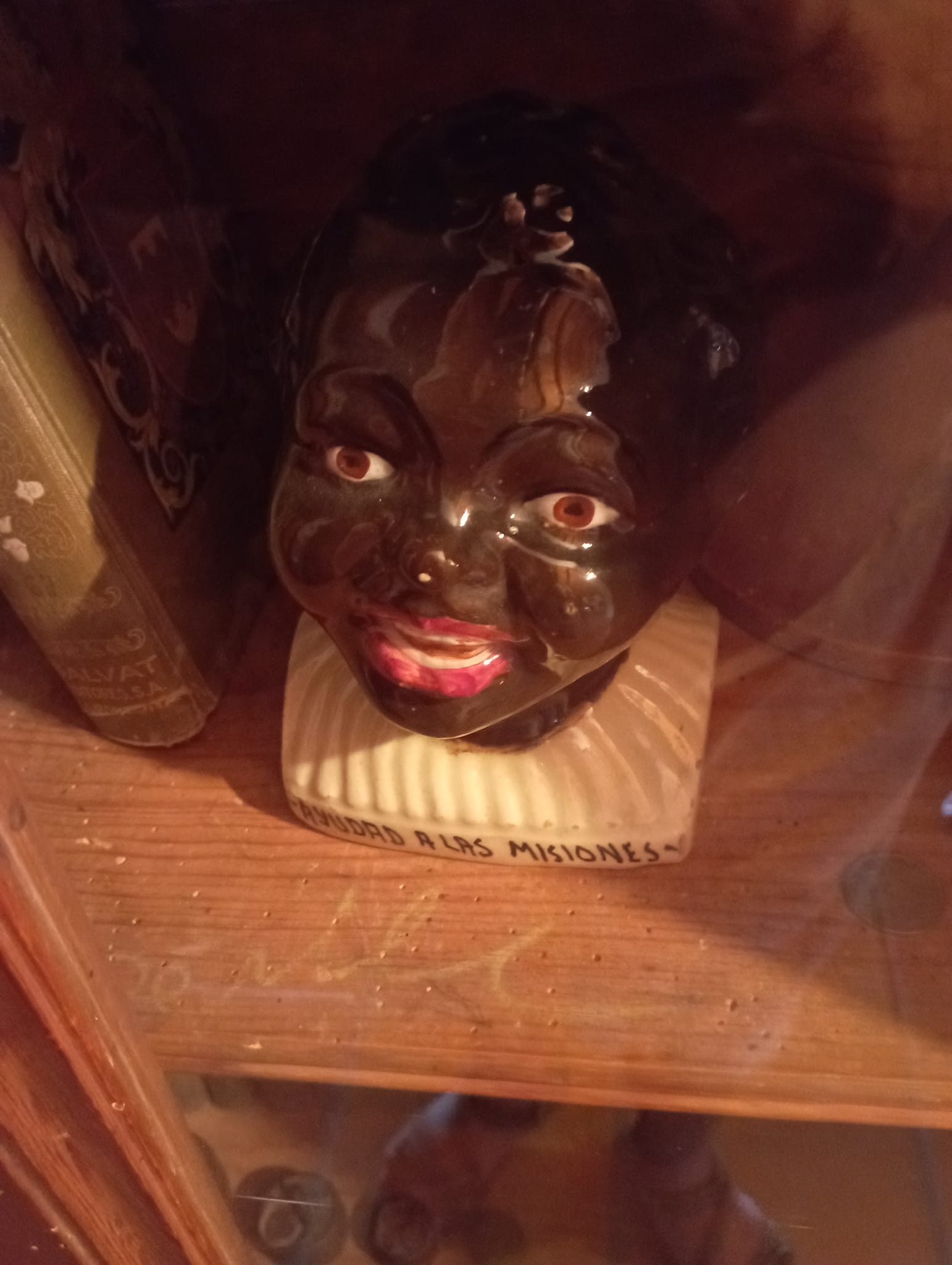
 De niña era muy, MUY asustadiza. Y a las seis primaveras quiso mi familia materna que hiciera la Primaria en el colegio de las Carmelitas de Castellón. Craso error. Sólo duré septiembre, y en octubre estaba en el CAU, una escuela de autismo secular y mucho más libre de iconografía sagrada. No era sólo por las huchas del DOMUND que parecían cabezas cortadas en tierras extrañas. Había también en el comedor un cuadro de la Última Cena de estilo románico con los personajes de cara de bombilla y ojos saltones como los marcianos de Mars Attacks!, una película cuyos extraterrestres me aterrorizaban. No quería comer en el comedor y no podía comer en casa porque mi mamá trabajaba de camarera. Así que comía en el despacho de la directora.

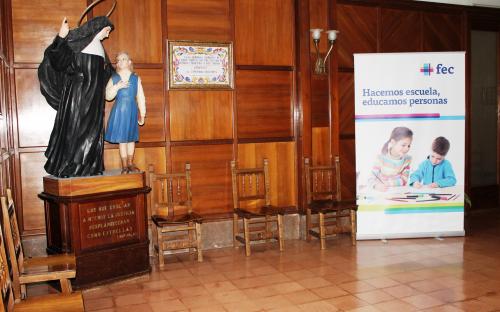
Pero no era solo eso. También había unas monjas en el colegio que me helaban la sangre. Nada más entrar, te encontrabas con una imagen de una monja con la boca muy roja inclinada sobre una colegiala con un uniforme de época, un pichi azul cobalto:

Parece que vaya a ganarse su confianza para chuparle toda la sangre.

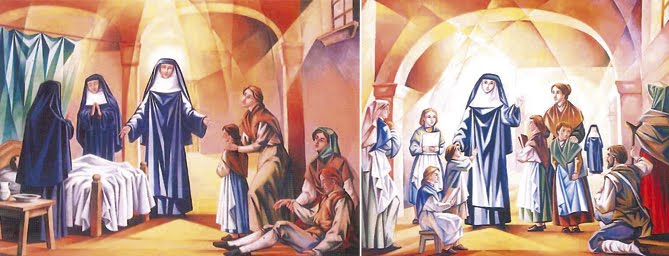
Y, en la capilla del colegio, hay unos cuadros de Albert Guallart, gran artista de la provincia, sobre unas monjas cuidando de enfermos y heridos durante las Guerras Napoleónicas. Lo malo es que los rostros y los hábitos de las monjas las hacen parecer fantasmas:

Ya ves por qué tuve y aún tengo pesadillas de este colegio (además de las huchas del DOMUND)

viernes, 21 de julio de 2023

JOAQUÍN SABINA, MANOLO GARCÍA Y CASTELLÓN

 Joaquín Sabina y Manolo García tienen mucho en común. Ambos son grandes cantautores y bardos (poetas) de la lengua española castellana, que manejan con gran estilo, y ambos mencionan a esta terreta castellonense en sus letras, pero en contextos muy diferentes, cada uno con su estilo. Joaquín Sabina, haciendo alusión al sufrimiento de mi provincia durante la guerra y la dictadura, y a su celebración de la muerte de Franco, en "Adivina, adivinanza":


Muertos de asco y fusilados 

bailaban de sol a sol, 

siete días con siete noches 

duró la celebración, 

en leguas a la redonda 

el champán se terminó.

Combatientes de Brunete, 

braceros de Castellón, 

los del exilio de fuera 

y los del exilio interior 

celebraban la victoria 

que la historia les robó, 

más que alegría la suya 

era desesperación.


Mientras que Manolo García pinta una terreta más festiva y veraniega, rimando su nombre con "amor" y con el "limón" que se exprime sobre el típico arroz, exhortando al carpe diem, en "Como un burro amarrado en la puerta del baile", de El Último de la Fila:


Llévame al cine, amor, 

y a comer un arrocito a Castelló.

Si total son cuatro días, 

¿"pa" qué vas a exprimirte el limón?


sábado, 4 de junio de 2022

VEM F*N ÄGER VAD? - MIN EGEN "MAGGA"

  This is part of one of two initiatives I am doing for June. One is a Pride initiative and one is a Povel Ramel - a Swedish singer-songwriter whose centennial was right now, on the 1st of June 2022 - initiative.

Povel Ramel är alltid aktuell, som Shakespeare. Det här är utdrag ur "Vem fan äger vad?" vari Maggans älskade kvarterskiosk slukas upp av en firma som slukas upp av andra i en kedja av fusioner. Jag har min egen "Magga" förresten. I min barndom älskade jag bar O.A.R. på calle Mayor i Castellón, i synnerhet bardisken som var prydd med handmålad keramik med årstiderna och stjärntecknen. En av provinsens och kanske länets bästa keramikmålare, Alberto Guallart, stod bakom mästerverket. Synd att det finns inga bilder av den disken på nätet!
O.A.R. försvann 2004 och ersattes av sparbanken Caja Castilla la Mancha, som har ätits upp av Liber Bank. Undrar fortfarande vad det blev av bardisken...
Ja, ”Misch & Masch” befanns vara bulvan för nåt schabrak
till jättefirma, under namn ”Förenade Kloak”,
som drevs emot sin undergång av några gamla fellows
och sålde allting ifrån bidéer till saltade marshmallows;
en superkluns på lerfötter som föll i första brant
och övertogs av ”Klotsen”, hyresmarknadens gigant.
Och ”Klotsen” gick till ”Pytsen” och dom bilda’ en fusion
som sedan slöks av ”Burken”, som åts upp av ”Nord-Kanon”;
och ”Nord-Kanon” blev ”Inter-Promp”, som hör till ”Multi-Chong”;
för att få klarhet fick jag sticka ända till Hong Kong:
Vem fan äger vad? Vem har koll på vem?
Alla drar i kopplet, ingen jäkel hittar hem!

domingo, 2 de diciembre de 2018

#SaveOurInternet 2: THE FIRST COPYRIGHT WAR EVER

This Christmas may be the last one that a free Internet exists within the EU, to the detriment of many people in the creative professions. When I first went into blogging and publishing fanfiction online over five years ago, I thought this day would never come. There would be a requiem and a ban on parodies, on sharing images and stories that move us for free, on filk lyrics and fanfiction, and pirate translations of works outside the public domain... The Members of Parliament turn a deaf ear to all of us in the creative and the electronic world, and thus, next year... if we all don't come together and do something against this Article 13, everything we know and love will fall apart.
Now I know how Odin must have felt with the forebodings of Ragnarök. But who am I to be then... Odin or Enjolras? Feeling powerless against the rising tide, or not? Not only is my career as a currently unemployed translator at stake; many other creative professionals will be facing the same dire consequences - if we don't do something ourselves.
Most surely, this year's Advent Calendar will be about Save Our Internet and have to do with the history of copyright and resistance to it - maybe this very introductory article will be barred because the name of Enjolras (or any other Les Mis character) would be as encouragingly mentioned as Macbeth, if we just sit there idly instead of coming together for the cause.

St. Columba - patron of information pirates - and the first copyright war ever
St. Columba (sometimes Columbkill, Columcille, Calum Cille, or other variations) was an Irish Gaelic missionary and one of the Twelve Apostles of Ireland. Those twelve were saints who studied under St. Finian at Clonary Abbey.
Columba was known for constant study and prayer--really, really constant. He is said to have written 300 books, by hand of course, continuing to transcribe up to the night before he died.
Finian and Columba got into a disagreement over a psalter. Columba borrowed the manuscript of the Cathach, a very rare item in medieval Ireland, from Finian--possibly without permission--and secretly copied it entirely by hand, with the intention of keeping it for his own use. But Finian said no, that this was theft--illegal copying! He demanded that Columba hand over the copy he had made.
Finian took the matter to King Diarmait mac Cerbhiall, the High King of Ireland, for arbitration. Believing he had done nothing wrong in his attempt to spread the word of the church, Columba agreed. (It didn't hurt his expectations that Diarmait was a relative.)
Finian's argument was simple: My book. You can't copy it. He felt that if anyone was going to copy it that it should be done through certain procedures and certainly not in secret under his own roof.
Columba's response was not all that different from those in favor of less restriction in digital duplication--that the book had not suffered by his copying. "It is not right," he said, "that the divine words in that book should perish, or that I or any other should be hindered from writing them or reading them or spreading them among the tribes." In his closing address, he told the court that those who owned the knowledge through books were obligated to spread the knowledge by copying and sharing them. He felt that to not share knowledge was a far greater offense than to copy a book that lost nothing by being copied.
But the king ruled in Finian's favor, famously saying, "To every cow belongs her calf; therefore, to every book its copy." In other words, every copy of a book belonged to the owner of the original book.
Of course, the story didn't end there. After more arguing and Columba's next offense (harboring a fugitive from Diarmait), the result was the Battle of Cúl Dreimhne, the death of 3,000 people on the battlefield, and Columba's exile to the island of Iona, which then belonged to Scotland. The Cathach, the hand-copied manuscript that started the war, and that he brought along to Iona (for, though losing the war, he had won the battle, so he got to keep his own copy), became a rallying cry and battle protectorare for the O'Donnell clan -significantly, the Isabelline general who vanquished Cabrera in the Castellón Province and founded its Liberal Party, Irish-Canarian Leopoldo O'Donnell, from a branch of O'Donnells turned Spanish sword nobility, descended from this clan.

lunes, 23 de abril de 2018

ASÍ HABLÓ GONZALO

For this Shakespeare Day, the turn has finally come to Gonzalo to give a little speech; I have endeavoured this by translating the good chancellor's afterthoughts (after leaving the isle of the wreck) into his mother tongue, that also happens to be my own.
I have see and abso-fricking-lutely adore a female Gonzalo, with the telling name Dolores:, a seductive, Gurdjieff-quoting flower child of a Californian intellectual, a true apostle of the New Age (played by Lucianne Buchanan), from a 1982 postmodern AU/retelling. Slightly improbably, Gonzalo is transformed into a dizzy blonde called Dolores (Lucianne Buchanan) who, with obvious Gonzalo correspondences, chatters senselessly and daydreams about everything turning out well for the good of humanity.
Be this character a he or a she; queer, straight, or ace; Californian, Australian, or from the Crown of Aragon (as Shakespeare's original was)... Sweet summer child for whom it takes decades to grow... surely reimagined sipping at a bar in the middle of a hot wasteland with the counterparts of Alonso Quijano and Mikel Tellagorri (ie; Dolores the Californian flower child sharing drinks with a fiftyish single LARPer and an eccentric, libertine former etarra). Where Quixote would be Enjolras and Tellagorri would combine Grantaire and Courfeyrac, Gonzalo/Dolores is definitely Combeferre. I claim the part of Marius, as the admiring newcomer, for myself. The drinks are on the house.

(Insert pinwheel here)

And where does this pinwheel come in? Is it a stylised reference to the Ingenious Hidalgo's feats of derring-do, a simple anemometre, or something far more metaphysical?
The pinwheel is a banner, an ideal, a sign; these mentors' counterpart to the tricolore at the backroom of the Café Musain.
You can take the girl out of the province, but you will never take the province out of the girl. The pinwheel is an ensign from Castellonian mythology, which stands for ideals such as modesty, kindness, and doing one's best. The tale, as narrated by our own regional Bard, Josep Pasqual i Tirado, tells of a humble, stunted-growing reed cane; it was at first used to make a kite, but the kite crash landed and was left by the children who flew it; yet the single mother of an ailing child found the broken kite and plumed its cane skeleton with its papers of bright colours to make a pinwheel, the only toy the little family could afford in their squalour. For the few years the child had left to live, the pinwheel brightened up and enlivened that short life. Not only that, but, after the mother was left alone, she kept the pinwheel as a keepsake, as a treasure to remember her lost beloved one.

»-Quan la meua ama morirà, seré canyeta; hui per hui sóc un record estimat i volgudíssim, sóc lo voladoret del fill de la mareta. . .»
"When my lady dies, I will be a little reed cane; nowadays, I am a beloved and most adored keepsake, I am the pinwheel of Mum's little one..."

This parable is also the reason why I would like pinwheels on my grave (if I chance to be buried in the cold, dark soil), or where my ashes shall be scattered, instead of flowers that only last for a short while, aside from being a tad too cliché.

Anyway, without further ado, let us return to the point, for the original Gonzalo, the good privado from the Crown of Aragón, has been waiting in the wings long enough; and, though I do not consider myself as worthy of rendering tribute to such a noble soul, let me nevertheless try by translating the good chancellor's afterthoughts (after leaving the isle of the wreck) into his mother tongue, that also happens to be my own:


ASÍ HABLÓ GONZALO
Sandra Dermark, 30 enero MMXVIII

La tarde solemne, inmensa y clara,
se cierne sobre nuestra nave,
cuya estela persiste, sin distorsionarse,
sobre el mar y el silencio. Miro
hacia atrás por última vez
mientras el Sol se pone tras la isla
donde se alteraron todos nuestros afectos: sí,
mi predicción se cumplió,
mas no estoy justificado,
sin soberbia estoy llorando.
No es mío el crédito por
las palabras que dije años ha,
cuya alegría traicioné:
las verdades de hoy no deben
nada a aquel consejero
cuya rimbombante elocuencia
trocó la honradez en falsedad.
¿No soy yo Gonzalo, el cual
con reflexión en torno a su ser
hizo del consuelo una ofensa?

No hay nada por explicar:
si en el Absurdo confiara
y, nota a nota, exactamente,
lo que había oído cantara...
aquella instantánea euforia
habría tomado, allí mismo,
al universo por sorpresa.
Todos bailarían la jota
de la autorredención ignota.
Fui yo quien lo había previsto,
celoso de mi antiguo oído,
mío el arte que hacía que el canto
sonara ridículo, de espanto.
Yo, cuya interferencia rompía
el galope en prosa más lenta,
y, especulando, las quimeras
cristalizaba en ideas vacías;
en bromas, las ironías;
hasta ser condenado reo
de duda y de falta de afecto.

Adiós, querida isla de naufragar:
todos hemos recuperado la salud,
todos hemos visto el Bien Común,
y no hay nada que perdonar.
Ya que la decisión de la tempestad
la pasión sujetiva devolvió
a uno inclinado a meditar,
hasta el recuerdo podrá
refugiar de un hostil ambiente,
cual torre en ruinas junto al mar
donde asustados adolescentes
aprendan la fórmula necesaria
para afrontar su mortalidad.
Hasta la carne marchita será
una campana, un cascabel
sobre el que pueda poner el Ya Está
las manos si, en cualquier ocasión,
se sienta inspirado a comunicar:
a quien solo está... "Aquí estoy",
a quien tenso está... "Todo va bien".

-----------------------------------------------------------------------------------------------


“Gonzalo”
—  from W. H. Auden’s “The Sea and the Mirror”
Evening, grave, immense, and clear,
Overlooks our ship whose wake
Lingers undistorted on
Sea and silence; I look back
For the last time as the sun
Sets behind that island where
All our loves were altered: yes,
My prediction came to pass,
Yet I am not justified,
And I weep but not with pride.
Not in me the credit for
Words I uttered long ago
Whose glad meaning I betrayed;
Truths to-day admitted, owe
Nothing to the councilor
In whose booming eloquence
Honesty became untrue.
Am I not Gonzalo who
By his self-reflection made
Consolation an offence?

There was nothing to explain:
Had I trusted the Absurd
And straightforward note by note
Sung exactly what I heard,
Such immediate delight
Would have taken there and then
Our common welkin by surprise,
All would have begun to dance
Jigs of self-deliverance.
It was I prevented this,
Jealous of my native ear,
Mine the art which made the song
Sound ridiculous and wrong,
I whose interference broke
The gallop into jog-trot prose
And by speculation froze
Vision into an idea,
Irony into a joke,
Till I stood convicted of
Doubt and insufficient love.

Farewell, dear island of our wreck:
All have been restored to health,
All have seen the Commonwealth,
There is nothing to forgive.
Since a storm’s decision gave
His subjective passion back
To a meditative man,
Even reminiscence can
Comfort ambient troubles like
Some ruined tower by the sea
Whence boyhoods growing and afraid
Learn a formula they need
In solving their mortality,
Even rusting flesh can be
A simple locus now, a bell
The Already There can lay
Hands on if at any time
It should feel inclined to say
To the lonely – “Here I am,”
To the anxious – “All is well.”


jueves, 21 de mayo de 2015

THE NOKIA TUNE AND FRANCESC TÀRREGA

"Lalaralla, laralalla, laralallala!"
The Nokia tune is surely familiar to you.
But who could say this international Finnish mobile company chose, as a leitmotif, a fragment of a waltz called Gran Vals (Great Waltz), by a composer from La Plana de Castelló, the little-known-outside-Spain Francesc Tàrrega?


It's nice to see a Northern European international corporation is identified by classical music from your own hometurf, eh?