Mostrando entradas con la etiqueta nightmare fuel. Mostrar todas las entradas

miércoles, 25 de febrero de 2026

ANDREW MARVELL, ON POSITIVE EMOTIONS

 À LA SHMOOP

... the cramp of hope does tear:

  • First off we've got hope, compared to a cramp, ... Notice how the metaphor fits the feeling: hope nestles inside you like a cramping muscle ...


The pestilence of love does heat:

  • In the same way, it makes sense that love is a pestilence, some kind of aggressively infectious disease like the black plague. Anyone who's ever had a Bella-on-Edward-style crush will know that love is definitely a full-body condition, delivering heat and plenty of it.


Joy's cheerful madness does perplex:

  • Joy's actually not so bad, although the mental giddiness it produces can be confusing and distracting. That's why happy people tend to be goggle-eyed ditzes. (No offense, all you smilies out there.)
The poem spins a tangled web of metaphor, making the pains of emotion and memory vivid and understandable by comparing them to bodily diseases.

  • Line 33: Hope is compared to a cramp, a small nagging pain that grows the more you move that muscle.
  • Line 35: The poem describes love as a pestilence, which means an aggressively infectious disease. Marvell was probably thinking of the black plague—because nothing says love like swelling pus-filled buboes—but the metaphor holds for all diseases. Love makes you hot and cold, flushed and dizzy. (And this "love" is obviously eros, erotic love: that for a parent for their child or a pet owner for their pet should BY NO MEANS be a heating pestilence!)
  • And joy in like 37 (note that all the positive emotions are in the odd-numbered lines!) is described as a "cheerful madness" or mania, the mental giddiness it produces can be confusing and distracting. 
  • The problem is, there's no cure for feelings like futile hope and despairing love. You can't Advil that stuff up and expect to zonk out in blissful non-awareness in thirty minutes. You have to find other solutions, like a new love interest or a new career. -- MISS DERMARK ADDS: But for Pete's sake, no addictions, whether drugs (that includes legal drugs like alcohol and caffeine), gambling, or shopping, or pyromania... I've been through a dark time with addictions myself and I know what it's like!
According to Shmoop: Emotional pain is easier to endure than physical pain because it can't result in death. No matter if it's "the cramp of hope" that tears, "the pestilence of love (eros)" that heats and chills, or "joy's cheerful madness" that perplexes or causes mental giddiness, positive emotions, even seen through Baroque poets by Marvell, are not as lethal as war, abuse, genocide, let alone poisons, torture, or some physical diseases (though some of them, like syphilis and strychnine poisoning, would make death seem like a welcome respite)!

But Marvell also has a naughty side: In To his Coy Mistress (read: To his Shy Girlfriend), he paints a picture of the titular ladylove dead and decaying, her hymen being eaten by maggots (ewww!!), and even uses the C-word of his day and age:

Thy beauty shall no more be found,
Nor, in thy marble vault, shall sound
My echoing song: then worms shall try
That long preserved virginity,

And your quaint honour turn to dust,
And into ashes all my lust:
The grave’s a fine and private place,
But none, I think, do there embrace. 

"Quaint" in the seventeenth century meant not only "whimsical," but also "C. U. Next. Tuesday." Like "gay" (once "merry"), "queer" (once "strange"), "nunnery" (once "brothel"), and "fishmonger" (once "pimp"), the word has been the unfortunate victim of semantic change... 

jueves, 24 de agosto de 2023

EL COLEGIO CATÓLICO DE LOS HORRORES

 De niña era muy, MUY asustadiza. Y a las seis primaveras quiso mi familia materna que hiciera la Primaria en el colegio de las Carmelitas de Castellón. Craso error. Sólo duré septiembre, y en octubre estaba en el CAU, una escuela de autismo secular y mucho más libre de iconografía sagrada. No era sólo por las huchas del DOMUND que parecían cabezas cortadas en tierras extrañas. Había también en el comedor un cuadro de la Última Cena de estilo románico con los personajes de cara de bombilla y ojos saltones como los marcianos de Mars Attacks!, una película cuyos extraterrestres me aterrorizaban. No quería comer en el comedor y no podía comer en casa porque mi mamá trabajaba de camarera. Así que comía en el despacho de la directora.

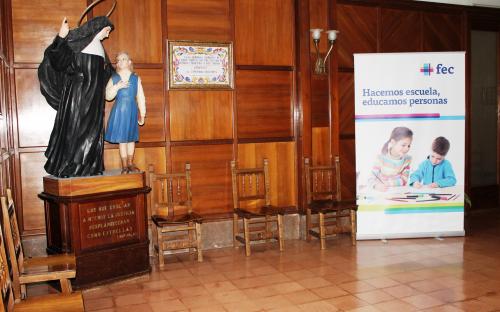
Pero no era solo eso. También había unas monjas en el colegio que me helaban la sangre. Nada más entrar, te encontrabas con una imagen de una monja con la boca muy roja inclinada sobre una colegiala con un uniforme de época, un pichi azul cobalto:

Parece que vaya a ganarse su confianza para chuparle toda la sangre.

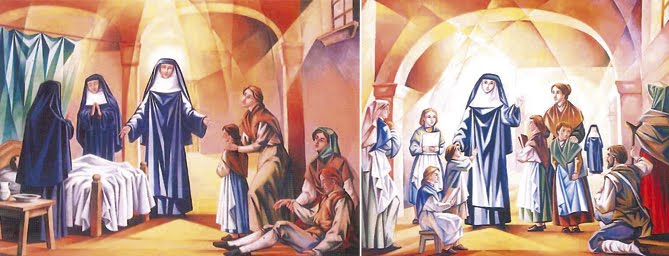
Y, en la capilla del colegio, hay unos cuadros de Albert Guallart, gran artista de la provincia, sobre unas monjas cuidando de enfermos y heridos durante las Guerras Napoleónicas. Lo malo es que los rostros y los hábitos de las monjas las hacen parecer fantasmas:

Ya ves por qué tuve y aún tengo pesadillas de este colegio (además de las huchas del DOMUND)

domingo, 16 de abril de 2023

TV Tropes on Salmacis and Hermaphroditus

 TV Tropes page on The Metamorphoses, pages on Hermaphroditus and Salmacis

Main Page

Bishōnen: Half the male cast really, the most well known being: Narcissus, Hermaphroditus, Hyacinth, Ganymede and Adonis, ...


Nightmare Fuel / The Metamorphoses

  • Ovid's take on Hermaphroditus' origins—originally, Hermaphroditus was a young boy, born to Hermes and Aphrodite (hence his name), but one day, a nymph fell in uncontrollable lust with him. Hermaphroditus wanted nothing to do with her, but she refused to take no for an answer. Eventually, she called out for the gods to let them be together forever. What did the gods do? Well, they decided to answer the request...by merging them together into a single entity. So now, poor Hermaphroditus is forced to share a body with his attempted rapist...forever. Did we mention Hermaphroditus was underage when this was happening?

martes, 6 de marzo de 2018

ESAS HUCHAS DEL DOMUND


En octubre del 98, a los seis años,
dejé el colegio de las Carmelitas,
como en este blog os he explicado.

Os he hablado de monjas vampiras
y apóstoles con cara de Mars Attacks,
pero eso no es todo lo que había que decir
sobre el Colegio Católico de los Horrores.

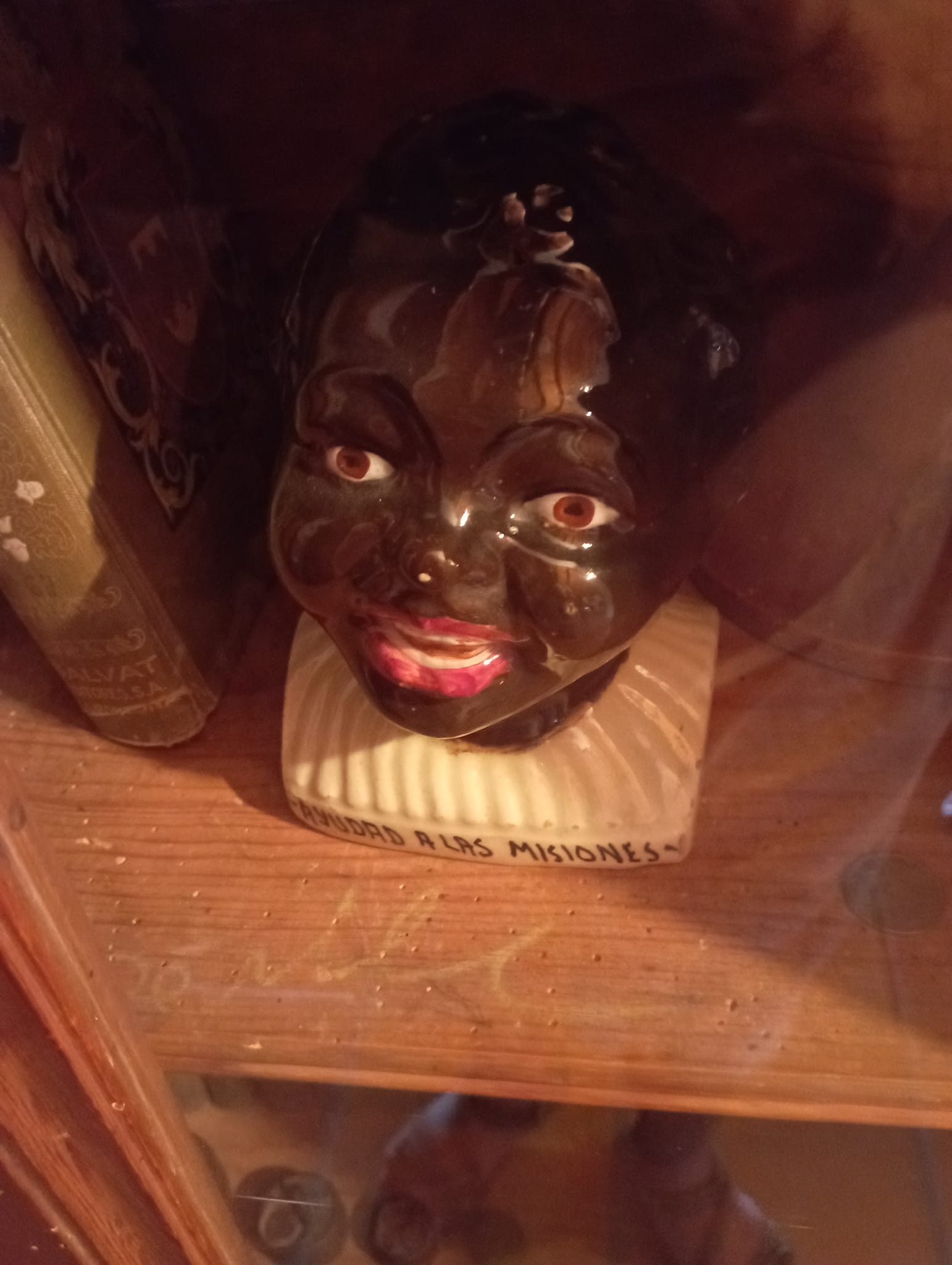
También estaban esas huchas del Domund
de cerámica valenciana,
que representaban cabezas de niños
asiáticos o subsaharianos (pero nunca europeos),
sumamente realistas, incluso
a tamaño real:


Y se me erizaba la piel.
Pensaba en niños de otras etnias,
víctimas de la guerra y/o trabajadores forzados,
a los que, después de muertos,
les cortaban la cabeza
y luego enviaban esas cabezas a España
para hacer las huchas de marras.

Aún se me eriza la piel
al mirar estas fotos que he colgado en el blog.
Al menos el vello de la nuca.
Me viene la taquicardia, escalofríos...

Por aquel entonces,
me encantaba leer y colorear
mis cuadernos de Pilarín Bayés
destinados a recaudar para Manos Unidas:
"Rasoa sueña", "Sianúa Corazón Alegre"...
Eran conmovedores, bellamente ilustrados
y por una buena causa.

De hecho, aquel otoño llegué a temer
que tuviera entre mis manitas de nieve
la cabecita de Rasoa o la de Sianúa
(o alguna modelada con la suya como molde).
Era algo visceral.
Me sentía exactamente como Hamlet
cuando asía el cráneo de Yorick y le recordaba.

 O como esta Pandora de Alma Tadema, dudando de si destapar la caja.

Hoy en día, esas huchas no sólo me dan miedo
por ser cabezas tan realistas,
sino también por la grima que provoca el racismo.
Miedo, ira, e invitemos al asco a la fiesta.
De paso.

En alguna que otra ensoñación,
rompo huchas del Domund a diestro y siniestro,
estrellándolas contra el suelo.


miércoles, 14 de febrero de 2018

THE ELUSIVE IDEA OF FULL EMPLOYMENT

THE ELUSIVE IDEA OF FULL EMPLOYMENT

- 1 -

The Nazis, as is well known, tanned Jews' skin for lamp shades and to bind books. Took the hair to stuff chairs, the bone to make fancy combs. The cartilage of the nose could reinforce the instep or sole of walking shoes.
Thus, the Nazis found uses for the Jews.
The Gypsies were a whole different story.
Stretched on frames until the vertebrae popped and the ribs were sprung, hung to smoke above the open hearth of the warriors' hall, while mead was liberally poured and lays sung; then cut to size and sinews made fine by spinning wheel or jenny; fat scraped painstakingly away by a tribe of craftsmen bearing the surname Katzenfeig, and their crest, one spectacle on a field (sometimes of charming daffodils, sometimes just a "field" field, in which case the spectacle was unedifying) and these Katzenfeigen bore the slop of bone, muscle, skin neatly wrapped in brown paper like you keep your pornographic whatnot in to the foundry: the result is what we call a violin.
Though some scholars render it as "twenty-five sources of radiation," which we must dismiss on the basis of its obvious anachronism in the years preceding the Surgically Accurate Making of Craters Where Once Was a Primary School.
The Slavs - oh, the Slavs! What you couldn't do with a big Slav, packed in his own ice! From fat alone the candle wax, cunningly moulded to the likeness of a chubby Negro babe, the wick curling from his brow - or refined, that fat could be kneaded into an aching back. The muscles were used in industry. The brains, in soup. The hands were first handy to teach young Helga/Fritz to count ten, then as digging implement to loosen soil, last joined to a special board sold separately in dry goods stores, which came bored to the wrist-width required (adult female, adult male, child) and made fast with glue rendered from that same Slavic bone
for coat racks - 
- for these were lean years. Things weren't just used and discarded like today! No such luxury! Who says the Germans didn't suffer in the war? Nothing but potatoes, day after day! Potato bread, potato cutlets, potato coffee, potato potato! Without those Slavs to concentrate in bottled protein supplements, whole families would have died of malnutrition! Of course some - no one is denying it - lived in the lap of luxury. How they lived, indeed! A style that is lost! The finest Indian braid, Persian kid, Scandinavian ivory - and slaves, slaves, made entirely of sloe eyes, doe eyes, oh those dark maids and emerald grooms in their distinctive pearly livery, all aglisten even by the faint starlight, the wartime night - they shone like new snow they ran faster than any command they never slept - they had been, well and truly, opened Those slaves of fascinating hazel were a scientific marvel in their time, now superseded, of course, by digital technology and made uneconomical by improved communications.
The Irish were employed on building sites and as a cheap source of electricity. Generally the British were regarded as fuel; without them many a factory would have stood dark and cold. Some still recall: "... tossing another limb on a crackling fire, fed to brightness with a few scoops of nail and those russet braids which so captivated us children. It was almost sad to see them vanish, turning quickly into so many threads of brighter orange, before collapsing - oh transformation wonderful to see! - into ashen worms. How many hours we spent before just such a fire, listening to Papi's tall tales of his youth, when he worked his way up by sheer hard graft to be the master of his own works, in which so many were employed who would be otherwise idle, left to their own mean resources. On this chiefly my father prided himself."
But it seems in poor taste in this more egalitarian, politically correct, time, to dwell on such scenes with a nostalgia which perhaps can be forgiven if not actually forgiven, if we're entirely honest about our feelings, not even in the slightest, but wholly treated with contempt and vindictiveness - unforgiven, then, in an elderly woman like Frau Hayek, who, readers will be relieved to hear, has now died alone and rotted for two weeks undiscovered in the single barren room she let above a Vietnamese restaurant.
Let someone forgive us! Forgive us, and then start working on the small fry!
But moving on strictly chronologically now to the post-war decades, when the German fantasy of racial supremacy had been defeated on the beaches, et cetera et cetera, though not so much in global markets, same for the Japanese, but international pretense - ("thought") no longer found it acceptable to discriminate on grounds of race. Needless to say, this was a stimulus to industry. At least some could be found to say so, again and again, at '00 DM a word, until they too were rounded up in unmarked vans and driven into a featureless night...
So, German sausage was now made possible. Thousands of Italians were shipped abroad for the new more durable plastics. Japanese components became the standard for high tech manufacturing. As trade barriers were lowered, lowered, and

- 2 -

I cannot carry on any longer. My pen feels like a child's finger in my hand. The light is waning - it's sunset - they are the ghosts of ghosts, the ashen silhouettes that stand among the trees outside my window. I will walk out among them. I will take my wallet with the many cards embossed with my name. I will buy them - perhaps - yes, I will buy them, one by one. Just to keep. Just to keep.
Now I dress with care, choosing a shirt whose pale linen makes a pleasing contrast with my charcoal woollen trousers. I follow, in the mirror, the lively manipulations of my fingers, tying the rough silk tie about my neck. I comb my hair. There is a minute inspection of my nails, and fresh socks - it's vital, psychologically, that the socks be freshly laundered. And whatever impatience I may feel to be away, to run out to my fellows across the dark, sweet-smelling, lawn, waving in jovial greeting - I will not mutter to myself. I will not.
I never talk to myself. A final item of pride.
There is no one underneath the trees.
There is no one.
That is, you see, it.
April "0"', "Ulysses' Rest," Oregon

- 3 -


April "0"', White Sands, Nevada

On a concrete pitch, triangular in shape, and inclined so that its bluntest angle lies some 50 foot below the rear hypotenuse, stand, shoulder to shoulder, exactly one million people. The triangle is isosceles, with edges in the ratio 2:3:4, a figure meaning "UPWARD" in the recently deciphered telepathic alphabet of whales. Each participant stands carefully aligned to painted footprints, like those once used in dancing classes. Here, however, all the prints are nearly parallel, oriented to that sunken point. The rows just perceptibly curve. The formation is compact; each must stand painstakingly erect to prevent his or her nose from poking the back of the head in front.
All are clean-shaven, depilated head to toe. All are nude.
The point man, a chubby Caucasian whose pale freckles and slack hindquarters hint at a sedentary profession, silently raises one arm. At this signal, all begin to chant.
They are repeating coordinates, escape velocity, energy required to overcome inertia - a haunting strain of numbers, intoned to the 6AM Nevada sky in the A below middle C.
The sky blanches. There is a series of exchanges in the air, like drumbeats too deep in pitch for the human ear. The sands draw, draw, the ruddy sands, stirring as if anxious, have drawn back from the edges of the concrete.
At the agreed moment, they will all fall silent, inhale, and contemplate a temperature. The willed spontaneous combustion of these million should just suffice -
- and did, they all popped, zoomed, Whee-hee! and that evening we land-lubbers gaped to witness the rising of a new moon. Of course the awe-inspiring - or at least outlandish - impact of the sight was somewhat undercut by the enormous luminous logo of a certain software company which sponsored the construction of the launch pad. But not in so flagrantly tasteless a degree as the later moons of Pepsi, Campbell's soup, Marlboro, Nike 

- 4 -

So, we distilled them to make fine wines, wines of a richer red than fruit, vegetarian products -
oh, those strange grapes from which came champagne that flowered from the glass! Chrysanthemums! Alive and kicking flowers drunk deeper than any heretofore draught, oh sword-swallowed the unquiet spirits of drugged mites, cotton-wool children plucked from mama's bosom
How sweet.
The bubbles stinging
struggling against the inevitable
gulp, and
tug of the brute gut
which does digest us -
I don't care who you are!
And, so drinking, we imbibed the secrets of their unfed nights, the sepia longing shantytowns, the faint cries and plaints -
how we woke in the night, panting and afraid, from a horrible recollection not ours -
in the day, we smiled, drawn on a nostalgic tangent by Amita from uncle's tribe, and how she glowed, coming back down the mountain with her bundled firewood! It's true, we understood with our bloodstreams then the subtly variegated sorrows of the poor -
and their triviality! Their contemptible pettiness. "Oh, I'm hungry, hungry, blah blah" and envy and the few hopes that rang ding dong or like a drumbeat bearing the otherwise formless tune onward onward into the wine press as it just so happened -
We drank the middle classes too. At the end of the day. My mates and I. It's fair to say we pissed away the whole population of Earth.
"Oh - they'll be back."
Five new moons,
explored, revealed themselves
to be but
rock, basalt, and granite, inanimate
holes
into which the masses had so avidly dived
as if there could be two deaths
a nice death and a bad death
or my death and their death
"This is my, nice death I"m diving in, it's not like your death, this death exalts me, it makes me whole, and in my death I will be hidden from your great gut, the gut can't get me, I'm all safe in my own death -" But we mined those moons so no one, actually, was singled out for special treatment.
And, too, there was always going to be just one survivor.
Philosophically I think this follows.
And that one we call, in English, "me."
Yes, in the end the difference may be solely one of nomenclature. Anyway, I killed the last few with my own hands. I knew all their names by then, so I could call out "Rupert!" "Peter!" "Jenny!" as I went, as if these were the numbers of the countdown, or as if I were creating them instead

- 5 -

In a freak accident, James had his skull pierced by a pole of infinite length.
His mentation, thereby, was miraculously unimpaired, though close relatives reported changes in temperament. Having been all his life cheery and soft-spoken, he now became morose, touchy even with those who selflessly, sincerely loved him - and, overnight, he lost his appetite for food.
"Eat, eat," his wife was always begging him. "You mustn't starve yourself."
To which the unfortunate James, bug-eyed with exasperation: "Can't you get it through your fucking head -"
And both would fall silent, oppressed by the massive, derisive presence of the enigmatic pole.
A pole like that must have travelled here from another galaxy. Earth is poor in artefacts of infinite length. Why it stopped - for, though it would have meant little to the miserable James, as he would have had to wait an infinite length of time for the far end of the pole to sail through and out of his head, allowing him, with the aid of a pair of steel plugs and a few stitches, to reassume an ordinary aspect and, in time, go back to his job as a marriage counsellor - well, no one knows why it stopped, much less where it was going. Furthermore, the fact that it pierced James's head, and had, there fore, an end, implies that it was infinite in only one direction, meaning that the universe is exactly twice the length of this pole, that is, twice infinity.
Now, isn't that interesting?
Furthermore, at the moment the pole first passed through the dead centre of James's head, he was in a sense the centre of the universe, albeit in only one dimension.
As James puts it: "Is that meant to comfort me?"
And isn't that interesting?
And why?
Why? What interests you?
I'M IN PAIN I AM IN PAIN I FUCKING DARE YOU TO LOOK AT ME AND TAKE AN INTEREST IN MY PAIN CONSUMER!
Due, it is presumed, to the gravitational pull of other bodies, the pole weighs only a few pounds. James refers to it, disparagingly, as "my stick."
This is the type of life-altering event I'm talking about. Something you really, really, really, wouldn't understand, with your breakfast cereals and charming puppydogs you let the kids name "Nike." With your wall to wall audio/video recreation centres and your "4 hour golfing channels for the disabled. With your rehabilitation programmes for pregnant battered donkeys abandoned by owners when too old for racing, pictured with a pregnant battered starlet under the shout line "SENTIMENTAL PRATING ISN'T JUST FOR CHRISTMAS."
Save the pregnant battered starlets, too old for racing!
Won't anybody give Luscious Opening a home?
Adopt a drug-addled pony, too old for sex shows!
Those days are gone. You wouldn't understand. Those days are gone.
I am glad no one will ever find out I'm talking to this blank wall.
I am 48. In my prime! Just two years older than James when he was stricken by the pole, putting an abrupt end to his strict fitness programme. Who's laughing now, James?
That pole, now, naturally, intersects the Earth, passing through it at a depth of six feet in a small churchyard in Pittsfield, New Jersey. I am 48. I am the only one who ever puts flowers on James's grave, which I have done on two occasions only (you understand my time is not my own).
The stone, which must rest on James's feet, judging from the pole, reads, "There are more things in heaven and earth," which quote I personally find in poor taste.
But it's always easy to be a back seat driver in hindsight. That's all I really wanted to say now you can't hear. And no point beating a dead dog when you have already lost your mind, your head, to the grinder and the pitiless weight. Lock the stable door, quick! The horses are gone forever!
Though in many regions, tomorrow will be another day. Personally. And you should never have started if you didn't need packing for shipment in heavy duty cardboard cartons, faintly smelling of dust.
Please apply for elucidation to the department in charge of your case, quoting the reference number stamped on the upper left corner of the carton in which your constituents have been packed for shipping. And I guess you might have liked, if your life must compulsorily be wasted, to have the wasting of it yourself? The answer to which you will find in your handbook. You will find it in your syllabus. It is in your contract, which, of your own free will, under no form of duress, you have signed, o my highly valued employees. 
- 6 -

"So When is Now, and When, Please, is Later?"
NOW you are all gone.
LATER I will be the only one.
NOW I am talking to you.
LATER you will understand why "all this," and wish you had listened. NOW you are under the terrible threat.
LATER shadows will eat you, cackling, it will be "much too late."
NOW late is only a harmless "fact" of time, timing slightly out of kilter, "oh so sorry I made you wait for your last sweet potatoes, darling."
LATER will be later than the late you now know, will be "much later," later than you can possibly survive. NOW that is all I am going to say.
What rights you have not forfeited are now to be taken away from you. Like delicate appliances taken from the hands of children, who will push all the buttons at once, though they were warned.
And fuck your flesh right off of your bones. God damn your puny souls. You let them shrink, shrink, as if they would not ever become insects, grubs to be trampled, as if we would forever cringe and not embrace "fascism" because "you said it was very bad -"
Laugh in your face. NOW Laugh in your face.

lunes, 7 de agosto de 2017

THE RETINUE OF ARES (AND SOME EXTRA MORRIS)

Fragment from a folktale retold by William Morris, explaining all the dire consequences of warfare, presented as the entourage of the god of war himself. If illustrated, the scene would be worth the paintbrush of a Goya in 1808:

A noise like echoes of a shout
Seemed in the cold air all about,
And therewithal came faint and thin
What seemed a far-off battle's din,
And on a sight most terrible
His eyes in that same minute fell,—
The images of slaughtered men,
With set eyes and wide wounds, as when
Upon the field they first lay slain;
And those who there had been their bane
With open mouths as if to shout,
And frightful eyes of rage and doubt,
And hate that never more should die.
Then went the shivering fleers by,
With death's fear ever in their eyes;
And then the heaped-up fatal prize,
The blood-stained coin, the unset gem,
The gold robe torn from hem to hem,
The headless, shattered golden god,
The dead priest's crushed divining-rod;
The captives, weak from blow and wound,
Toiling along; the maiden, bound
And helpless, in her raiment torn;
The ancient man's last day forlorn:
Onward they pressed, and though no sound
Their footfalls made upon the ground,
Most real indeed they seemed to be.
The spilt blood savoured horribly,
Heart-breaking the dumb writhings were,
Unuttered curses filled the air;
Yea, as the wretched band went past,
A dreadful look one woman cast
On Laurence, and upon his breast
A wounded blood-stained hand she pressed.

   But on the heels of these there came
A King, that through the night did flame,
For something more than steel or brass
The matter of his armour was;
Its fashion strange past words to say;
Who knows where first it saw the day?
On a red horse he rode; his face
Gave no more hope of any grace
Than through the blackness of the night
The swift-descending lightning might;
And yet therein great joy indeed
The brightness of his eyes did feed;—
A joy as of the leaping fire
Over the house-roof rising higher
To greet the noon-sun, when the glaive
Forbids all folk to help or save.

--------------------------------------------------------

In another poem by Morris, a retelling of the Psyche legend, warfare is also omnipresent:

Whose husbands wring from miserable hinds
What the first battle scatters to the winds;

............
   Thenceforth her back upon the world she turned
As she had known it; in her heart there burned
Such deathless love, that still untired she went:
The huntsman dropping down the woody bent,
In the still evening, saw her passing by,
And for her beauty fain would draw anigh,
But yet durst not; the shepherd on the down
Wondering, would shade his eyes with fingers brown,
As on the hill's brow, looking o’er the lands,
She stood with straining eyes and clasped hands,
While the wind blew the raiment from her feet;
The wandering soldier her grey eyes would meet,
That took no heed of him, and drop his own;
Like a thin dream she passed the clattering town;
On the thronged quays she watched the ships come in
Patient, amid the strange outlandish din;
Unscared she saw the sacked towns' miseries,
And marching armies passed before her eyes.
And still of her the god had such a care
None did her wrong, although alone and fair.
Through rough and smooth she wandered many a day,
Till all her hope had well-nigh passed away.


......................................................
So in a third homoerotic poem by the same author, where an overprotected teenage prince --just like Balder or Sleeping Beauty-- is exceedingly sheltered from an untimely fate, yet to no avail. Enter another, foreign prince, a twentyish exiled brother-slayer who has sought death on the battlefield and whose wartime yarns soon excite the younger prince... who is violently killed by chance by his more than friend. The whole story reminds me of Eugene Onegin or Apollo and Hyacinth:

The other one, that Atys had to name,
Grew up a fair youth, and of might and worth,
And well it seemed the race wherefrom he came
From him should never get reproach or shame:
But yet no stroke he struck before his death,
In no war-shout he spent his latest breath. 

   Now Crœsus, lying on his bed a-night,
Dreamed that he saw this dear son lying low,
And folk lamenting he was slain outright,
And that some iron thing had dealt the blow;
By whose hand guided he could nowise know,
Or if in peace by traitors it were done,
Or in some open war not yet begun.

 Three times one night this vision broke his sleep,
So that at last he rose up from his bed,
That he might ponder how he best might keep
The threatened danger from so dear a head;
And, since he now was old enough to wed,
The King sent men to search the lands around,
Until some matchless maiden should be found;

   That in her arms this Atys might forget
The praise of men, and fame of history,
Whereby full many a field has been made wet
With blood of men, and many a deep green sea
Been reddened therewithal, and yet shall be;
That her sweet voice might drown the people's praise,
Her eyes make bright the uneventful days.

So when at last a wonder they had brought,
From some sweet land down by the ocean's rim,
Than whom no fairer could by man be thought,
And ancient dames, scanning her limb by limb,
Had said that she was fair enough for him,
To her was Atys married with much show,
And looked to dwell with her in bliss enow.

   And in meantime afield he never went,
Either to hunting or the frontier war,
No dart was cast, nor any engine bent
Anigh him, and the Lydian men afar
Must rein their steeds, and the bright blossoms mar
If they have any lust of tourney now,
And in far meadows must they bend the bow.

   And also though the palace everywhere
The swords and spears were taken from the wall
That long with honour had been hanging there,
And from the golden pillars of the hall;
Lest by mischance some sacred blade should fall,
And in its falling bring revenge at last
For many a fatal battle overpast.

...
  Then did Adrastus rise and thank the King,
And the next day when yet low was the sun,
The sacrifice and every other thing
That unto these dread rites belonged, was done;
And there Adrastus dwelt, hated of none,
And loved of many, and the King loved him
For brave and wise he was and strong of limb.

   But chiefly amongst all did Atys love
The luckless stranger, whose fair tales of war
The Lydian's heart abundantly did move,
And much they talked of wandering afar
Some day, to lands where many marvels are,
With still the Phrygian through all things to be
The leader unto all felicity.

...
  And with that promise must they be content,
And so departed, having feasted well.
And yet some god or other ere they went,
If they were silent, this their tale must tell
To more than one man; therefore it befell,
That at the last Prince Atys knew the thing,
And came with angry eyes unto the King.

   "Father," he said, "since when am I grown vile?
Since when am I grown helpless of my hands?
Or else what folk, with words enwrought with guile,
Thine ears have poisoned; that when far-off lands
My fame might fill, by thy most strange commands
I needs must stay within this slothful home,
Whereto would God that I had never come?

   "What! wilt thou take mine honour quite away?
Wouldst thou, that, as with her I just have wed
I sit among thy folk at end of day,
She should be ever turning round her head
To watch some man for war apparelled,
Because he wears a sword that he may use,
Which grace to me thou ever wilt refuse?

   "Or dost thou think, when thou hast run thy race
And thou art gone, and in thy stead I reign,
The people will do honour to my place,
Or that the lords leal men will still remain,
If yet my father's sword be sharp in vain?
If on the wall his armour still hang up,
While for a spear I hold a drinking-cup?"

   "O Son!" quoth Crœsus, "well I know thee brave,
And worthy of high deeds of chivalry;
Therefore the more thy dear life would I save,
Which now is threatened by the gods on high;
Three times one night I dreamed I saw thee die,
Slain by some deadly iron-pointed thing,
While weeping lords stood round thee in a ring."

   Then loud laughed Atys, and he said again,
"Father, and did this ugly dream tell thee
What day it was on which I should be slain?
As may the gods grant I may one day be,
And not from sickness die right wretchedly,
Groaning with pain, my lords about my bed,
Wishing to God that I were fairly dead;

   "But slain in battle, as the Lydian kings
Have died ere now, in some great victory,
While all about the Lydian shouting rings
Death to the beaten foemen as they fly.
What death but this, O father! should I die?
But if my life by iron shall be done,
What steel to-day shall glitter in the sun? 

   "Yea, father, if to thee it seemeth good
To keep me from the bright steel-bearing throng,
Let me be brave at least within the wood;

---

But Atys drew the bright sword from his side,
   And to the tottering beast he drew anigh:
But as the sun's rays ran adown the blade
Adrastus threw a javelin hastily,
For of the mighty beast was he afraid,
Lest by his wounds he should not yet be stayed,
But with a last rush cast his life away,
And dying there, the son of Crœsus slay.

   But even as the feathered dart he hurled,
His strained, despairing eyes, beheld the end,
And changed seemed all the fashion of the world,
And past and future into one did blend,
As he beheld the fixed eyes of his friend,
That no reproach had in them, and no fear,
For Death had seized him ere he thought him near.

   Adrastus shrieked, and running up he caught
The falling man, and from his bleeding side
Drew out the dart, and seeing that death had brought
Deliverance to him, he thereby had died;
But ere his hand the luckless steel could guide,
And he the refuge of poor souls could win,
The horror-stricken huntsmen had rushed in.

   And these, with blows and cries he heeded nought,
His unresisting hands made haste to bind;
Then of the alder-boughs a bier they wrought,
And laid the corpse thereon, and ’gan to wind
Homeward amidst the tangled wood and blind,
And going slowly, at the eventide,
Some leagues from Sardis did that day abide.

   Onward next morn the slaughtered man they bore,
With him that slew him, and at end of day

Toward the king's palace did they take their way.
He in an open western chamber lay
Feasting, though inwardly his heart did burn
Until that Atys should to him return.

   And when those wails first smote upon his ear
He set the wine-cup down, and to his feet
He rose, and bitter all-consuming fear
Swallowed his joy, and nigh he went to meet
That which was coming through the weeping street:
But in the end he thought it good to wait,
And stood there doubting all the ills of fate. 

   But when at last up to that royal place
Folk brought the thing he once had held so dear,
Still stood the King, staring with ghastly face
As they brought forth Adrastus and the bier,
But spoke at last, slowly without a tear,
"O Phrygian man, that I did purify,
Is it through thee that Atys came to die?"

   "O King," Adrastus said, "take now my life,
With whatso torment seemeth good to thee,
As my word went, for I would end this strife,
And underneath the earth lie quietly;
Nor is it my will here alive to be:
For as my brother, so Prince Atys died,
And this unlucky hand some god did guide."

   Then as a man constrained, the tale he told
From end to end, nor spared himself one whit:
And as he spoke, the wood did still behold,
The trodden grass, and Atys dead on it;
And many a change o’er the King's face did flit
Of kingly rage, and hatred and despair,
As on the slayer's face he still did stare.

   At last he said, "Thy death avails me nought,
The gods themselves have done this bitter deed,
That I was all too happy was their thought,
Therefore thy heart is dead and mine doth bleed,
And I am helpless as a trodden weed:
Thou art but as the handle of the spear,
The caster sits far off from any fear.

   "Yet, if thy hurt they meant, I can do this,—
—Loose him and let him go in peace from me—
I will not slay the slayer of all my bliss;
Yet go, poor man, for when thy face I see
I curse the gods for their felicity.
Surely some other slayer they would have found,
If thou hadst long ago been under ground.

   "Alas, Adrastus! in my inmost heart
I knew the gods would one day do this thing,
But deemed indeed that it would be thy part
To comfort me amidst my sorrowing;
Make haste to go, for I am still a King!
Madness may take me, I have many hands
Who will not spare to do my worst commands."

   With that Adrastus’ bonds were done away,
And on the road where they had been that day
Rushed through the gathering night; and some lone man
Beheld next day his visage wild and wan,
Peering from out a thicket of the wood
Where he had spilt that well-beloved blood.


-------------------------------------
In Morris's version of the Holger Danske/Holger the Dane mythos, the bulk of it takes place in war-torn 100YW-era France:
[···] think that now ye are
In France, made dangerous with wasting war;
In Paris, where about each guarded gate,
Gathered in knots, the anxious people wait,
And press around each new-come man to learn
If Harfleur now the pagan wasters burn,
Or if the Rouen folk can keep their chain,
Or Pont de l’Arche unburnt still guards the Seine?
Or if 'tis true that Andelys succour wants?
That Vernon's folk are fleeing east to Mantes?
When will they come? or rather is it true
That a great band the Constable o’erthrew
Upon the marshes of the lower Seine,
And that their long ships, turning back again,
Caught by the high-raised waters of the bore
Were driven here and there and cast ashore?
   Such questions did they ask, and, as fresh men
Came hurrying in, they asked them o’er again,
And from scared folk, or fools, or ignorant,
Still got new lies, or tidings very scant.

---
But his changed life he needs must carry on;
For ye shall know the Queen was gathering men
To send unto the good King, who as then
In Rouen lay, beset by many a band
Of those who carried terror through the land,
And still by messengers for help he prayed:
Therefore a mighty muster was being made,
Of weak and strong, and brave and timorous,
Before the Queen anigh her royal house.
So thither on this morn did Holger turn,
Some certain news about the war to learn;
And when he came at last into the square,
And saw the ancient palace great and fair
Rise up before him as in other days,
And in the merry morn the bright sun's rays
Glittering on gathering helms and moving spears,
He ’gan to feel as in the long-past years,
And his heart stirred within him. Now the Queen
Came from within, right royally beseen,
And took her seat beneath a canopy,
With lords and captains of the war anigh;
And as she came a mighty shout arose,
And round about began the knights to close,
Their oath of fealty there to swear anew,
And learn what service they had got to do.
But so it was, that some their shouts must stay
To gaze at Holger as he took his way
Through the thronged place; and quickly too he gat
Unto the place whereas the Lady sat,
For men gave place unto him, fearing him:
For not alone was he most huge of limb,
And dangerous, but something in his face,
As his calm eyes looked o’er the crowded place,
Struck men with awe; and in the ancient days,
When men might hope alive on gods to gaze,
They would have thought, 'the Gods yet love our town,
And from the heavens have sent a great one down.'
   Withal unto the throne he came so near,
That he the Queen's sweet measured voice could hear;
And swiftly now within him wrought the change
That first he felt amid those faces strange;
And his heart burned to taste the hurrying life
With such desires, such changing sweetness rife.

While fainter still with love the Queen did grow
Hearing his words, beholding his grey eyes
Flashing with fire of warlike memories;
Yea, at the last he seemed so wise indeed
That she could give him now the charge, to lead
One wing of the great army that set out
From Paris’ gates, midst many a wavering shout,
Midst trembling prayers, and unchecked wails and tears,
And slender hopes and unresisted fears.

   Now ere he went, upon his bed he lay,
Newly awakened at the dawn of day,
Gathering perplexed thoughts of many a thing,
When, midst the carol that the birds did sing
Unto the coming of the hopeful sun,
He heard a sudden lovesome song begun
’Twixt two young voices in the garden green,
That seemed indeed the farewell of the Queen.

SONG.

SHE.


   In the white-flowered hawthorn brake,
Love, be merry for my sake;
Twine the blossoms in my. hair,
Kiss me where I am most fair—
Kiss me, love! for who knoweth
What thing cometh after death?

HE.


   Nay, the garlanded gold hair
Hides thee where thou art most fair;
Hides the rose-tinged hills of snow—
Ah, sweet love, I have thee now!
Kiss me, love! for who knoweth
What thing cometh after death?

SHE.


   Shall we weep for a dead day,
Or set Sorrow in our way?
Hidden by my golden hair,
Wilt thou weep that sweet days wear?
Kiss me, love! for who knoweth
What thing cometh after death?

HE.


Weep, O Love, the days that flit,
   Now, while I can feel thy breath;
Then may I remember it
   Sad and old, and near my death.
Kiss me, love! for who knoweth
What thing cometh after death?

Soothed by the pleasure that the music brought
And sweet desire, and vague and dreamy thought
Of happiness it seemed to promise him,
He lay and listened till his eyes grew dim,
And o’er him ’gan forgetfulness to creep
Till in the growing light he lay asleep,
Nor woke until the clanging trumpet-blast
Had summoned him all thought away to cast:
Yet one more joy of love indeed he had
Ere with the battle's noise he was made glad;
For, as on that May morning forth they rode
And passed before the Queen's most fair abode,
There at a window was she waiting them
In fair attire with gold in every hem,
And as the Ancient Knight beneath her passed
A wreath of flowering white-thorn down she cast,
And looked farewell to him, and forth he set
Thinking of all the pleasure he should get
From love and war, forgetting Avalon
And all that lovely life so lightly won;
Yea, now indeed the earthly life o’erpast
Ere on the loadstone rock his ship was cast
Was waxing dim, nor yet at all he learned
To ’scape the fire that erst his heart had burned.
And he forgat his deeds, forgat his fame,
Forgat the letters of his ancient name
As one waked fully shall forget a dream,
That once to him a wondrous tale did seem.

   Now I, though writing here no chronicle
E’en as I said, must nathless shortly tell
That, ere the army Rouen's gates could gain
By a broad arrow had the King been slain,
And helpless now the wretched country lay
Beneath the yoke, until the glorious day
When Holger fell at last upon the foe,
And scattered them as helplessly as though
They had been beaten men without a name:
So when to Paris town once more he came
Few folk the memory of the King did keep
Within their hearts, and if the folk did weep
At his returning, ’twas for joy indeed
That such a man had risen at their need
To work for them so great deliverance,
And loud they called on him for King of France.


   But if the Queen's heart were the more a-flame
For all that she had heard of his great fame,
I know not; rather with some hidden dread
Of coming fate, she heard her lord was dead,
And her false dream seemed coming true at last,
For the clear sky of love seemed overcast
With clouds of God's great judgments, and the fear
Of hate and final parting drawing near.
   So now when he before her throne did stand
Amidst the throng as saviour of the land,
And she her eyes to his kind eyes did raise,
And there before all her own love must praise;
Then did she fall a-weeping, and folk said,
"See, how she sorrows for the newly dead!
Amidst our joy she needs must think of him;
Let be, full surely shall her grief wax dim
And she shall wed again."