Mostrando entradas con la etiqueta against racism. Mostrar todas las entradas

miércoles, 14 de junio de 2023

EL DULCE SABOR DEL RACISMO

Hubo una época no muy lejana (los años noventa, para más señas), cuando no había Conguitos blancos en absoluto, y todos los oscuros Conguitos que existían eran más tribales y guerreros, ataviados con faldas de flecos, armados con lanzas de sílex y provistos de marcados labios rojos:


Gracias a algo llamado "corrección política", esos Conguitos de antaño son historia. Desde que surgieron los Conguitos blancos en la primera década del nuevo milenio, se ha dado un giro copernicano a la marca: ahora todos los Conguitos vienen en son de paz (sin lanzas), carecen de labios rojos y van al parecer desnudos, sin las faldas de flecos:


La publicidad de chocolate y de cacao, tanto por su color como por tratarse de un producto históricamente colonial, se ha prestado en el siglo pasado a anuncios que en la actualidad tildaríamos de racistas, ya ligeramente, ya totalmente desarrollando estereotipos racistas. Preguntadles a vuestros padres o madres por la canción del negrito del Cola-Cao que salía en la tele en su niñez (y, si son demasiado jóvenes, a vuestros abuelos):


A pesar de que el negrito desapareció de la tele, siguió apareciendo en el tarro de Cola-Cao durante décadas, más estilizado...


... hasta la primera década del nuevo milenio, cuando, en aras de la corrección política, fue reemplazado por los alienígenas Kao-Kao, que personificaban los nutrientes del producto (Ferki, el hierro; Fosfik, el fósforo; Akinha, la vitamina A... ).


El discurso racista puede limitarse también a un único ingrediente del producto. Entre "nata Made in Vaca" y "fresas del bosque de Caperucita" muy inocentes que atraen a toda la familia, la agencia publicitaria que introdujo el helado de palo italiano Doctor Strabik en España para Frigo (de su marca hermana en Italia Algida, bajo el sello Eldorado) a principios de los noventa (como el Frigurón, sólo duró un par de veranos) describió su cobertura de chocolate de una forma que hoy en día sería totalmente inaceptable; "De crrrrrrrujiente chocolate negro Bwana". Negro BWANA. "Bwana" es un vocativo en suajili que literalmente quiere decir "amo" o "señor". La palabreja de marras ganó tracción en Occidente con las películas de aventuras en la selva, tipo Mogambo o las de Tarzán, donde los sirvientes africanos suelen tratar de "bwana" a sus amos blancos constantemente.


Pero no está confinada a nuestro país de Sagitario esta costumbre de la publicidad de chocolate histórica racista. En alemán "Mohr" es literalmente tanto "moro" como "negro" (se dice, por ejemplo, del Otelo de Shakespeare). La marca alemana de chocolate Sarotti tuvo clásicamente a un pequeño moro negro, con turbante, babuchas y los labios muy rojos ("der Sarotti-Mohr"), como mascota y para atraer a los niños, en anuncios animados, como muñeco, etcétera...


El personaje existe hoy en día aún, salvo que es un pequeño mago oriental de tez dorada, con el mismo traje islámico ("der Sarotti-Magier"), que está presente en todas las estrategias publicitarias ya existentes además de en Internet y en los medios sociales. Simplemente le han cambiado el color de la piel y el grosor de los labios:


En la vecina Austria existe un postre conocido como "Mohr im Hemd" ("moro encamisado"), un pudin de chocolate y almendras cocinado al baño María (como un pudin navideño británico). En el 2009, la empresa heladera austríaca Eskimo, que forma parte de Heartbrand junto con Frigo (y Algida en Italia [también en Hungría, Croacia, Serbia, Grecia, Chipre y otros países], Langnese en Alemania, GB Glace en Suecia, Olá en Portugal, Frisko en Dinamarca, Wall's en Reino Unido [también en Corea, Japón y otros países], Streets en Australia y Nueva Zelanda, y otras heladeras) lanzó un helado en pinta Cremissimo con sabor Mohr im Hemd con el eslógan "I will Mohr" (juego de palabras con el inglés "I will/want more," "quiero más", dado que "more" ["más"] se pronuncia igual que "Mohr"). Los medios austríacos tacharon enseguida el eslógan de racista. Por cierto, el nombre del pudin se está convirtiendo en un arcaísmo, puesto que cada vez menos restaurantes lo ponen como "Mohr im Hemd" en el menú y, en cambio, describen el postre, por ejemplo, como "Schoko-Nuss-Kuchen mit Schlag" (literalmente: pastel de chocolate y frutos secos con nata montada).

Pudin "Schoko-Nuss-Kuchen mit Schlag", antes "Mohr im Hemd"


"I will Mohr!" Helado Cremissimo de Eskimo sabor Mohr im Hemd

Un dulce que no muchos españoles aprecian pero que muchos adoran en Alemania y en los países nórdicos es el regaliz. No hace falta salir de Europa para conseguirlo, pero su color ya da una buena pista de que también su publicidad ha conllevado polémicas racistas. GB Glace, la empresa heladera sueca de Heartbrand (hermana de Frigo y de otras muchas heladeras internacionales que ya se han mencionado aquí arriba), lanzó en exclusiva para Suecia en 2005 un helado de palo con cobertura y relleno de regaliz salado (una delicia en Suecia), y encima mediante una campaña publicitaria con una estética "callejera", con rap en los anuncios y tipografía similar al grafiti. La gota que colmó el vaso era el nombre del helado en cuestión: Nogger Black. NOGGER BLACK, a una letra de Nigger Black. El helado sólo duró dos veranos y se retiró del mercado en 2007, tras protestas del Centro Sueco contra el Racismo.


Pero los suecos tampoco estaban en contra del chocolate racista antes de la corrección política. Estas delicias esféricas del tamaño de pelotas de ping-pong se llamaron en su día "negerbollar" (bolas de negro"); en la actualidad, son conocidas como "chokladbollar" (bolas de chocolate) o "kokosbollar" (bolas de coco). Ay, la corrección política...


Para finalizar este recorrido por la historia racista de los dulces y de los helados, volvamos a la España de los años noventa. Allí, la marca Camy lanzó un helado mucho, mucho más blanco... De hecho, color blanco HUESO y con una forma acorde. Este sorbete de limón con aspecto de fémur estaba atravesado por el palo en sentido longitudinal y se comía agarrándolo con una mano por cada extremo. Igual que lo haría un bárbaro, un vikingo o un caníbal royendo un hueso de verdad. El problema yace en que la refrescante delicia se llamaba KANÍBAL, escrito con K para parecer más salvaje, y encima en una tipografía de fémures, y en el envoltorio se veía a un africano con gruesos labios rojos, un húmero en la coleta y desnudo excepto por una falda de flecos (vamos, semidesnudo).
Hoy en día, esta helada delicia no podría, a diferencia del Frigurón, resucitar en un verano del futuro. Aunque cabe admitir que la canción del anuncio era pegadiza:


"KANÍBAL es de Camy...


...y se come así..."

"Jarl!" (Sí, Chiquito de la Calzada decía "jarl", o eso parecía, al final de los anuncios de Camy)


viernes, 19 de mayo de 2023

EZEKIEL 23:20 - flow like the flow of stallions


Ah, the Book of Ezekiel. The biblical prophet best known nowadays for having seen flying heavenly wheels in the sky that may or may not have been UFOs. (Et oui, I subscribe to the UFO hypothesis.)

But what if I told you that Ezekiel had seen even weirder things than wheels in the sky? And what has the horse in the picture above got to do with it? Consider that Anglophone nursery rhyme that is so insufficient for teaching the skeletal system to six-year-olds:

The toe bone's connected to the foot bone,

the foot bone's connected to the ankle bone,

And so forth. As if we only had ONE bone on each toe, ONE bone on each foot, ONE bone on each ankle, and the list goes on!!! See WHY this song is insufficient for teaching the skeletal system?

That came also from a vision of Ezekiel's. He found himself in a dry valley full of human bones and all of a sudden the bones gradually connected at their joints, like puzzle pieces falling into place, until standing before Ezekiel there was a large army of human skeletons. Then things got even scarier as the skeletons were gradually covered in organs, muscle, skin, hair, and clothing, and a full horde of zombies began to march across the Holy Land.

All right, that was one creepy vision, but where does the horse fit in?

In Chapter 23, which is (along with the Song of Songs) one of the finest pieces of Biblical erotica. There is lusting after military officers in brightly-coloured uniform (fetishism: check), bosoms fondled and nipples squeezed till they're bruised blue, a whore has her tits, ears, and nose cut off as punishment (or maybe to keep an STD from spreading?), but if you want Chapter and Verse for the most lurid detail, Ezekiel 23:20 has you covered!

Ezekiel 23:20 Which reads: "There (in Egypt) she (Judah) lusted after her lovers (in Hebrew pilageshim פִּֽלַגְשֵׁיהֶ֑םcan be used of either male or female lovers, translated "paramours" in the King James Version), whose genitals (besar or basar בְּשַׂר־, literally flesh or physical body, translated "flesh" in the KJV) were like those of donkeys and whose emission (zirmat וְזִרְמַ֥תliterally flow of liquid or downpour, translated "issue" in the KJV) was like that of horses." This passage gets amused reactions from non-religious readers for how easily it's taken it out-of-context.

23:20

NASB, NKJV,
NRSV"paramours"
TEV"oversexed men"
NJB"big-membered"
NIV Interlinear"genitals"
Peshitta"male organs"
REB"members"

Though it is crude to modern standards Ezekiel is suggesting

1. large penis

2. strong ejaculation

The NIV translation captures the sense well! These sexual metaphors are meant to shock and nauseate the Chosen People about their idolatry (i.e., foreign alliances). Here Ezekiel is referring, on one hand, both to political alliances between Pharaonic Egypt and the Southern Kingdom of Judah; on the other, to worship of Egyptian gods in the Southern Kingdom. Using zoophilia as a metaphor for added shock value... Often the sexual metaphors are also literal because the fertility gods of the Ancient Near East are the national gods.

Wycliffe "as the membris of horsis ben the membris of hem."
NASB, NKJV"issue of horses"
NRSV"emission of stallions"
NJB"ejaculating as violently as stallions"
CJB "who ejaculate like stallions"
LXX"members of horses"
Peshitta"whose privates are like those of horses"
JPSOA"whose organs were like those of stallions"
USCCB "whose thrusts are like those of stallions"
LSV "And the emission of horses—their emission."
MSG: "more virile, vulgar, and violent lovers - stallions obsessive in their lust."
She remembered her lover with the penis like a donkey and a flood of semen like a horse. 

This term (BDB 281, zirmat וְזִרְמַ֥ת in Hebrew) refers either to a sexually ready male organ or a powerful ejaculation. It occurs only here in the Bible. It is a hapax legomenon.

In ancient cultures, male donkeys and horses were renowned for their sexual drive in heat. As a result, they became a metaphor in that time and culture for hyperactive sexual lust. Ezekiel, or Yahweh, is using that same association, that was common in that culture, to condemn Judah's out-of-control appetite (for idolatry, for power). So he says Judah pursued Egypt's gods and/or alliances with Egypt with as much zeal as a male donkey or stallion would pursue a mate. And they lusted after Egypt's gods and/or alliances with Egypt like following a horse's issue (of semen, winkwink!). Now, that may sound worse than it is to some, because the Hebrew word for "issue" here is a feminine word for "issue" (zirmat) which refers to (this critic, Stephen Armstrong, interprets it as) the female's bodily fluid, not the male's; the mare's, the female horse's discharge of bodily fluid while in heat. And why is he referring to that? Because that is what attracts the male (the pheromones), the stallion, the male horse. This discharge that tells a male that the female of the species is in heat and ready to mate! Okay? So what the LORD is describing in Judah's case here is saying that Judah was calling as if it were to the Egyptian gods, to come her way, to come mate with her as it were, as if she were a mare in heat trying to attract a stud horse.
And in that culture they understood a stud horse to have the strongest sexual desire they'd ever seen; they'd go crazy trying to mate.
The LORD is mocking Judah, obviously, making them appear as debased as they truly were by using graphic sexual language, which has a potent impact on the listener. It's shocking. It's provocative.

"... lusted after her paramours there (in Egypt), whose members were like those of donkeys, and whose emission was like that of stallions." (Ezekiel 23:20).

“Members,” as used above, are a euphemism for penises. Concerning the seminal emission or ejaculating imagery, it is noteworthy to mention that the horse was the hieroglyph that Egyptians used for a lustful person. Verse 23:20, in the Complete Jewish Bible, states, “Yes, she lusted after their male prostitutes, whose members [genitals] are like those of donkeys and who ejaculate like stallions,” (Ezekiel 23:20, CJB).

20 She ·wanted men [lusted after lovers] ·who behaved like animals in their sexual desire [or whose genitals/L flesh were the size/L flesh of donkeys and seminal emission like that of horses]

She remembered her lover with the penis like a donkey and a flood of semen like a horse. 

Vulgate by Saint Jerome: Et insanivit libidine super concubitum eorum, quorum carnes sunt ut carnes asinorum, et sicut fluxus equorum fluxus eorum.


Hesekiel 23:20, Bibel 2000

20

och hon upptändes av begär efter vällustingarna där med kön som åsnor och säd som hingstar.


Liten förklaring: "vällustingar": älskare / "där": i Egypten / "kön": storlek på penis / "säd": mängd utlösning: en hingst har upp till 300 milliliter, tillräckligt för att fylla en genomsnittlig ölburk


Shmoop

Oholibah continues to step up her "whorings," remembering (and hold on, because this gets way gross and way disturbing) how her lovers in Egypt had penises like donkeys and ejaculations like horses.

Donkey penises??

Anyway, back to our story…


Janis Nelson
... and lusted after her paramours there (in Egypt) ("paramours" are lovers, especially the illicit partner of a married person), whose members were like those of donkeys (you're talking about a penis 14 to 18 inches in length and 5 to 10 inches in diameter; that's large!), and whose emission was like that of stallions (that is a normal ejaculation volume of 25 to 100 milliliters, but may be as great as 300 ml. Convert milliliters to ounces and that would be more than 12 oz. of semen. My goodness!). Remember In Ezekiel Chapter 16 Verse 26 Judah loved the Egyptians, her former slaveholders, who were known for their physical endowment, meaning their large penisesIn Chapter 23 Ezekiel's language is coarse, but the coarse language is used to shock and to reflect Yahweh's own disgust with sin.

Now this quote by Janis Nelson about Ezekiel 16:26 in comparison actually sent me down a rabbit hole to look that passage up. There are more spots where Ezekiel 23 echoes Ezekiel 16, not only in exaggerating the penis size of Egyptians for shock value, and he even uses the same word! 
The expression used in Ezekiel 16:26 of the Egyptians is usually translated "great of flesh", including in the KJVMore modern versions have "with the great sexual organs" or "with the great genitals," "big-membered" or "well-endowed" or more freely "lustful" or "very fleshly." In the original Hebrew it is "gidley-basar" גִּדְלֵ֣י יבְּשַׂר the latter part of the term being the same euphemism we have met before for the penis in our discussions of Ezekiel 23:20, besar or basar בְּשַׂר־, literally flesh or physical body, literally translated "flesh" like in the other passage in the KJV, but with the same sense of "penis." Apparently Ezekiel used "basar"/"besar" בְּשַׂר־, as a recurring word for "penis" and the King James translators always translated this literally as "flesh".

Bibel 2000 Hesekiel 16:26
egypterna (sic), ... med stor lem, 

Biblias castellanas Ezequiel 16:26
Oso y Reina-Valera 
"los egipcios ... de cuerpos robustos" (eufemismo)

Biblias castellanas Ezequiel 23:20
Oso y Reina-Valera 

Y enamoróse de sus rufianes (los de Egipto), cuya carne es como carne de asnos; y cuyo fluxo, como fluxo de cauallos.
(La palabra aquí traducida "carne" es la que se tradujo "cuerpo" en el pasaje anterior para referirse literalmente al pene en el texto origen en ambos casos).


12 ounces/300 milliliters is enough to fill your standard aluminium can! Imagine a can like that filled with you-know-what, from a horse or human I don't care!

This passage also conjures up imagery of the "lovers" or "paramours" in question as powerful centaurs, humanoid from the waist upwards and equine from the waist downwards. Sure enough, lots of warrior centaurs appear in this period in both Mesopotamian boundary stones, steles that marked the limits of provinces, and Greek mythology, where the average male centaur is, with a few exceptions (I am looking at you, Chiron), a potent creature driven by basic instincts like an intense thirst for strong drink and an intense sexual drive for human maidens, barely able to control these instinctive impulses (which led to, for instance, the infamous Centauromachy). Riding in and of itself is an act not bereft of sexual innuendo either ("monter" in French, "montar" or "cabalgar" in Spanish, "at ride" in Danish... can mean either to ride or to have sexual intercourse). 

Also, the horses or jackasses are referred to as the powerful forces as well as the military of the kingdoms of Egypt and Assyria.
The reader understands that Yahweh hated the weakness of the Israelites so much that He chose to use gross imagery along with a metaphorical description to highlight their disgrace and their idol worship.
Ezekiel Chapter 23 is not commonly used in churches. Hence remains unknown to most Christians. A few literary devices used in Ezekiel 23:20 are given below.

Imagery – The verse uses extensive and lewd imagery to describe a woman doing an illicit act with a male whose body parts are compared to a donkey and a horse.

Metaphor – The verse is also a good example of metaphor as the prophet Ezekiel compares male intimate body parts with a donkey’s "flesh." (winkwink)

Daniel Block: The strength of Yahweh’s passion over Oholibah’s conduct is reflected in the shocking portrayal of the third phase of her whoredoms. Now she has come full circle. As she recalls her youth in Egypt, the mature woman’s addiction takes her back to where it all began, only with intensified energy. The obscenity of the description accords with the unrestrained prurience of Oholibah’s actions.

Constable: She lusted after the Egyptians that pursued her like donkeys and horses in heat (cf. Jer. 2:24; 5:8; 13:27). Donkeys and horses were proverbial for their strong sexual drive (cf. Jer. 2:24; 5:8; 13:27), and the Lord used these animals as a figure for the Egyptians’ potency that attracted the Israelites.1 Judah returned to her old lover, namely, Egypt.

Lamar Cooper: Judah’s political prostitution was presented in explicit sexual terminology. This idolatry produced the same revulsion by the Judaeo-Christian God that prompted him to annihilate their forefathers in the wilderness (Sinai Desert) for the worship of the gods of Egypt (v. 21; Exod 32:11–18). Judah lusted for her lovers whose “genitals were like those of donkeys, and whose emission was like that of horses” (v. 20). These proverbial phrases were intended to show divine contempt for those attracted by the military power portrayed by reference to sexual potency.


Leslie Allen: vv. 19-21 —The coarseness of the description in v 20 leaves no doubt that for Ezekiel and his God the political alliance stank.


The trope is exemplified in the TV Tropes page of Ezekiel as an example of Bigger is Better in Bed. As it contrasts foreign, darker, Othered pagan goyim's/nations' Egyptian gods' "flesh/member like that of donkeys and flow like that of horses" with Yahweh's smaller male member, it won't be hard to disagree that this is also an explicit example of Black is Bigger in Bed (https://tvtropes.org/pmwiki/pmwiki.php/Main/BlackIsBiggerInBed), similar to Iago's portrayal's of Othello as a beastly "stud muffin" or mandingo (hypersexual black man) aggressively riding or tupping the pristine human Desdemona (Othello as "black ram" and "black Barbary horse"). Done right, portrayals of interracial relationships can be wonderful, like in the case of Othello and Desdemona (it is, after all, the villain Iago and his henchman Roderigo in whose mouths we can find all the racist ranting), but you have to tread a fine line in this balancing act. Or you might screw up like the creators of this Vogue cover, where a howling NBA superstar LeBron James, the first black man ever to grace the cover of Vogue, cradles blonde German Brazilian model Gisele Bündchen in a way so reminiscent of King Kong with Fay Wray that the magazine went viral. There you have the blonde bombshell held aloft by the brutish "ape," and even though Gisele is portrayed as having fun instead of terrified, the iconography of Hollywood about both the "stud muffin" stereotype and King Kong sends a crystal clear subject matter:

Should have been called APE ISSUE?
Or maybe... Read below! RAPE ISSUE?

Eighteenth-century Westerners believed that large male apes, whether orangutans on Borneo or gorillas in Sub-Saharan Africa, carried off native human maidens from their villages into the jungles and raped them, reproducing and giving rise to the next generation of apes; these apes, for generations, had human blood in their veins, in other words. This was long before Darwin, and people like Thomas Jefferson, infamous for having affairs and illegitimate half-blood children with female slaves of African descent that he owned, subscribed to this notorious ape-rape theory.
In the twentieth century, post-Darwin, we had chimp testicle implants into impotent human males' scrota (there were also goat testicle implants, that became a boom or bubble in the US), and even the theoretical possibility (still held by some) of the humanzee, a human-chimp hybrid.

Still today, this mag cover is a hot potato. Hope we have learned our lesson and shy away from such iconography in mass media nowadays and in the future.


PS. A Black is Bigger in Bed joke from the animated series Family Guy: On the right we see the white marble Washington Monument, famous real-life obelisk in Washington DC. On the left we see a fictional, non-existant but larger obelisk, the so-called Obama Monument, the same shape but way larger in size and made of black marble. The phallic innuendo is obvious.

PS II. Min, Priapus, and winged dick charms!

Only Egyptians are described as having genital and ejaculatory largesse.
Their “members (basar, בְּשַׂר־) were like those of donkeys” and their “emission
(zirmat, וְזִרְמַ֥ת) was like that of stallions” (23:20; cf. Ezekiel 16:26 "gidley-basar" גִּדְלֵ֣י יבְּשַׂר , with great penises/members, describing the Egyptians). A number of ancient texts credit members of the equine family with astonishing sexuality.

There may be a cross-cultural explanation for limiting genital endowment
to Egyptians. According to Gwendolyn Leick, Enki is the
only Mesopotamian deity with explicit phallic characteristics. Phallicism
never flourished in Mesopotamian culture the way it did after
the Aryan invasion of India, or even in Pharaonic Egypt or classical
antiquity. Archaeological remains of Mesopotamian phallic symbols
are rare, although they are present in Egypt and its colonies. In this
case the preoccupation with the size of Egyptian genitalia may allude
to the ithyphallic Egyptian god Min-Amun, or Min for short, who is often portrayed
with an erect penis. He is the Egyptian version of the Greek Priapus.

The ithyphallic god Min. I could not upload pictures of Priapus, so Google him up!

A Roman Priapus charm or fascinus (rather fascinating indeed), 
used to keep away spirits amd the evil eye.

Lawrence Stager discusses a number of Egyptian
artifacts of Min found at Ashkelon, a Philistine stronghold destroyed
by Nebuchadnezzar before his sack of Jerusalem. Among
these artifacts are seven ithyphallic-shaped situlae (bronze bottles), on
which Min is the most prominent deity represented. On one of the
situlae, Min is masturbating himself with his left hand while throwing
his right hand up in a gesture of sexual pleasure. Stager thinks
that these situlae may have contained semen or other liquids symbolizing
generative power. These artifacts corroborate the rhetorical
connection Ezekiel draws between the Egyptians and large, ejaculatory
penises.
Although the correlation between Min (and Priapus) and Ezekiel’s description of
sexually well-endowed Egyptians is conjectural, Ezekiel clearly makes
two points in his revisionist history regarding Oholibah’s return to her
Egyptians, with their tumescent phalli. First, these foreign men can
only provide erotic attraction to Oholibah; they cannot compete with
the military and political prowess of Mesopotamia. Egyptian military
assistance has been proven false historically at the times when
Judah needed it the most, particularly before its destruction in 587
B.C.E. Basically racialized stud-muffins for Oholibah, the Egyptians
can make only love, not war.
Second, Ezekiel concludes the promiscuous history of Oholibah
by returning to her origins in Egypt, following G*d's rejection of her.
Oholibah reverts back to the time and place before her marriage to
the deity, when she was groomed as a child in Egypt. Ezekiel makes a wordplay on zirmat (ejaculations, 23:20) with Oholibah’s longing for the zimmat (lewdness, 23:21) of her
youth, when Egyptians fondled her breasts and squeezed her young
nipples.

jueves, 1 de diciembre de 2022

KALLE ANKAS JUL - UTVECKLING OCH CENSUR

VARJE JULAFTON KLOCKAN TRE... ...har Disneys julspecialare From All of Us to All of You, mer känd i Norden som Kalle Anka och hans Vänner (Kalle har huvudroll i "Djungelns pajas", delad huvudroll i "Campingsemester" och biroll [snarare cameo] som julsångare för blott en vers ['Tis the season to be jolly] i visan vid slutet av "Ekorrar i vår gran"), fängslat tusentals nordiska familje- och vänkvällar vid teven och granen. Det har blivit en kanonisk jultradition vars kortfilmer och långfilmklipp (de senare ursprungligen kända som s.k. "Memorable Moments") har upprepats så ofta en gång om året att ett par tre bevingade ord med detta ursprung har fastnat i folksjälens ordförråd. Vissa år har mer än hälften av Sveriges befolkning fastnat för denna julshow!

Alla filmer i denna julspecialare, både kortfilmer och "Memorable Moments," härrör från en svunnen tid innan 1990-talets Disney-renässans, dvs. från baby-boomer-generationens barndom (den senaste nykomlingen är Robin Hood, från 1973). Numera är Kalle Ankas Jul alltså en hel tidskapsel fylld med gammaldags klassiska 2D-filmer som känns lika fräscha nu som vid sin premiär i rutan. För nutida och framtida generationer svenskar blir den här julshowen en introduktion till dessa klassiker, som de annars, varken numera eller i framtiden, kommer att få lära känna till.

Germans Love David Hasselhoff - something is vastly far more popular outside its region or nation of origin:
From All of Us to All of You, a Disney Christmas compilation special that first aired on Walt Disney Presents in 1958, hasn't been seen on US (or British) network TV in decades, but in Sweden (where it goes by the name Kalle Anka och hans vänner önskar God Jul, or simply Kalle Anka, Donald Duck's Swedish name), it's an obligatory Christmas Eve viewing, drawing the kind of ratings that Super Bowls draw in the USA, or Wimbledon in the UK.

Arne Weise är förspelsvärd, och Bengt Feldreich dubbar den tecknade värden och berättaren Benjamin Syrsa, samt sjunger den första strofen i hans slutnummer "Ser du stjärnan i det blå" ("When You Wish Upon a Star").
"Memorable Moments" (kavalkaden av scener från långfilmer):
(Dåligt) bortklippta scener som var med i förlagan (och i det svenska urprogrammet): Peter Pan (Flyg Iväg), Pinocchio (på scenen) och Bambi (på isen).
Troligast klipptes två av dessa bort av säkerhetsskäl (rädsla att små barn skulle åka skridskor på isen utan övervakning respektive hoppa ut genom fönstret och tänka på julen med förväntningen att kunna flyga). Den tredje, ur Pinocchio, har jag inte en aning om värför den skulle bort. Kanske för att den kunde väcka dockskräck? Eller för att det var en aggressiv kosackdocka, som anfaller Pinocchio, med till kosackmusik och det neutrala Sverige ville då inte ha besvär med ryssarna i kalla kriget?
Och urprogrammet är från 1958 i USA, den svenska/nordiska premiären 1960. From All of Us to All of You kom till Norden i samband med en samling naturprogram av Disney Pictures. Då det först kom ut var det det enda tecknade inslaget i SVT, då den enda svenska TV-kanalen. Alla de andra svenska barnprogrammen var spelfilmer och kasperteater. 
Vissa år har mer än hälften av Sveriges befolkning fastnat för denna julshow!


Endast fyra filmer från originalprogrammet från 1958/1960 är kvar: Memorable Moments ur Askungen, Lady och Lufsen, Snövit och de sju dvärgarna, samt kortfilmen om "Tomtens verkstad" (en julspecialare i kortfilmsserien Silly Symphonies). Och självklart slutnumret "Ser du stjärnan i det blå" (ursprungligen stjärnsången ur Pinocchio). Alla dessa filmer, även de i Sverige borttagna, hade självklart haft urpremiär innan julspecialaren From All of Us to All of You gavs ut i urformat: "Tomtens verkstad" 1932, Snövit 1930, Askungen 1950, Lady och Lufsen 1955 - och de i Sverige borttagna ur julrutan Pinocchio 1940, Bambi 1942 och Peter Pan 1953.
Så ingen Djungelbok (från 1967) och ingen Robin Hood (från 1973) hade varit ursprungligen med (de är inte del av originalshowen)!! De har lagts till i efterhand (Djungelboken lades till 1969, Robin Hood lades till 1974). "Tjuren Ferdinand", en kortfilm från 1938, lades till 1971, samma år som "Djungelns pajas" (en kortfilm från 1947). "Ekorrar i vår gran" (från 1952) hade lagts till 1967. "Campingsemestern" (från 1938) lades till 1982, det år då man beslöt att aldrig mer förändra programmet i svensk julteve. Fram till 1982 varierades innehållet från år till år; det året fastställdes serien av kortfilmer och Memorable Moments som vi har i rutan i våra dagar klockan tre på julafton. 

From All of Us to All of You (Kalle Ankas Jul)

"Memorable Moments" (kavalkaden av scener från långfilmer):

(Dåligt) bortklippta scener som var med i förlagan (och i det svenska urprogrammet): Peter Pan (Flyg Iväg), Pinocchio (på scenen) och Bambi (på isen). 

Troligast klipptes två av dessa bort av säkerhetsskäl (rädsla att små barn skulle åka skridskor på isen utan övervakning respektive hoppa ut genom fönstret och tänka på julen med förväntningen att kunna flyga). Den tredje, ur Pinocchio, har jag inte en aning om värför den skulle bort. Kanske för att den kunde väcka dockskräck? Eller för att det var en kosackdocka med till kosackmusik och det neutrala Sverige ville då inte ha besvär med ryssarna i kalla kriget?

Och urprogrammet är från 1958. 

Endast fyra filmer från originalprogrammet från 1958 är kvar: Memorable Moments ur "Askungen", "Lady och Lufsen", "Snövit och de sju dvärgarna", samt kortfilmen om Tomteverkstan. Och självklart slutnumret Ser du stjärnan i det blå.

Så ingen Djungelbok (från 67) och ingen Robin Hood (från 73) ursprungligen (de är inte del av originalshowen)!! De har lagts till i efterhand. Ferdinand, en 40-talskortfilm, lades till 1971.

Alla dessa filmer i denna julspecialare, både kortfilmer och "Memorable Moments," härrör från en svunnen tid innan 1990-talets Disney-renässans, dvs. från baby-boomer-generationens barndom (den senaste nykomlingen är Robin Hood, från 1973). Numera är Kalle Ankas Jul alltså en hel tidskapsel fylld med gammaldags klassiska 2D-filmer som känns lika fräscha nu som vid sin premiär i rutan. För nutida och framtida generationer svenskar blir den här julshowen en introduktion till dessa klassiker, som de annars, varken numera eller i framtiden, kommer att få lära känna till.

Nu är vi framme vid temat censur - vad som fanns ursprungligen i rutan och som kan ses numera... Förutom de Memorable Moments som byttes ut har en del av kortfilmernas innehåll också censurerats bort i nyare tider (detta bortcensurerade innehåll går dock att se t ex på YouTube)...

Censur i From All of Us to All of You i SVT (Kalle Ankas Jul):

  1. "Tomtens verkstad" - mörkhyad ung kvinnlig docka med flätor som sätter sig på okej-stämpeln ("MAMMA!" som TV Tropes tolkar som en allusion till filmen The Jazz Singer - dockan föreställer en s.k. "gollywog"), gammal manlig docka med helskägg och örnnäsa (ser troligen ut som en jude, TV Tropes specificerar en rabbi, men sedan barnsben har jag tolkat den bara som en gamling).
  2. "Djungelns pajas" - hackspetten försöker ta gift, Kalle skjuter på honom med kulspruta.
  3. "Campingsemester" - Långben poppar popcorn med gaffel i eluttaget (TV Tropes säger Harmless Electrocution och Popcorn on the Cob), husvagnen kör över järnvägen just när bommarna åker ner och nästan kolliderar med tåget (TV Tropes säger Railroad Tracks of Doom).

Urklippen ur långfilmerna, sk Memorable Moments, och kortfilmerna om "Tjuren Ferdinand" och "Ekorrarna i julgranen" har inte lidit någon censur, så vitt jag vet.

martes, 17 de diciembre de 2019

ADVIENTO - LOS POLLITOS GEMELOS

LOS POLLITOS GEMELOS


Una gallina que vivía en un pequeño corral sintió que le había llegado la hora de poner un huevo. Y antes de poner el huevo hizo un nido con suaves pajas.

Momentos después, puso su apreciado huevo sobre el nido y se quedó allí calentándolo. Cuando llegaba la noche, la gallina leía cuentos infantiles con valores al bebé pollito que aún estaba dentro del cascaron.

Muchas veces estaba tan ilusionada que pensaba cómo sería su bebé pollito:

_ ¿Será marrón, negro o amarillo? ¡No me importa el color, lo importante es que salga sano!_ afirmaba con mucha dulzura, acariciando el huevo con una de sus alas.

Una noche mientras calentaba el huevo, la gallina sintió que algo se estaba moviendo dentro del cascaron. Apartándose miró fijamente cómo un pollito comenzó a picar el cascarón hasta que sacó una patita y luego la otra. Con mucho esfuerzo salió del huevo carraspeando y tosiendo un poco.

Segundos después salió otro pollito del mismo huevo piando:

_ ¡Pío, pío, pío, pío pío!

La gallina se quedó sorprendida al descubrir que habían salido dos pollitos del mismo huevo. Eran dos pollitos gemelos, amarillos e idénticos.

La mamá gallina estaba tan feliz que rápidamente los cubrió bajo sus alas.

Momentos después, llegó papá gallo de trabajar. Cuando la gallina le mostró a los bebés pollitos se desmayó, patas arriba al descubrir que eran gemelos.

Rápidamente la mamá gallina se acercó al gallo y echándole aire con sus alas le despertó del desmayo. Finalmente decidieron ponerle nombres a los bebés: a uno le pusieron Piolisto y al otro Lito.

Pasados los meses los pollitos iban creciendo. Aunque físicamente eran idénticos, en su forma de ser eran muy diferentes.

Piolisto era un pollito tan inquieto y travieso, que cada vez que su hermano el pollito Lito se acurrucaba bajo las alas de mamá gallina, él corría y tomándolo por las patitas lo sacaba a rastras de debajo de las alas de mamá gallina.

Luego salía corriendo y se subía sobre el techo del corral. Cada vez que papá gallo veía esta situación, ponía una de sus alas sobre su frente y gritaba:

_ ¡Dios mío, dame paciencia! ¡Esto es grande ser padre!

Segundos después gritaba desesperado:

_ ¡Piolisto baja de ahí, puedes caerte y hacerte daño!

Y así iban pasando los meses. Piolisto haciendo de las suyas y Lito pintando y leyendo tranquilamente.

Papá gallo y mamá gallina estaban preocupados por el comportamiento inquieto de Piolisto. Los pollitos eran muy distintos y no encontraban la manera de educarlos basados en sus diferencias.

Una tarde, mientras merendaban en la terraza del corral vieron al pollito Piolisto salir de su habitación con sus plumitas amarrillas bien estiraditas y pateando una pelota.

_ ¡Ya lo tengo!_ exclamó papá gallo.

_ ¡Qué dices cariño!_ preguntó mamá gallina.

_ Debemos inscribir al pollito Piolisto en una escuela de fútbol. Creo que le gustará, es una actividad que le permitirá estar en movimiento.

A mamá gallina le pareció muy buena la idea. Cuando se lo comunicaron a Piolisto éste  piaba de alegría sin parar de saltar.

_ ¡Pío pío pío, pío pío pío!

Una vez inscrito en la escuela de fútbol, sus padres siempre le apoyaban yendo a verlo jugar.

Pasados algunos años el pollito Piolisto se convirtió en el mejor futbolista del equipo amarillo. Disfrutaba haciendo lo que realmente lo gustaba hacer.

Mientras tanto el pollito Lito se desarrolló en la pintura convirtiéndose en un gran pintor de huevos de pascua quien también disfrutaba con su verdadera vocación.

De esta manera, con amor, negociación y orientación ambos padres lograron que sus hijos fueran muy felices haciendo lo que a ellos realmente les gustaba.


Autora: María Abreu

lunes, 2 de diciembre de 2019

ADVIENTO - RELATO DE LAS DOS VAINILLAS

RELATO DE LAS DOS VAINILLAS

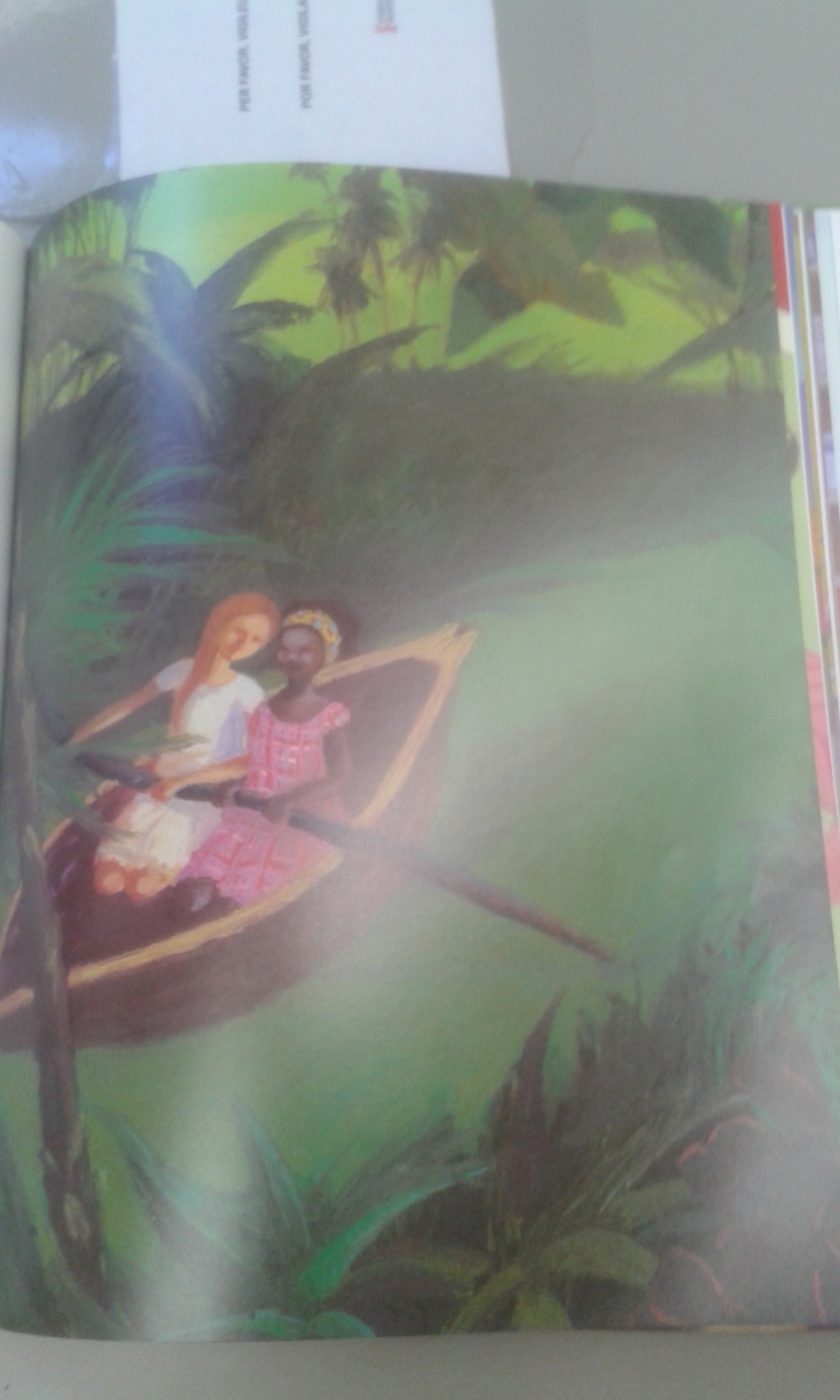
Los muy bobos la llamaban “Cacao”, porque había nacido en una mazorca de cacao, muy lejos de allí. Su piel era tan blanca como una nube generosa y los demás niños se burlaban de ella: “¡Cacao, Cacao!”. Esos mismos abusones bautizaron a su mejor y única amiga con el nombre de “Nieves” porque había nacido lejos, en el vientre frío de una muñeca de nieve; ella, que tenía la piel oscura como una sombra en pleno verano. Un día vino a la escuela un anciano para contar la guerra de colores en que le habían obligado a participar en los bárbaros años de su juventud. Algunos niños lloraron. Las dos niñitas sonrieron: el color de su piel era la menor de sus preocupaciones. Incluso se habían inventado un nombre secreto: Vainilla. ¿Quién sabe de verdad cuál es el color de la vainilla? ¿El del helado o el de la vaina que la contiene?


20190313_174723

lunes, 6 de mayo de 2019

EN QUE ... RESULTAN NO SER ESPAÑOLES

Star*Twinkle Pretty Cure
Episode 14 - My Own Review
EN QUE ... RESULTAN NO SER ESPAÑOLES

https://angryanimebitches.com/2019/05/star-twinkle-precure-episode-14/

The fourteenth episode of Star ☆ Twinkle quite simply focuses on Elena’s family. However, one of her younger siblings doesn’t seem to be too fond of them.


Elena’s family
Izda-dcha: Takuto, Kaede (mamá), Ana, Carlos (papá), Ikuto, Reina. (Ausentes: Elena y Tomás)


This episode pretty much starts with Hikaru, Lala, and Madoka meeting Elena’s family. This episode confirms that Elena’s dad Carlos is Hispanic Mexican (ESPAÑOL NO -- FACEPALM!!), and her mum Kaede is an interpreter. The two met whilst she was in Mexico, and they went on to have quite a large family (seven!).


Tomás doesn’t join in with his family’s dancing
Whilst most of the family are happy to dance around, one of them is not. That is Tomás, the first of Elena’s younger siblings. He doesn’t think his family is normal, and that isn’t helped by classmates calling his parents weird when they were dancing and holding hands (Not only because of the dark-skin and interracial elements: Hispanic outspokenness, loudness, and emphasis on physical contact clash A LOT with Japanese culture -- reminding me of equal personal trauma in my first and only time in the UK so far!).


At one point Tomás gets angry enough to run away. Lala ends up finding him, and it isn’t long before trouble finds them both in the form of Tenjou – with a new Princess Star Colour Pen.
Tenjou turns Tomás into the monster of the week
Tomás is made into a KNottrigger, and Tenjou does a ‘Make my monster grow!’ bit. The other girls arrive, and it is time for PreCures to do their usual thing.


Cure Soleil admits she thought her family was odd when she was younger
During the battle, Cure Soleil is able to get through to Tomás. With a little help from Cure Star, she is able to get the Scorpio Princess Star Colour Pen from Tenjou. PreCures defeat the 'trigger, returning Tomás to normal.
Scorpio Fuwa
Tenjou retreats after losing the Princess Star Colour Pen. With the Scorpio Princess Star Colour Pen now in their possession, one more Star Princess is awakened.
Scorpio Princess


After the whole princess awakening process, PreCures return to Earth. Tomás wakes and apologises for his actions earlier, and seems to be more accepting of his family now. All’s well that ends well.
Well, this was certainly an episode of Star ☆ Twinkle. I don’t particularly have all that much to say about it; it done its job. We got to learn a bit more about Elena’s family, and er… well, that was pretty much it.
Not a bad episode, but there have been others that treated the issues of racism and culture shock in a more ham-fisted way. So it could have been worse...
Next episode certainly looks like it has potential, though.
Tomás is very lucky to have loving parents. He should see how Emiru's family behaved despite their status. Her parents are living in their own world even to the end of the series and her grandfather is still as stubborn as ever. Only Masato and Emi herself, the youngest generation, are the Aisakis who have changed the most for the best, even coming out as part of their coming of age. Tomás should count himself lucky since his parents expressed their love very openly like a lot of western families do and shouldn't be down by peer pressure or racist remarks. 

This week we turn to Elena’s interracial family, where we see one of her brothers struggling with how a friend of his told him his parents are crazy for holding hands and dancing everywhere, and being so loud. The innocently racist comment hurt him, and he became self conscious of what people thought of them ever since.
It didn’t take me long to realize the direction the episode was going, but I am quite happy to this series diving into the subject of addressing the struggles of kids born from mixed families with different cultural backgrounds. I thought it was handled well by utilizing Lala’s character as a foreigner who hails from another planet. Lala was able to talk to Tom about her dialect, and shared bits about her culture, such as instead of holding hands they touch their feelers and dance with them. She goes a step further by sharing how every culture has their own thing, but none of them were weird, nor does it make them any less normal than anyone else.
I really enjoyed the episode. It’s good to see them using Elena’s character and her family background to expand onto these subjects. Elena’s parents are especially endearing, and I love how affectionate they are. It’s also worth noting we are actually seeing how different each of the girls’ family dynamics are, which gives us a great insight to their character. Elena’s is radiant to say the least, making it a stark contrast to Madoka’s solemn household, I would say Hikaru’s family is definitely in the middle. Now it makes me curious about what Lala’s family dynamic is like, so I wonder if we will ever get the chance to see it!
But goodness, did anyone else get mildly freaked out with the way they transformed Touma into an enemy? They litterally made him into one of their own, and turned him giant! And then they made his chupa-chups into a weapon! To that I was like, “Well shit, I wouldn’t want to be hit by THAT!” He seriously gave the girls a run for their money this week, also in part of the Scorpio Pen, which Tenjou had found while she was roaming around worlds, actually doing her job.
Next week, the girls are off to another planet! Looks like it’s going to be a tricky one with the pen being at an auction house! Let’s see how the girls will tackle this one!


MY OWN HUMBLE OPINION:
¡No eran españoles al fin y al cabo! - Lo cual conlleva que la única Cure española en cánon está inspirada en un deporte de sangre (facepalm!) - necesito un carajillo para aceptar la realidad.
Carlos y Kaede la traductora-intérprete: de hecho que los padres de Elena y sus hermanitos resuenan mucho con mi propia historia, a pesar de que los míos se desenamoraron antes de poder tener más descendencia, dejándome hija única.
Racismo en este ánime: pobre Tomasito para sufrir el acoso en clase por tener la tez más oscura y un talante más latino. Y que se convirtiera en la víctima de turno... eso era de esperar.

En el frente de los Pens: ¡¡ESCORPIO!! - Cinco pens, y quedan siete. También tenemos el primer pen de un signo de agua, lo cual significa que todos los elementos ya están representados. Pero queda la cualidad mutable.
Poderes:
Fuwa (Stingwa):

Princesa:

¡Qué trenza, qué corbatín, qué hombros desnudos... una princesa sexy para el signo más sexy del zodiaco occidental!


IN NEXT EPISODE (15):
Why don't we keep it a surprise...?